
Speaking between worlds: how P’urhepecha changes across communities
P’urhepecha is an Indigenous language of Mexico that is also spoken by diaspora communities in the USA. At Leiden University in the Netherlands, Dr Kate Bellamy is investigating how P’urhepecha varies between these communities, and how multilingual environments influence the way the language is used.
Talk like a linguist
Article — a type of word (found in some languages) that indicates whether a noun is known (definite article – ‘the’) or unknown (indefinite article – ‘a/an’) and whether it is singular or plural
Bilingual — the ability to speak two languages
Clitic — a small element (found in some languages) that must attach to another word to convey a certain meaning, such as to indicate the subject of a sentence
Code-switching — using two or more languages within a single word, sentence or conversation
Diaspora — a community of people who live outside their original homeland
Grammatical gender — a system (present in some languages) to classify nouns, e.g., in Spanish, nouns are masculine or feminine
Multilingual — the ability to speak more than two languages
Sociolinguistic interview — a structured conversation to study how language is used in social contexts, and how it can vary
Subject — the person, place or thing in a sentence that performs an action or undergoes an experience
Languages shape the way we see the world. They allow us to share ideas, tell stories, build relationships and express who we are. Around the globe, millions of people grow up speaking more than one language, switching effortlessly between them at home, school and in their communities. But what happens to a language when it is used alongside others every day?
Dr Kate Bellamy, a linguist at Leiden University, is studying P’urhepecha, an Indigenous language spoken in Mexico, and exploring how it varies between communities in its homeland and diaspora communities in the USA. P’urhepecha is spoken mostly in the state of Michoacán in west Mexico by around 140,000 people, and there is also a notable diaspora community in the USA. “Most P’urhepecha speakers in Mexico speak Spanish too, and those in the USA often also speak Spanish and English,” says Kate, who is investigating the influences of Spanish and English on P’urhepecha.
What makes P’urhepecha unique?
P’urhepecha is a language isolate, meaning it has no known relatives. Languages are grouped into families because they share similarities in vocabulary and grammar that point to a common origin. For example, Spanish, French and Italian are in the Romance branch of the Indo-European language family, while English, Dutch and German are in the Germanic branch. In contrast, linguists have not found any systematic links between P’urhepecha and any other language, living or extinct.
P’urhepecha contains features that neither Spanish nor English have. One example is the use of subject clitics – small, movable elements that attach to words to indicate who is carrying out an action or experiencing a state. However, P’urhepecha lacks a feature that is central to Spanish – grammatical gender. In Spanish, every noun is classified as either masculine or feminine, signalled by the definite article el or la (‘the’) and the corresponding adjective ending -o or -a, respectively. “P’urhepecha does not have a comparable system,” says Kate. “In fact, it doesn’t have a word for ‘the’!” Instead, ima (‘that’) can be used for definite reference and ma (‘one’) can be used to express the indefinite article ‘a’. “The use of these forms as articles is a relatively recent development in the language,” explains Kate.
How might Spanish and English influence P’urhepecha grammar?
When languages are in close contact, they can influence one another in important ways. Kate is interested in how contact with Spanish and English affects the way P’urhepecha speakers express the subject of a sentence – in other words, how they indicate who is performing an action (e.g., ‘I eat’), undergoing an experience (e.g., ‘You are scared of snakes’), or in a particular state (e.g., ‘He is tired’).
Different languages solve this problem in different ways. English uses subject pronouns, such as ‘I’, ‘she’ or ‘we’. Subject pronouns are not always necessary in Spanish because the verb ending signals who the subject is (como – ‘I eat’; come – ‘she eats’; comemos – ‘we eat’). P’urhepecha, however, has several possibilities. To say ‘I am eating’, speakers can use a subject pronoun (ji t’irexaka), a verb ending alone (t’irexaka) or a clitic that attaches to the verb to identify the subject (t’irexakani). These forms can also appear together (ji t’irexakani).
“I hypothesise that bilingual speakers in Michoacán, who speak P’urhepecha and Spanish, will use subject clitics more frequently, since Spanish also indicates the subject using the verb,” says Kate. “In contrast, in the diaspora in the USA, where speakers also use English, I hypothesise that subject pronouns will be more prevalent, because they are obligatory in English and, therefore, heard more often.”
How does Kate study variation in P’urhepecha?
“One of my main approaches is to conduct sociolinguistic interviews with P’urhepecha speakers in Mexico and the USA,” Kate explains. “I ask them about their family, where they are from, their education and occupation, how they view the language, and how things have changed in their community over the years.” This allows Kate to compare the words, grammatical structures and pronunciation that people use, revealing patterns of change across regions and generations.
To study code-switching – the use of P’urhepecha words or phrases in Spanish or English sentences, or vice versa – Kate records conversations and runs linguistic experiments. These include spoken games, where pairs of participants must switch languages to complete a sentence, and written questionnaires, where participants must choose which Spanish gender they would assign to genderless P’urhepecha nouns.
How does P’urhepecha vary in different contexts?
Kate’s research has revealed that when code-switching, bilingual P’urhepecha and Spanish speakers in Mexico use different strategies to assign gender to P’urhepecha words in Spanish sentences, depending on the task. “In spoken tasks, participants tend to use a default approach, assigning masculine gender to over 90% of P’urhepecha nouns,” says Kate. In contrast, when reading or writing, the final vowels of words become more noticeable, and speakers are more likely to assign the gender that matches the word ending. For example, japunda (‘lake’) ends in -a and so is associated with the feminine gender (la japunda), even though the Spanish translation (el lago) is masculine.
“P’urhepecha in the diaspora naturally contains far more English words than the Mexican variety does,” says Kate. Many diaspora speakers are trilingual, fluently speaking P’urhepecha, Spanish and English, and they often switch between all three within the same sentence. Living in such a multilingual environment expands speakers’ linguistic repertoire and shapes the way they use P’urhepecha in everyday communication. This lived experience shows how languages adapt and evolve depending on community and context – which is what makes linguistics so fascinating!
 Dr Kate Bellamy
Centre for Linguistics, Leiden University, The Netherlands
Field of research: Linguistics
Research project: Studying the influences of Spanish and English on P’urhepecha
Funders: Current: Nederlandse Organisatie voor Wetenschappelijk Onderzoek (Dutch Research Council); British Academy/Leverhulme Trust. Previous: Newberry Library (Chicago, USA); Endangered Languages Documentation Programme; KU Leuven Postdoctoral Mandate; Marie Curie-Skłodowska Individual Fellowship
About linguistics
Linguistics is the study of languages. It looks at how people speak, understand and use language, as well as how languages evolve. “The field of linguistics has something for everyone,” says Kate. “It covers the study of different languages around the world and aspects of written and spoken language.” For example, it includes the sounds we make when we speak (phonetics and phonology), how words are formed (morphology), how sentences are structured (syntax), and how these features vary across different languages (typology).
Linguists also examine how people use language in different social contexts (sociolinguistics), what they mean when they speak (semantics and pragmatics), how language is processed in the brain (psycholinguistics and neurolinguistics), and how languages change over time (historical linguistics and language contact). Multilingualism is a key area of study, exploring how people juggle multiple languages, including how they code-switch between them. Another important focus is documenting endangered languages to preserve knowledge and ways of thinking that cannot be expressed in any other way.
For young people, linguistics is an exciting field. “Language is all around us – it is part of what makes us human,” says Kate. “You could study a language in the highlands of Mexico or analyse communication in a school in London.” Linguistics can take you to places you never expected, let you experience new cultures, and show you different ways of seeing the world – all while learning more about language and yourself.
Pathway from school to linguistics
“At school, study English and modern foreign languages to learn how languages are structured and used, as well as how they can vary from each other,” advises Kate. Classical languages, if they are offered, will also be useful as they will teach you about grammar and language structure.
“Psychology will help with certain sub-disciplines of linguistics, such as psycholinguistics and neurolinguistics,” says Kate. “Computing (especially programming) will also come in handy, especially as AI becomes more prominent in the field. Other humanities subjects, such as history and literature, will help you develop strong analytical and writing skills. And maths will be useful for areas like computational linguistics.”
Study linguistics at university. You could then obtain a postgraduate degree in a sub-discipline such as sociolinguistics (language and society), neurolinguistics, or language description and documentation. You could also combine your linguistics studies with a degree in languages and/or literature.
Explore careers in linguistics
Prospects provides information about what you can do with a degree in linguistics: prospects.ac.uk/careers-advice/what-can-i-do-with-my-degree/linguistics
“Explore resources provided by national linguistics associations,” recommends Kate. Examples include the Linguistics Association of Great Britain and Northern Ireland (lagb.org.uk), the Linguistic Society of America (lsadc.org), the Societas Linguistica Europaea (societaslinguistica.eu), the Canadian Linguistic Association (cla-acl.ca) and the Asociación de Lingüística y Filología de América Latina (mundoalfal.org).
Lingthusiasm (lingthusiasm.com) and A Language I love is… (dannybate.com/podcast) are accessible podcasts that discuss different topics in linguistics and introduce languages you have probably never heard of before.
Meet Kate
I’ve always loved to read and travel. Both entail an innate sense of curiosity as you are constantly exploring and learning something new. That sense of wonder and the desire to never stop learning are always with me.
Although I didn’t realise it at the time, I began linguistics research at school. I studied English language as one of my A levels and, for my final project, I explored how the language use of my two Jamaican uncles varied in different contexts – when they were talking to each other and when they were talking to me. A classic sociolinguistic project, as it turned out!
Reference
https://doi.org/10.33424/FUTURUM683


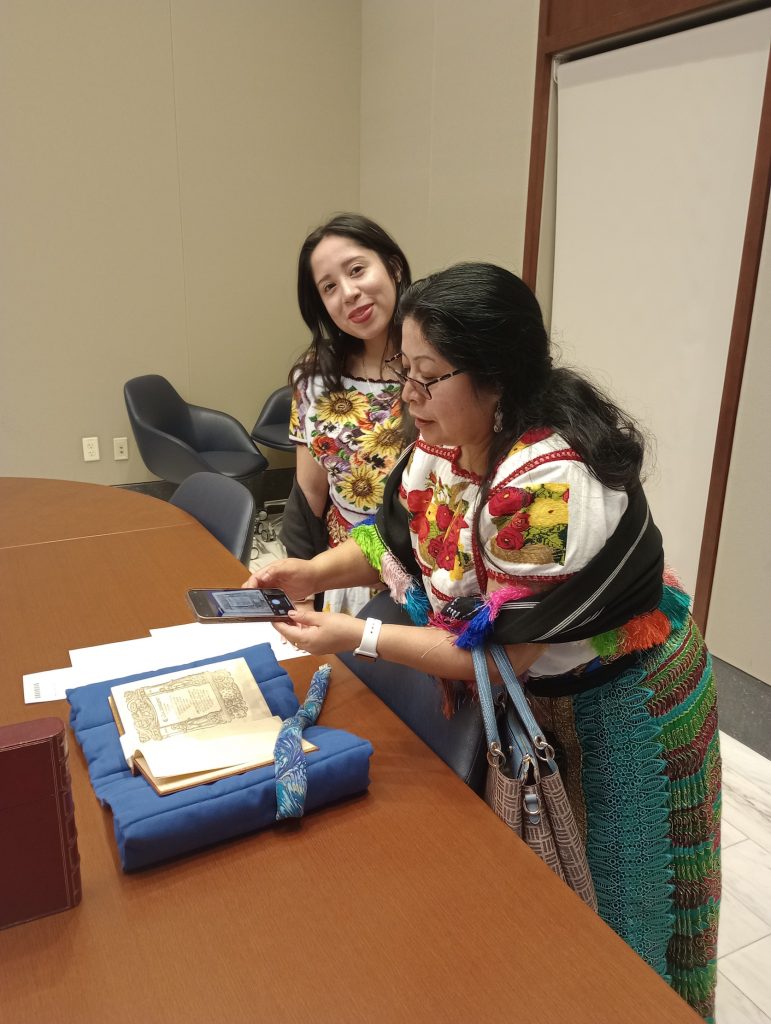
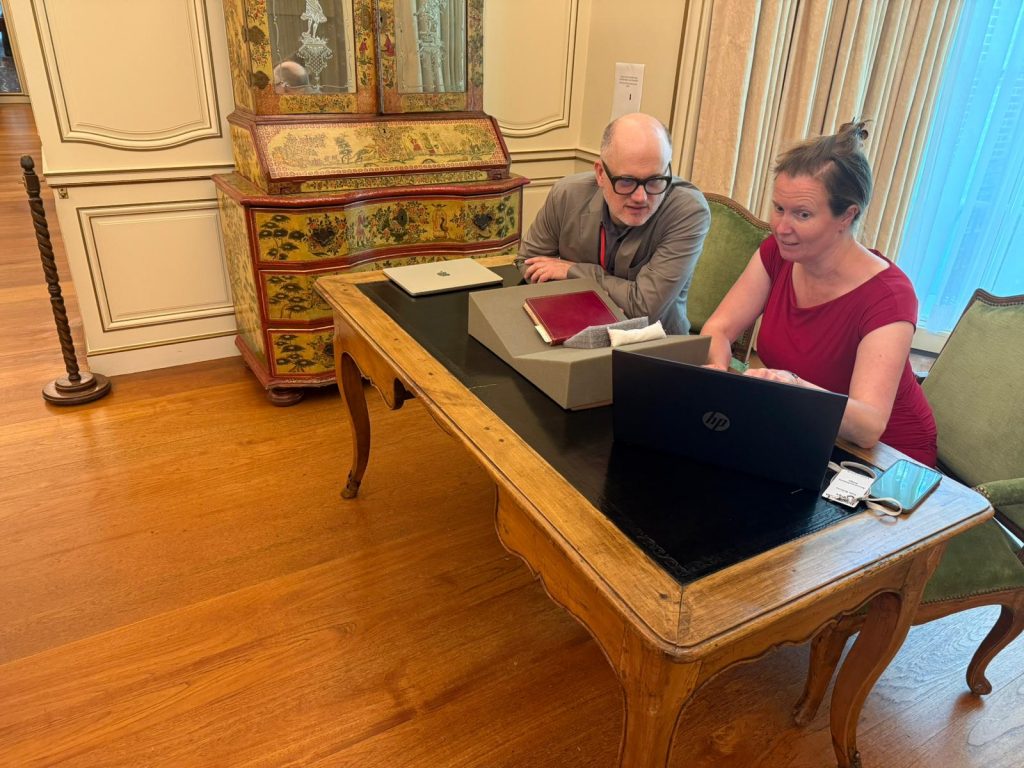
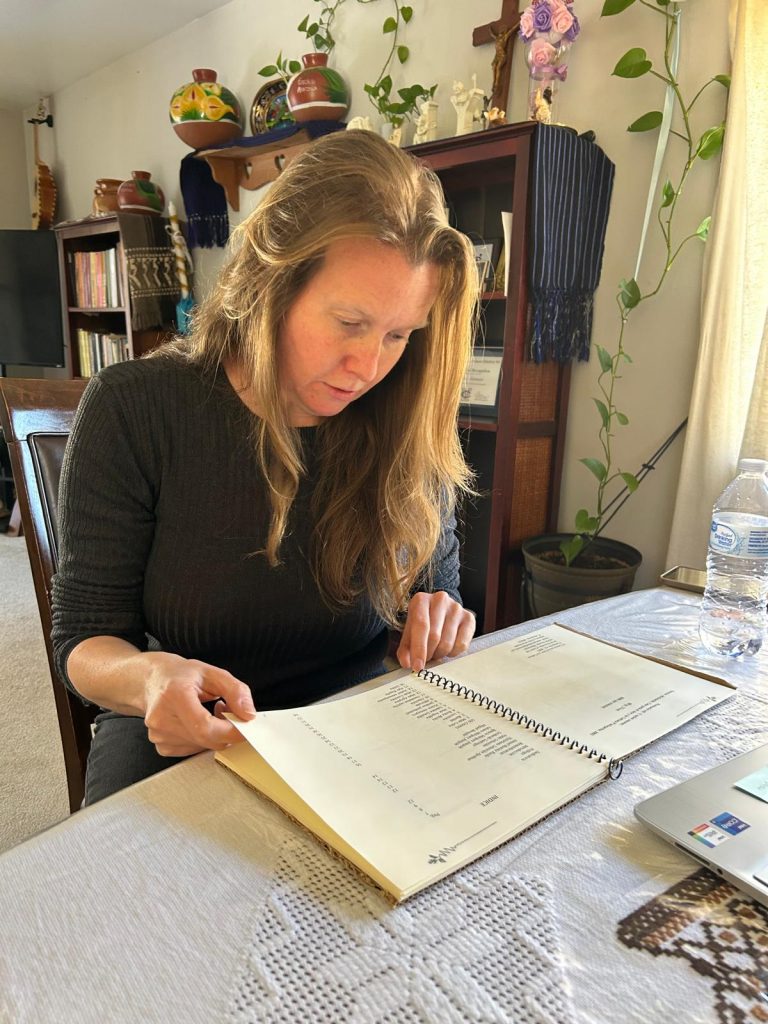
Luz Márquez and her daughter Mintsita consult a 17th century P’urhepecha book at the Newberry Library in Chicago.
© Kate Bellamy
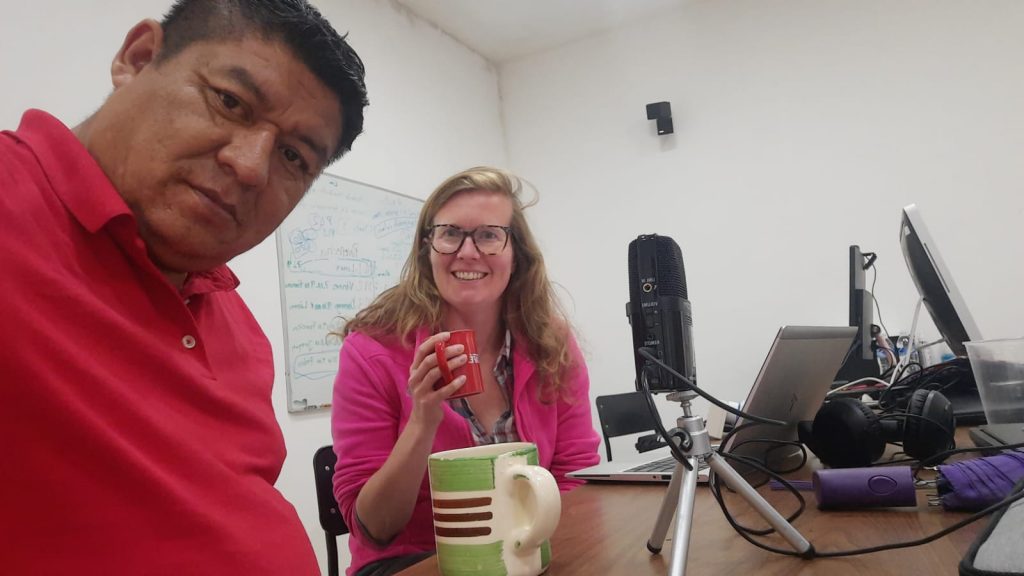
© Joaquín Márquez Trinidad
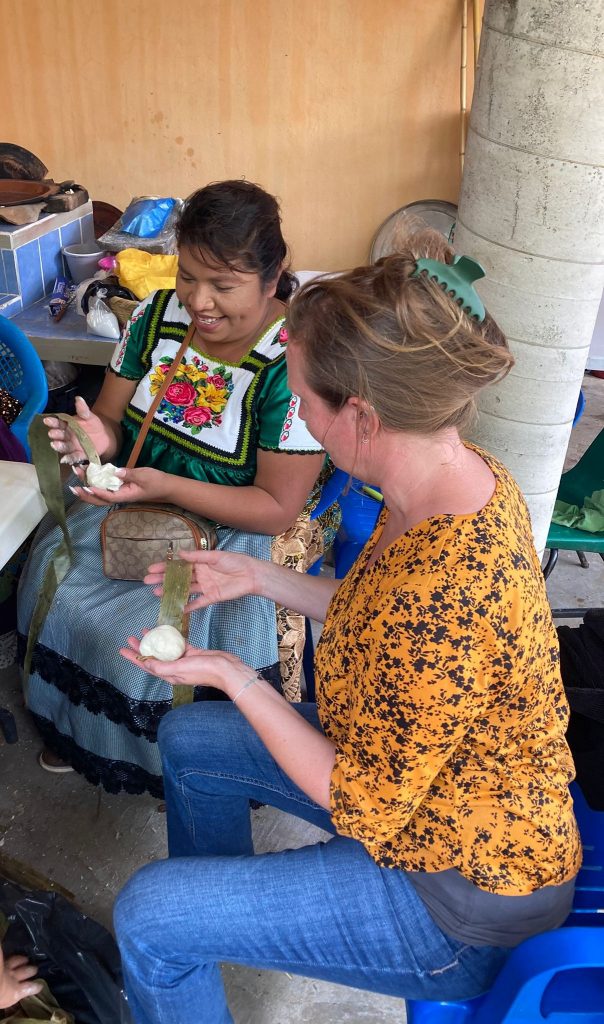
© Esmeralda Santiago Gregorio
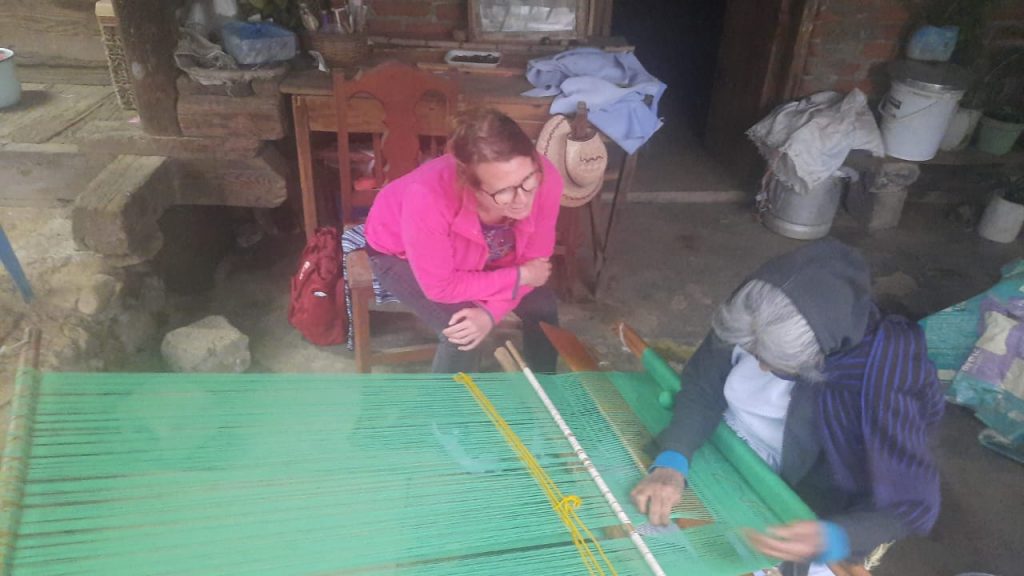
© Rebecca Mendoza
© Luz Márquez Antonio




I studied modern and medieval languages at university, focusing mostly on French and Italian from about 1200 CE to the present. After graduating, I worked in sales for a large brewery but didn’t enjoy it. So, I found a job that made use of my language skills by researching education systems and qualifications throughout Europe and beyond to establish standards of comparison between them. Nonetheless, I felt like I was wasting one of my main talents – my multilingualism. I moved to Luxembourg to work as a project coordinator at a university, which made me realise I wanted to study more. And so I ended up at Leiden University in the Netherlands, where I gained a Master’s degree and PhD in linguistics, and now work as a linguistics researcher.
I love learning new languages because I love being able to interact with people who speak different languages. It opens my eyes to their culture in a different way. I am fluent in English (my mother tongue), Dutch, French, Italian and Spanish, I can have conversations in German, I can get by in P’urhepecha, and I can do basic things like ordering food in Russian and Georgian. Last year, I also started learning Limburgian, the local language of the region where I live in the Netherlands.
One of my favourite memories from my linguistics research was when I organised a trip to the Newberry Library in Chicago for P’urhepecha speakers living in the area. The library holds P’urhepecha books written in the 16th and 17th centuries, and it was very moving to see members of the P’urhepecha community come face-to-face with these books for the first time – to be able to turn the pages and read the words aloud.
Kate’s top tips
1. Study what you enjoy – don’t study something just because you think it will get you a job.
2. Be prepared to get out of your comfort zone – the results can be very rewarding.
3. Don’t let failure or rejection get you down – know it will just make you stronger. Remember that persistence and hard work pay off!
Do you have a question for Kate?
Write it in the comments box below and she will get back to you. (Remember, researchers are very busy people, so you may have to wait a few days.)

Learn how your language abilities can shape you:
futurumcareers.com/can-embracing-plurilingualism-transform-education
0 Comments