
Can understanding V-ATPase help fight disease and ageing?
V-ATPase is a vital molecular machine that helps control the pH levels within cells and their organelles. Professor Patricia Kane, a molecular biologist at Upstate Medical University in the US, is investigating V-ATPase function, activity and regulation. Her research explores how problems with this molecular pump may contribute to diseases such as Alzheimer’s disease, cancer and osteoporosis, as well as the ageing process itself.
Talk like a molecular biologist
ATP – the primary energy carrier in cells, used to power molecular machines like V-ATPase
Cytosol – the jelly-like fluid that surrounds organelles within a cell
Lysosome – an acidic organelle that degrades and recycles damaged proteins and organelles within cells
Osteoclast – a cell that uses V-ATPases to break down bone tissue
Osteoporosis – a disease causing bones to lose density and become fragile, leading to a higher risk of fracture
pH – a measure of acidity, with lower values indicating more acidic conditions and higher values indicating more basic conditions
Proton – a positively-charged particle pumped by V-ATPase to acidify organelles
Reversible disassembly – the process by which V-ATPase subcomplexes separate and later reassemble to regulate activity
V-ATPase – a molecular motor that pumps protons into organelles to maintain acidic conditions
The human body is made up of roughly 30 trillion cells. These cells are highly organised structures, filled with cytosol and divided into membrane-bound compartments called organelles. Each organelle has its own internal environment, including a specific pH that allows it to function properly. Although the cytosol is maintained at a near-neutral pH, some organelles need to be more acidic to carry out their roles.
One of the most important acidic organelles in animal cells is the lysosome. Plant and fungal cells have a similar organelle called a vacuole. “Lysosomes and vacuoles are the recycling centres of the cell,” says Professor Patricia Kane, a molecular biologist at Upstate Medical University. “They use enzymes to break down old or damaged cellular proteins and organelles, allowing the cell to reuse their building blocks.” The enzymes that carry out this degradation only work well at acidic pH.
What is V-ATPase?
To maintain the acidity of lysosomes and other organelles, cells rely on a molecular machine called V-ATPase. This protein complex acts as a molecular motor, using energy from ATP – the cell’s main energy source – to pump protons across membranes and into organelles. By concentrating protons inside organelles, V-ATPase makes them more acidic than the surrounding cytosol, allowing their enzymes to function properly.
V-ATPase is made up of two subcomplexes – groups of proteins that work together. One subcomplex breaks down ATP to release energy, while the other uses this energy to rotate within the membrane, allowing protons to pass through.
In humans, mutations in V-ATPase genes can cause serious health problems. For example, when V-ATPases in certain kidney cells do not function correctly, the body cannot regulate blood pH properly, which can make the blood dangerously acidic. “Almost all organisms die if they have no V-ATPase activity,” says Patricia.
How do cells control V-ATPase activity?
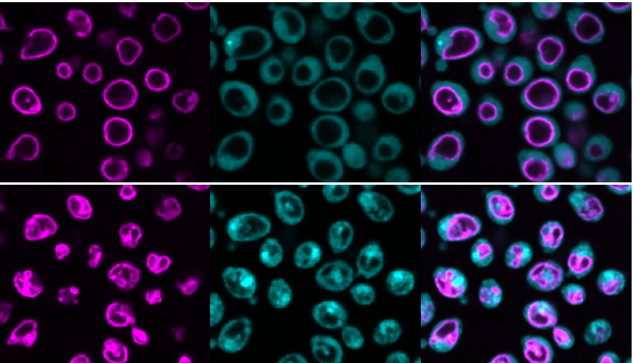
V-ATPases maintain the specific acidic conditions needed for a cell’s organelles to function properly. However, cells do not always require the same level of V-ATPase activity, so they must regulate when and where the pump is active. “For example, when yeast cells lack glucose, their favourite nutrient, they reduce V-ATPase activity to conserve energy, then increase it again when nutrients become available,” explains Patricia. This adjustment occurs through a process called reversible disassembly, in which the two V-ATPase subcomplexes separate, stopping ATP breakdown and preventing proton pumping. When conditions improve, the subcomplexes quickly reassemble and restore acidification. Reversible disassembly also occurs in mammalian cells where it regulates V-ATPase activity and can help restore lysosome acidity if membranes become damaged.
How does Patricia study V-ATPase?
From yeast to humans, V-ATPases in different organisms are remarkably similar and share the same basic structure. “We often study V-ATPase in yeast because yeast cells can survive without V-ATPase activity (although they grow slowly) while most other organisms cannot,” explains Patricia. Her team introduces mutations into yeast V-ATPase genes and examines how these changes affect cell growth, protein recycling and organelle acidity. They also isolate the yeast’s vacuoles to measure how efficiently V-ATPase breaks down ATP and pumps protons, and use fluorescent labels to track where the complex is located inside cells.
Reference
https://doi.org/10.33424/FUTURUM692
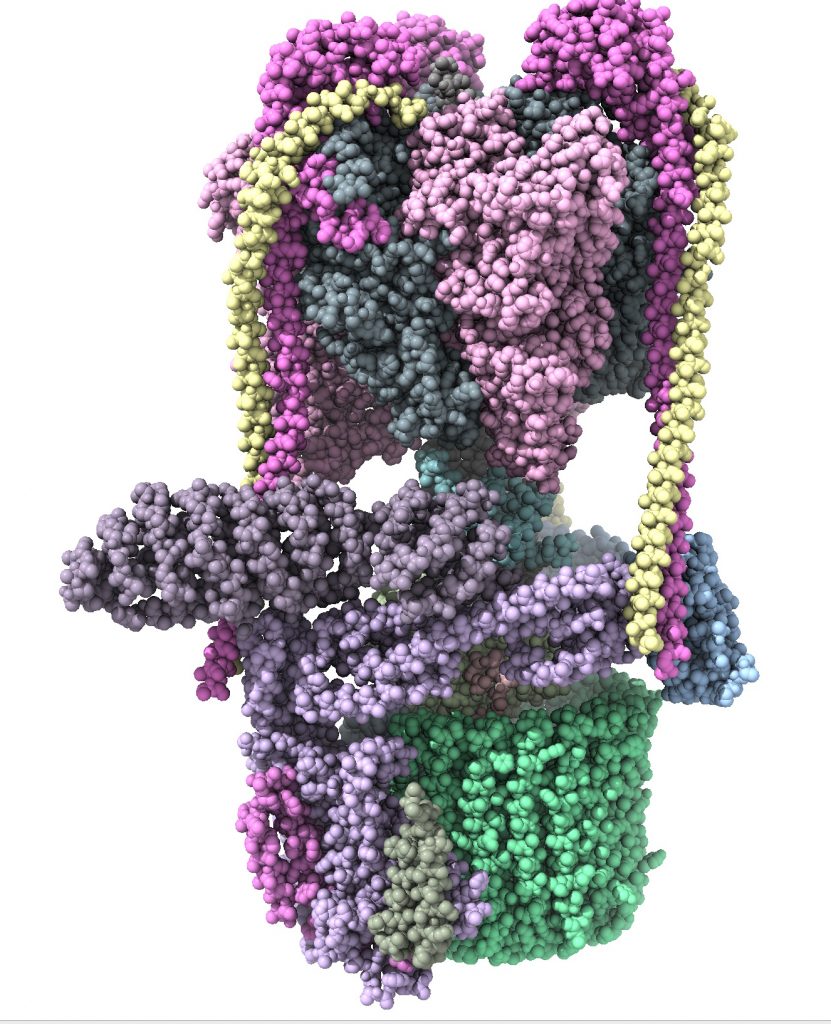
Structure of assembled yeast V-ATPase ©Protein Data Bank PDB: 7TMT
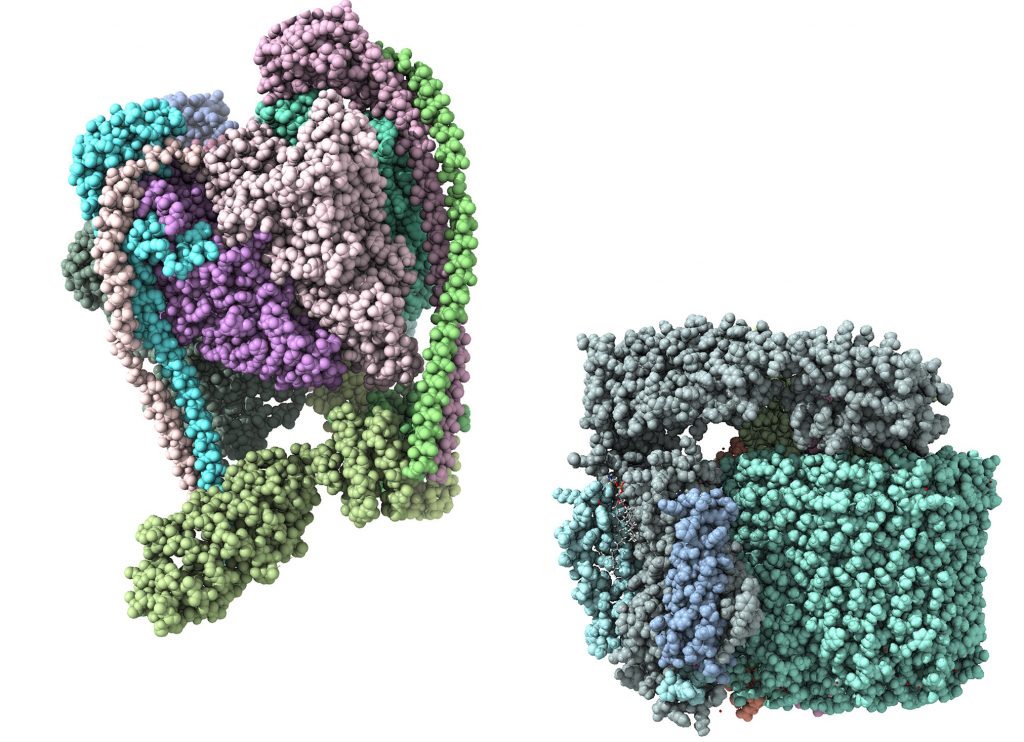
Structures of disassembled V-ATPase pieces ©Protein Data Bank PDB: 6MOR and 7TMQ


Much of what Patricia and her team learn from yeast can be applied directly to human cells. Although human V-ATPases can be more complex, the basic structure, function and regulation are the same, providing a blueprint for understanding how the system works in humans.
How can V-ATPase dysfunction lead to disease?
When V-ATPases do not function properly, lysosomes become less acidic, which makes it harder for cells to break down damaged proteins. The accumulation of these faulty proteins is a hallmark of neurodegenerative diseases such as Alzheimer’s and Parkinson’s. Lysosomes also naturally become less acidic with age, which may help to explain why these conditions are more common in older people. “To treat these diseases, we need to figure out why V-ATPases become less active and reverse this process,” says Patricia. “This is why we are interested in the reversible disassembly of V-ATPase in ageing cells.”
In other conditions, such as cancer and osteoporosis, problems can be caused by too much V-ATPase activity or pumping taking place in the wrong location. Osteoclasts use V-ATPases to break down bone, and excessive activity can lead to osteoporosis. In cancer cells, V-ATPases can move to the cell surface, acidifying the surrounding environment and helping tumours spread to nearby tissue. “In both cases, we need to block V-ATPase activity only in specific locations, but that’s challenging because all cells rely on these pumps to survive,” explains Patricia. “Any treatment must either be very carefully targeted or focus on features found only in cancer cells or osteoclasts.”
How does ageing affect V-ATPase function?
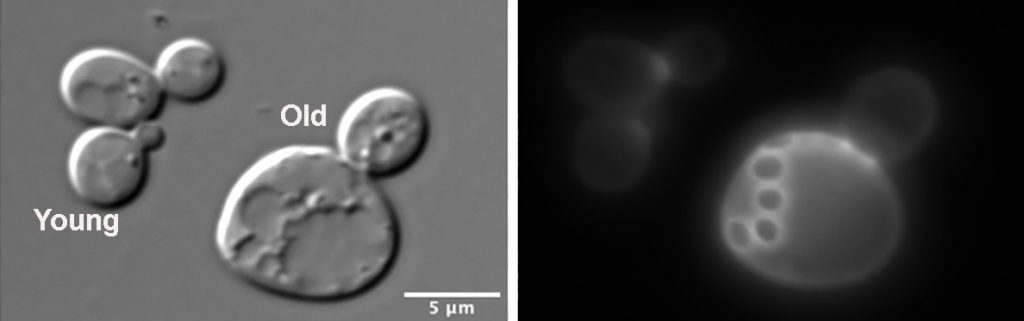
As organisms age, lysosomes gradually become less acidic, which can cause a buildup of defective proteins. Patricia’s team recently found that V-ATPases in yeast are more often disassembled in older cells, even though all the protein components are still present. This disassembly likely contributes to the reduced acidity of lysosomes with age. “We found that when we introduced a mutation forcing the V-ATPase to stay assembled, yeast cells lived much longer,” says Patricia. “Now, we want to understand why V-ATPases disassemble with age, identify factors that can prevent or delay this, and see if the findings apply to mammalian cells.”
Patricia and her team continue to study V-ATPase regulation, including reversible disassembly. After disassembly, V-ATPases rely on a protein complex called RAVE to reassemble. Mammalian cells have similar complexes, and the team recently discovered that a protein linked to severe genetic epilepsy is a subunit of the mammalian RAVE complex. “While this discovery will not provide a cure for the disease, it suggests a mechanism, which can eventually allow us to develop therapies,” explains Patricia.
 Professor Patricia Kane
Department of Biochemistry and Molecular Biology, Upstate Medical University, USA
Field of research: Molecular biology
Research project: Investigating V-ATPase regulation and how it contributes to disease and ageing
Funders: US National Institutes of Health (NIH); National Institute of General Medical Sciences (award number R35 GM14525); National Institute of Aging
The contents of this work are solely the responsibility of the authors and do not necessarily represent the official views of the NIH.
About molecular biology
Molecular biology is the study of the molecules that make up living cells and how these molecules interact to sustain life. It focuses on DNA, proteins and other cellular components, exploring how genes are regulated, how proteins are made and how cells carry out their essential functions. The field overlaps with biochemistry, genetics and cell biology, and it provides a foundation for understanding diseases, developing therapies and advancing biotechnology.
Molecular biology is an exciting field because it allows scientists to explore life at its most fundamental level. “New technologies, such as CRISPR gene editing and advances in microscopy that allow visualisation of individual molecules in cells, are extremely exciting,” says Patricia. “The next generation of scientists will be able to see and manipulate cells and individual molecules in ways that would not even have been imagined 30 years ago.” Computational methods also allow researchers to generate hypotheses that can then be tested experimentally. These advances mean that molecular biology will continue to drive discoveries in both basic science and the development of new therapies.
Working in molecular biology also comes with challenges. “The field moves quickly, and it’s important to stay up to date as much as possible,” says Patricia. “I read scientific literature, go to seminars and conferences, and interact with colleagues to stay informed.” For students, building curiosity and persistence is key. Patricia recommends starting with popular science books, blogs and online resources before moving on to scientific reviews and research papers. The increasing accessibility of open-access scientific literature makes it easier than ever for students to explore molecular biology independently.
A typical day for a molecular biologist combines research, data analysis and teaching. Patricia and her team start by checking in on lab experiments and planning the day’s work. Techniques vary widely – from purifying proteins and constructing DNA molecules to observing cells under microscopes and conducting yeast genetics experiments. “I also spend time analysing data, communicating with other scientists and writing research papers.” This mix of experimentation, problem-solving and mentorship can make molecular biology both dynamic and fulfilling.
Pathway from school to molecular biology
At school, build a strong foundation in biology, chemistry and physics. Mathematics and basic computing skills are also helpful, as modern molecular biology increasingly relies on data analysis.
At college or university, relevant courses include molecular biology, biochemistry, genetics, cell biology, microbiology and biotechnology. “A strong science background is important for this field, though you can enter from multiple directions,” says Patricia. “For example, while many people major in biology or biochemistry, both my undergraduate and graduate degrees are in chemistry, and I have colleagues that have degrees in physics.”
“Big data is also a critical element of modern biology, so learning basic programming and data analysis skills would be helpful,” says Patricia.
Explore careers in molecular biology
If you are interested in molecular biology, organisations such as the American Society for Cell Biology, the American Society of Biochemistry and Molecular Biology, the Biochemical Society and the Federation of American Societies for Experimental Biology offer webinars and useful resources for students and early-career researches.
Textbooks such as Molecular Biology of the Cell by Bruce Alberts and Principles of Biochemistry by Albert Lehninger, David Nelson and Michael Cox are widely used in undergraduate, graduate and medical courses and provide a holistic background in cellular and molecular biology.
Meet Patricia
I grew up on a farm and went to school in a small town, so I didn’t have any exposure to research careers. I did grow up with a great appreciation for the natural world, and that fits well with biological research.
I wasn’t interested in science until I took chemistry and physics with an excellent teacher in my last two years of high school. When I started college, I planned to major in English, but changed my major to chemistry in my second year. Over time, my interests became more biochemical. However, despite my change in major, I still do a lot of writing, and my English skills help with that!
I love the thrill of discovering something new through our research and working with students in my lab. It’s great to see students experience the thrill of discovery.
I continue to be fascinated by the microscopic world – there is so much happening that we can’t see directly and so much more to discover.
I think curiosity and persistence have helped me in my career. I love doing research because I’m very curious about how things work and excited by the possibility of new discoveries (both little and big). However, in scientific research, there are many experiments that don’t go as expected, so persistence, patience and some optimism are also important.
I go for a walk after work most days. This helps me process my day and shift gears. I live in a snowy place, so I like to ski in the winter, and I garden in the summer.
Patricia’s top tip
Don’t be intimidated if molecular biology seems complicated at first. It can seem like learning a new language, but as you get used to it, it will make sense. You don’t have to understand everything immediately.
Do you have a question for Patricia?
Write it in the comments box below and she will get back to you. (Remember, researchers are very busy people, so you may have to wait a few days.)
Learn more about the mechanisms that transport molecules across membranes:
futurumcareers.com/orphan-membrane-transporters-mapping-functions-of-the-unknown
0 Comments