
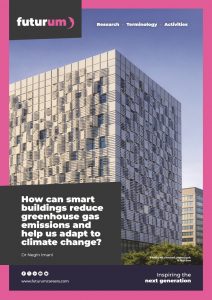
How can smart buildings reduce greenhouse gas emissions and help us adapt to climate change?
Most of the buildings we spend time in are solid and unmoving, and manage their environmental conditions (such as temperature, lighting and air flow) using energy-hungry heating, ventilation and air conditioning (HVAC) systems. However, at Bodeker Scientific in New Zealand, Dr Negin Imani has taken inspiration from plants to design adaptive building façades that respond to environmental conditions to keep buildings well-lit, well-ventilated and at a comfortable temperature.
Talk like an architect
4D printing – creating materials that can transform their shape in response to changes in their environment
Adaptive façade – a façade that can change to maximise a building’s energy efficiency and comfort of its occupants, for example by using shading systems
Biomimetic – designed and engineered to mimic a natural system
Façade – the exterior of a building
Shading system – a mechanical system that uses moving panels to cover a building’s windows to prevent overheating and excessive brightness inside when it is sunny
Thermal equilibrium – a state where heat entering and leaving a system is balanced, so the temperature remains constant
When the weather is cold, heating keeps our buildings warm. When the temperature outside rises, we use air conditioning to cool them down. However, these systems use huge amounts of energy (often provided by fossil fuels) and even then, we can still find ourselves sweating in summer or shivering our way through winter.
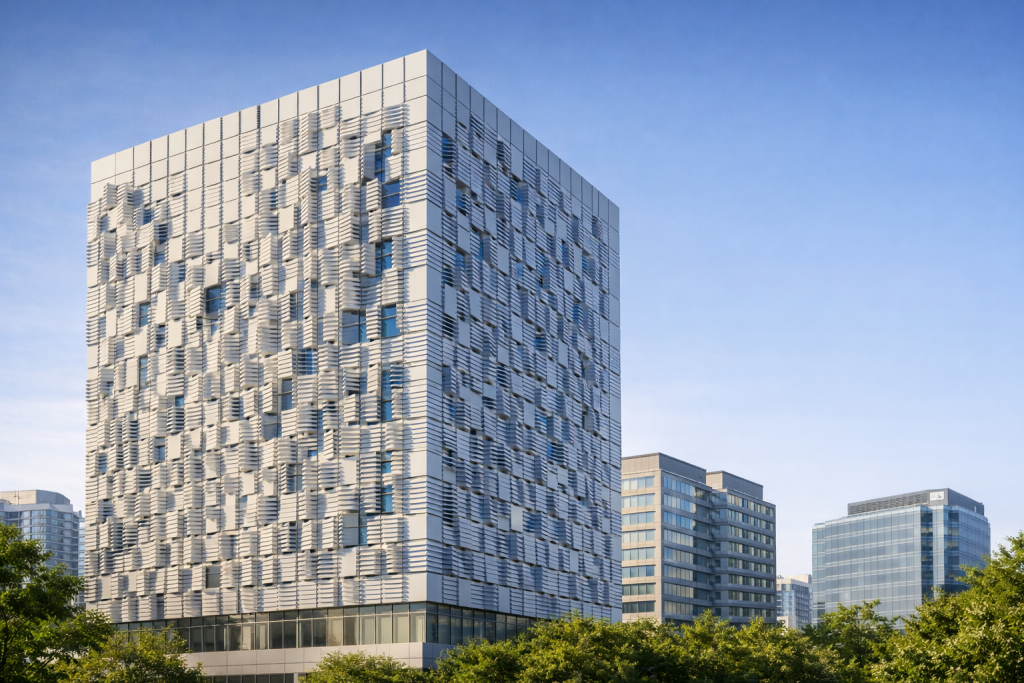
To make buildings more energy efficient and comfortable for their occupants, architecture researcher Dr Negin Imani from Bodeker Scientific is taking inspiration from nature. Since 2021, she has spearheaded nationally significant research on biomimetic adaptive building façades for energy efficiency, through two prestigious projects funded by the New Zealand Ministry of Business, Innovation and Employment. “An adaptive façade is a building ‘skin’ that can change depending on how much sun there is, or how hot or humid it is,” she explains. “This reduces the need for heating, cooling and artificial lighting inside, making buildings more comfortable and efficient.”
“We can learn from biological systems and apply natural ideas to buildings,” Negin continues. “It’s not about copying how something looks but understanding how it works and translating that logic into building design.”
Learning from leaves
“The inspiration for our biomimetic adaptive façade came from how plants use stomata to regulate heat and moisture,” says Negin. Plant leaves are covered in tiny holes called stomata which open and close to regulate heat, moisture and gas exchange. Their behaviour is governed by changes in environmental conditions such as temperature and humidity. Stomata tend to open during the day to let in carbon dioxide for photosynthesis, then close at night to preserve water. However, during drought conditions, stomata close to reduce water loss and prevent dehydration. In more humid conditions, they remain open as the risk of water loss is reduced, allowing for continued gas exchange. Negin and her multidisciplinary, multi-institution team are designing biomimetic adaptive façades that respond to environmental conditions, inspired by plant stomata.
Buildings with balance
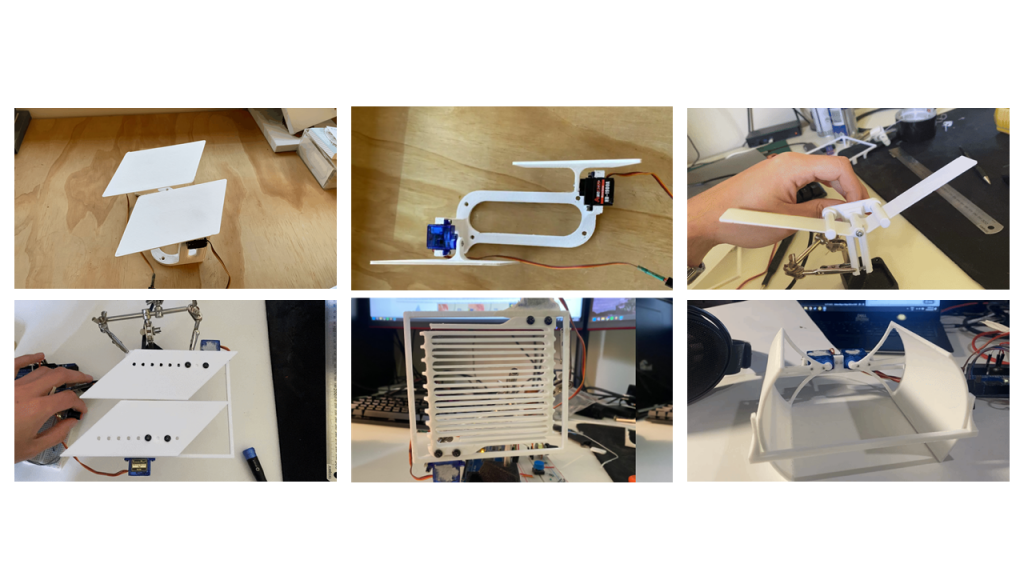
Negin has designed a shading system for an adaptive façade that includes both active and passive components. “Active systems depend on an external energy input (typically electricity) to move and use sensors, motors and control systems to respond dynamically to environmental conditions,” she explains. “They are very precise and responsive but can be complex and require ongoing maintenance.” In the motorised component of Negin’s shading system, rotating panels are controlled by artificial intelligence (AI) to adjust the amount of sunlight hitting a building’s windows, thereby altering the temperature and brightness inside to maintain maximum comfort and energy efficiency.
In contrast, passive systems do not need external energy input so are more energy efficient. They are made from materials that self-regulate by changing shape or properties in response to temperature, light levels or moisture in the atmosphere. “These materials can now be programmed through their composition, structure and fabrication process to behave in specific ways,” says Negin. She uses 4D printing to create materials that react to moisture, and has incorporated these into her shading system so that it also automatically responds to changes in humidity.
Intelligent designs
By combining an active motorised system with a passive shape-changing material, Negin has designed a shading system for an adaptive façade that responds to environmental conditions. “The active system, especially when supported by AI, gives control, precision and the ability to adapt the façade in real time, while the passive system provides an energy-free response,” she says. “Together, they create a smarter, more efficient and more responsive adaptive façade.”
Reference
https://doi.org/10.33424/FUTURUM694
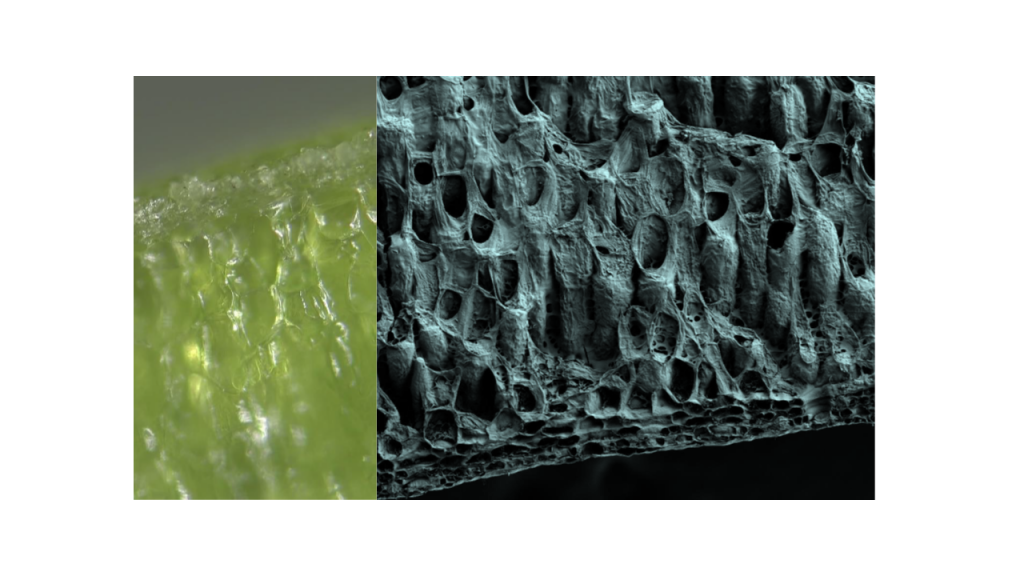
A cross section of Opuntia (prickly pear cactus) which has inspired Negin’s designs.
All images © Negin Imani




Both the active and passive parts of Negin’s system are inspired by how plants maintain thermal equilibrium. “The active system is biomimetic at a system level, using controlled movement to regulate sunlight, similar to how stomata adjust their opening,” Negin explains. “The passive system is biomimetic at a material level, behaving like plant tissue responding automatically to light and humidity.”
Trial by sun and water
After designing prototypes of her shading system, the next step was to test whether they were up to the challenge of becoming part of an adaptive façade. “We tested how the 4D printed materials reacted to different conditions by spraying them with water,” says Negin. “We then observed how they changed over time as they dried or were heated. By measuring how much they bent and how quickly they responded, we could understand how effective they were and how the design could be improved.”
To test the effectiveness of the motorised component of the shading system, Negin looked at how effectively the different rotating panel designs could control or block sunlight. She also needed to check if her ideas worked on a practical level. “When we tested different designs, we looked at how simple and robust they were, and how easy they would be to install and maintain,” she says. “Importantly, we also considered how they would look on a real building. It’s not just about performance; an adaptive façade also needs to contribute positively to the overall architectural design.”
Building on the work so far
One challenge for Negin and her team is making these designs simple, affordable and durable. “While there are several iconic buildings around the world that use adaptive façades, they are often very complex, expensive and difficult to maintain, so they’re not widely used,” says Negin. “We want to make these systems more practical, scalable and easier to apply in everyday buildings.”
It takes an interdisciplinary group of highly skilled experts to design and test adaptive façade systems. Negin and her team hope to use their innovations to improve the process of applying adaptive façades in real buildings.
 Dr Negin Imani
Senior Research Fellow, Bodeker Scientific; Senior Lecturer, Open Polytechnic, New Zealand
Fields of research: Architecture; building science, technologies and systems
Research project: Designing biomimetic adaptive building façades
Funder: New Zealand Ministry of Business, Innovation and Employment Endeavour Fund Smart Ideas
Website: biomimeticbuildings.org.nz
Do you have a question for Negin?
Write it in the comments box below and she will get back to you. (Remember, researchers are very busy people, so you may have to wait a few days.)
1 Comment
Submit a Comment

Discover how architects are using building design to promote social and environmental justice:
What famous buildings currently use adaptive facades?