
Tending to turfgrass: better understanding the effects of fungicide use
When competing in sports such as football, rugby or cricket, players want their turfgrass-covered playing surface to be as smooth and level as possible. But turfgrass, like other plants, can be susceptible to disease, and while fungicides can help to manage this, they can also lead to other problems. Dr Paul Koch from the University of Wisconsin–Madison in the US is researching fungicides to understand what negative, non-target effects they may have, and how these can be reduced to help maintain healthy turfgrass.
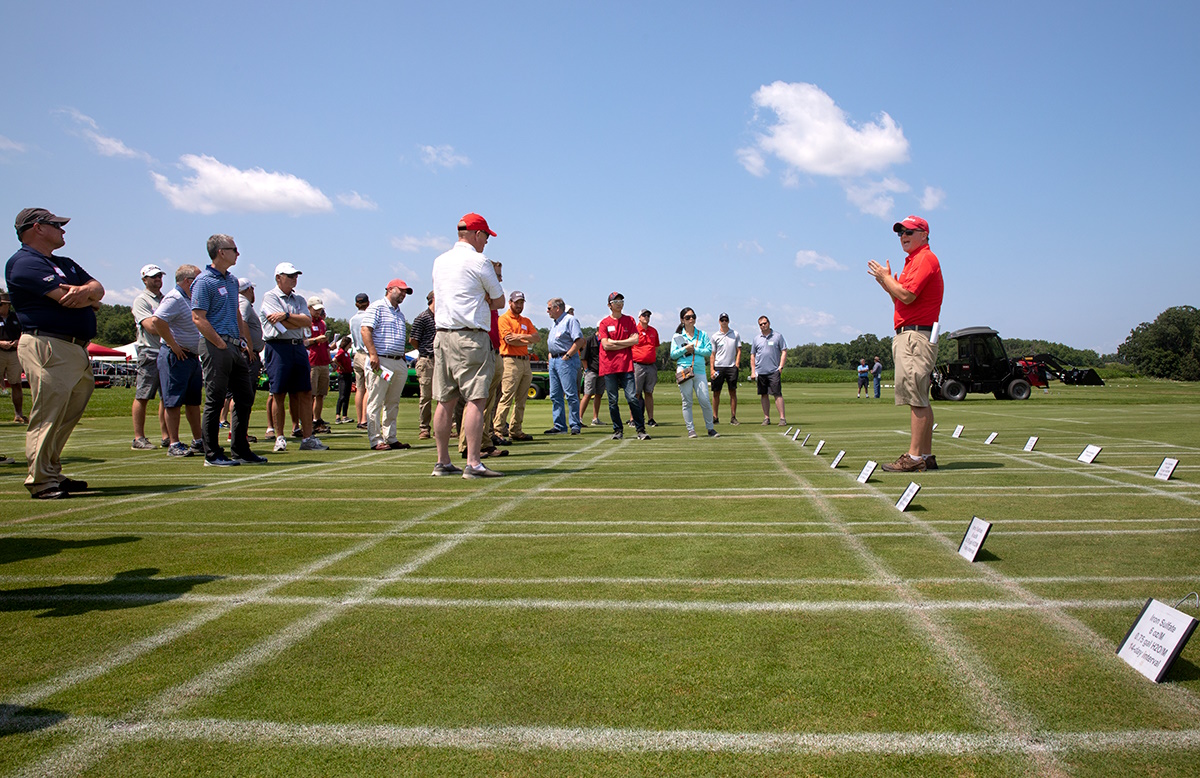
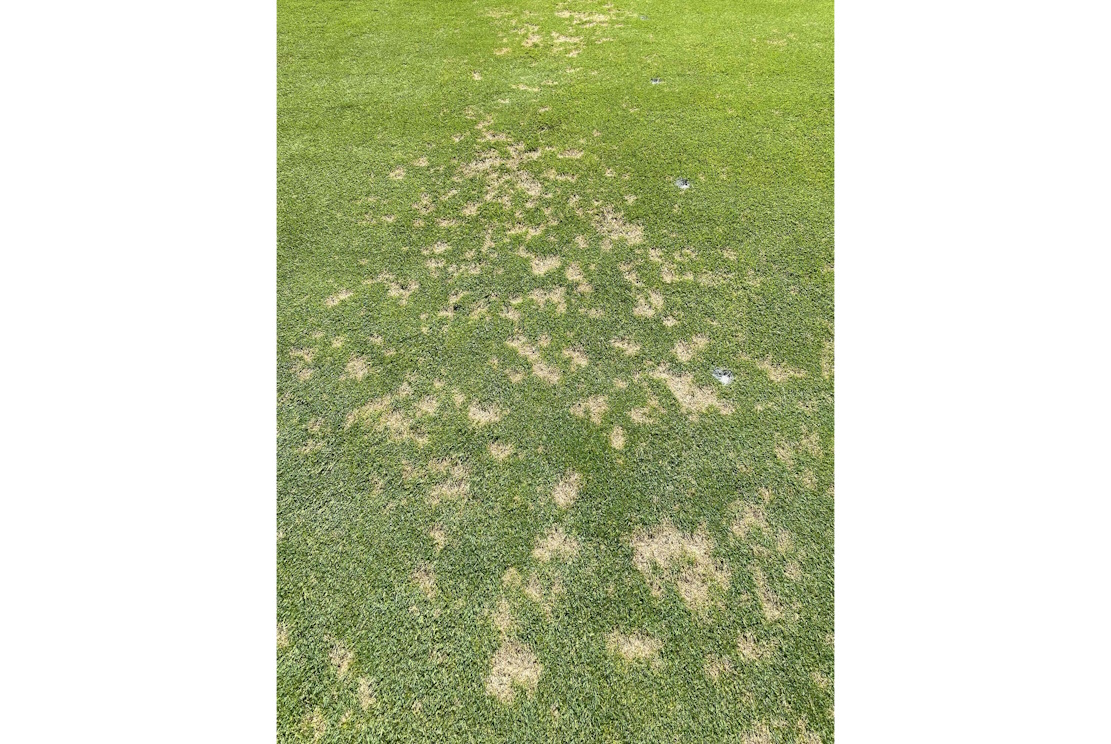
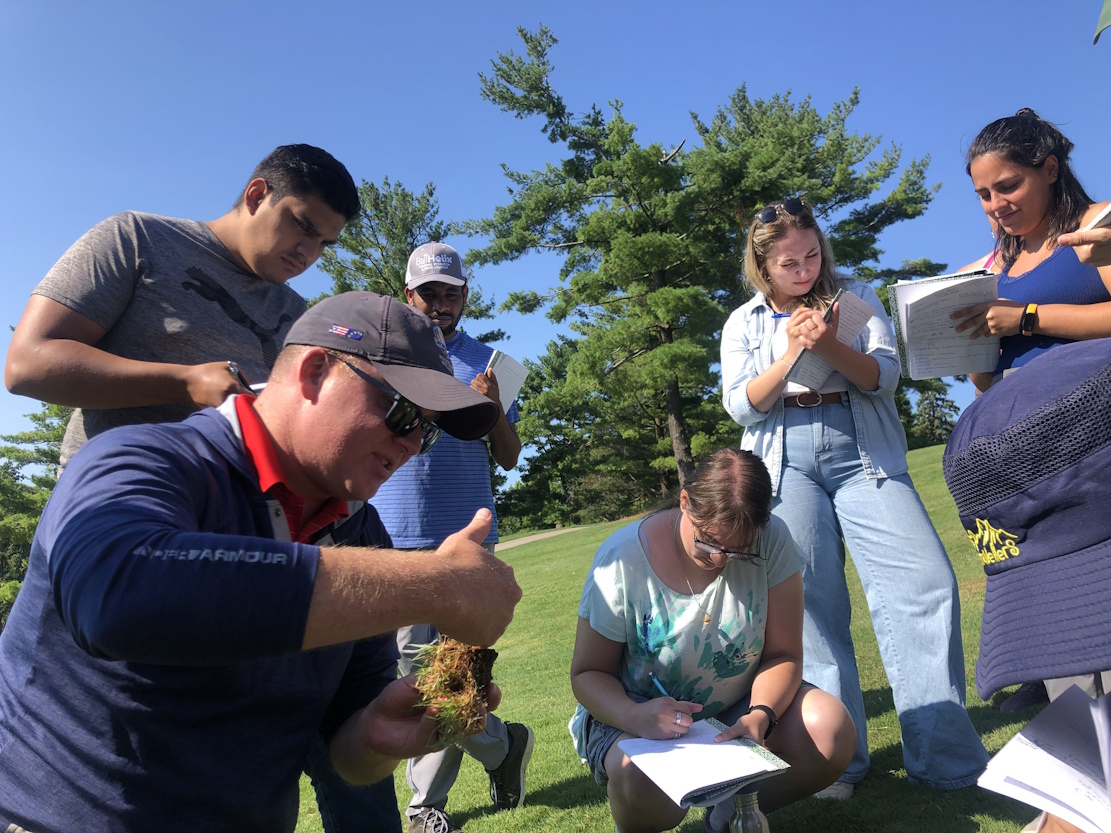
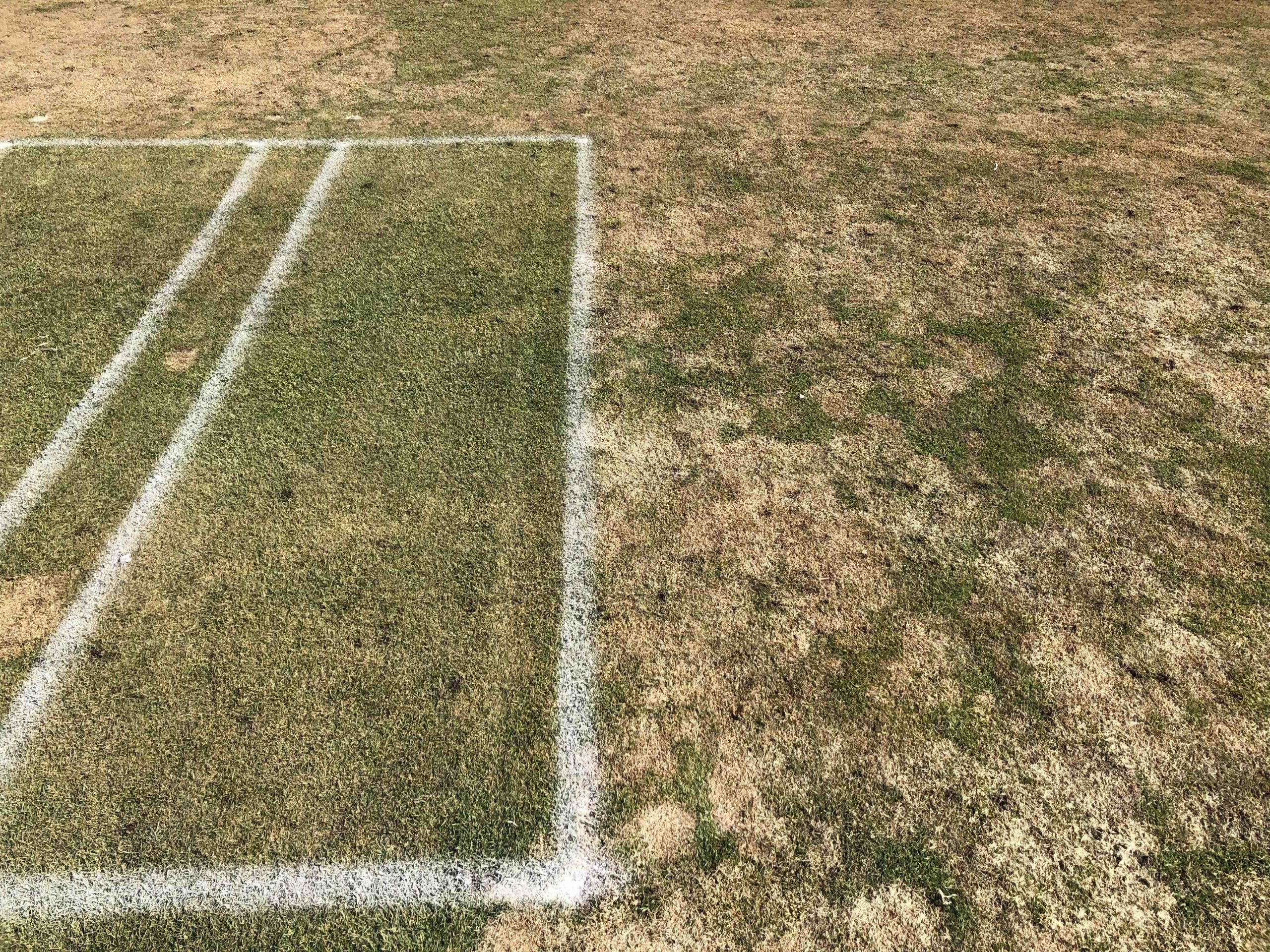
control options. © Michael King – UW Madison
 Talk like a …plant pathologist
Disease resurgence — the return or increase of a disease that had previously been managed
Fungicide — a chemical substance designed to kill or control disease-causing fungi
Metabolomics — the study of small molecules produced by cells or organisms during biological processes
Non-target impacts — unintended effects of a treatment on organisms or environments that were not meant to be affected
Pathogen — a microorganism, such as a fungus, bacterium or virus, that can cause disease
Pesticide — a substance used to control or kill pests that can harm plants, animals or crops
Sequencing — reading microbial DNA to identify and study the microbes present
Turfgrass — grass species that are grown and maintained to form a lawn or contiguous playing surface

Dr Paul Koch
Professor and Chair, Department of Plant Pathology, Molecular and Environmental Toxicology Center, University of Wisconsin–Madison, USA
Field of research: Plant pathology
Research project: Studying fungicides and their effects on turfgrass
Funder: US National Institute of Food & Agriculture (NIFA)
DOI: doi.org/10.33424/FUTURUM745
Picture the scene: a crucial penalty in the final moments of a football game, a dramatic catch in cricket or a winning try in a rugby match. What do all these moments have in common? Beyond the players and the desire to win, they all take place on turfgrass.
In many parts of the world, turfgrass is not hard to find. In gardens, sports fields and parks, those leaf-like green blades form a carpeted backdrop to scenes of daily life. “Turfgrass plays a critical aesthetic, environmental and economic role, especially in areas where most people live,” says Dr Paul Koch from the University of Wisconsin–Madison. “It can have environmental benefits such as urban cooling, flood prevention and carbon sequestration.”
Managing turfgrass requires numerous inputs such as water, fertiliser and pesticides. “These inputs are coming under greater scrutiny as climate change increases in severity,” continues Paul. “As such, my research focuses on how we can manage turfgrass systems in a more sustainable manner.”
Fighting fungi with fungicides
Paul studies fungicides and is interested in how they can be used effectively to control fungal disease, without causing other harm. “Fungicides are substances that suppress fungi and are often used in agriculture and medicine to control fungal diseases,” says Paul. “In agriculture, fungicides are often used to suppress fungal diseases on crops like potatoes, apples, corn and other plants.” If you’re a keen runner, you may have first-hand experience of a fungicide used in medicine. “The athlete’s foot cream you put on your skin is a type of fungicide,” explains Paul.
While fungicides can do a lot of good, they can also have negative side-effects, known as non-target effects. “Non-target effects are basically any effects besides the direct effect on the fungus itself,” says Paul. “This can include things like disturbing the good fungi, bacteria and other microbes nearby, harming pollinator populations, or causing serious health effects in people.”
Paul is particularly interested in the impact of fungicides on soil and plant microbiomes. “The microbiome is the collection of all microbes, such as fungi, bacteria and viruses, in a given environment,” says Paul. “What’s become pretty clear so far in our research, however, is that most fungicides currently in use today don’t have huge effects on the plant or soil microbiome.” In other words, they don’t kill off large sections of fungi or bacteria – their effects are more subtle. “But that doesn’t mean these subtle effects can’t have significant impacts on plant or soil health or how we manage disease,” continues Paul.
How to study fungicides
Paul uses a few different methods to study non-target effects. For example, sequencing is the process of reading and analysing the microbial DNA found in a sample (Paul often uses soil samples) to identify what microbes are present and how this might change once the sample has been exposed to fungicides. “We typically focus on the fungi and bacteria because they often make up the largest segment of the overall microbial population,” says Paul.
Microbes such as fungi and bacteria in soil are constantly active; recycling nutrients, growing and building cells, and responding to stressors. To study how exposure to fungicide may change microbial activity, Paul is using a technique called metabolomics. “This technique allows us to look at some of the chemicals the microbes produce which tells us how the activity of the microbes change after exposure to a fungicide,” he says.
The problem with fungicides
The harmful impacts of fungicides can vary. “Some may directly decrease a plant’s ability to fend off pathogens by stressing and weakening the plant,” says Paul. “Other fungicides can injure plants, especially at hot temperatures, making them more susceptible to certain fungal or bacterial infections.”
Paul believes that the biggest cause of disease resurgence may come from damage to the wider microbial community. Normally, helpful fungi and bacteria can compete with pathogens and help keep them under control. “If you have one fungicide that narrowly targets the fungus that causes disease and doesn’t really harm the surrounding ‘good’ fungi and bacteria, then you’re likely to see good disease control,” says Paul. But if a fungicide harms the helpful microbes as well as the target pathogen, this can lead to disease resurgence. “The pathogen can recover and have less competition, causing more damage than it did before,” explains Paul.
The power of turfgrass
“Our goal is to improve the sustainability of turfgrass management so that turfgrass can contribute to climate-resilient cities in the future,” says Paul. “At the moment, my research particularly focuses on pesticide use.” Turfgrass sites are often close to where many people live, work and play, so the application of pesticides must be monitored. “Reducing the non-target effects of turfgrass pesticides will help reduce pesticide exposure to people that reside near and interact with turfgrass on a regular basis,” continues Paul.
Paul and his colleagues have been able to collect large amounts of data on both turfgrass and corn. “My own lab has done quite a bit of analysis of the microbes that are present and, so far, we haven’t found a lot of changes in the turfgrass or corn microbiome following fungicide exposure,” he says. Other colleagues are using metabolomics to learn more about the impact of fungicide on the microbes. Paul says, “We’re excited to see what that data says.”

About plant pathology
Armed with knowledge, research tools and experience, plant pathologists spot clues to uncover the causes of plant diseases and to decide the best treatments to support the healthy growth of crops, grass and other plants. They investigate different pathogens, devise new and improved treatments, and study how plants and plant diseases are impacted by environmental conditions and climate change.
“Plant pathology is such a fun field to work in because it’s so broad and it intersects with so many different areas of science,” says Paul. “I’m often working with managers of the professional sports fields to make their field the best that it can be. Other plant pathologists in my department are determining how the signals that a fungus produces are sensed by the plant and how we can use that to control disease. Still others use huge amounts of data to predict when a disease outbreak might occur.”
Working in plant pathology can be tricky. “Both plants and microbes are living organisms, so they’re unpredictable,” says Paul. “While that unpredictability is part of the fun of the job, it’s also a challenge.” Paul recommends creating clear research plans and documenting observations and experiments carefully. He also says, “Be curious and look forward to all the awesome and unpredictable things that plants and microbes can lead to.”
All of this can lead to a varied and fascinating career. “Some days I’m in the field taking samples, collecting data or applying treatments,” says Paul. “Other days I’m in the lab extracting DNA, growing fungi or seeing how they respond to various external factors. Still other days I’m on the computer running analysis on all the data we’ve collected. If you like to do the same thing every day, plant pathology probably isn’t for you!”
Pathway from school to plant pathology
“Plant pathology encompasses both plants and microbes,” says Paul. “Courses that will help you understand the plants include ones like botany and soil science. Microbiology courses on bacteria, fungi, viruses, nematodes and other microbes will help you understand the microbes.”
“In college and at university you can take plant pathology courses that look specifically at how microbes and plants interact,” continues Paul.
Get your hands dirty. Dig around in the soil and see what you notice. Find out if there are any opportunities to support researchers in your local university – any hands-on experience will be invaluable.
Explore careers in plant pathology
“There are many careers available in plant pathology,” says Paul. “There are careers in academia that include professors, researchers, outreach specialists and teachers. There are careers in private industry that include agronomic consultants, biotech researchers, synthetic and biological pesticide developers and others. There are also careers in government that involve pesticide regulations and invasive species work.”
“The American Phytopathological Society (apsnet.org) is the largest US association for plant pathologists and has numerous resources for those interested in learning more,” continues Paul. “Internationally, there is the International Society for Plant Pathology (isppweb.org) which is another great resource for budding plant pathologists.”
“Our Department for Plant Pathology at the University of Wisconsin–Madison is a world leader in plant pathology research and education and our website has several excellent resources to learn more about plant pathology,” concludes Paul: plantpath.wisc.edu
Meet Paul
 As a teenager, I liked biology and sports. I wasn’t very good at any of the sports I played, and I didn’t have some grand plan to integrate my interest in sports and biology. Still, it sort of turned out that way in the end because I work with a lot of golf course superintendents and sports field managers.
The people I work with are incredible and so appreciative when I help them solve a problem they’re having. In addition, I love that my job is so different from day to day.
There are two things that motivate me in my work. One is to help people solve the problems they’re having with their turfgrass. This can be anyone from a homeowner having trouble with their lawn to the superintendent of a golf course who is about to host the world’s best golfers. The second is a desire to solve serious problems through science-based solutions.
I think the traits that have helped me succeed are a natural desire to help people, treating people with respect, a curiosity to figure out things we don’t currently have an answer for, and responding to people’s messages in a timely manner.
To unwind from work, I enjoy running around with my two young kids and following their activities. I also like to read and travel.
Paul’s top tip
Because plant pathology is such a broad field that intersects with so many other fields of biology, get a bunch of different experiences. Work for a summer on a farm or orchard so you understand how plant disease impacts farmers and food security. Get a summer internship in a research lab so you know how research works and begin to hone your scientific skills. And just be ready for whatever opportunities arise, because plant pathology has a lot of them.
Do you have a question for Paul?
Write it in the comments box below and they will get back to you. (Remember, researchers are very busy people, so you may have to wait a few days.)
Related article

Discover how plant scientists are using inventive remedies to manage plant pests:
futurumcareers.com/ingenious-solutions-for-outwitting-plant-pests
0 Comments