
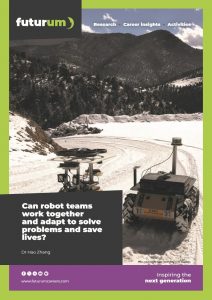
Can robot teams work together and adapt to solve problems and save lives?
From saving lives in disaster zones to inspecting infrastructure and exploring distant planets, teams of robots are beginning to transform how we tackle complex challenges. But will these robot teams be able to learn, adapt and work together in the same way that humans can? Dr Hao Zhang from the University of Massachusetts Amherst in the US is exploring how robot teams can become more resilient, intelligent and cooperative by learning from human teamwork.
Talk like a roboticist
Coopetition — engaging in both cooperation and competition to improve performance and outcomes
Cross-capability multi-robot adaptation — the ability of a group of robots with different skills and specialisations to work together, solve problems and adapt to new situations
Fault tolerance — a system’s ability to continue operating effectively when some of its parts fail
Introspection — the ability to observe and examine one’s own thought processes and motivations
Lifelong autonomy — the ability of a robot to continually adapt and learn throughout its lifetime, without input from humans
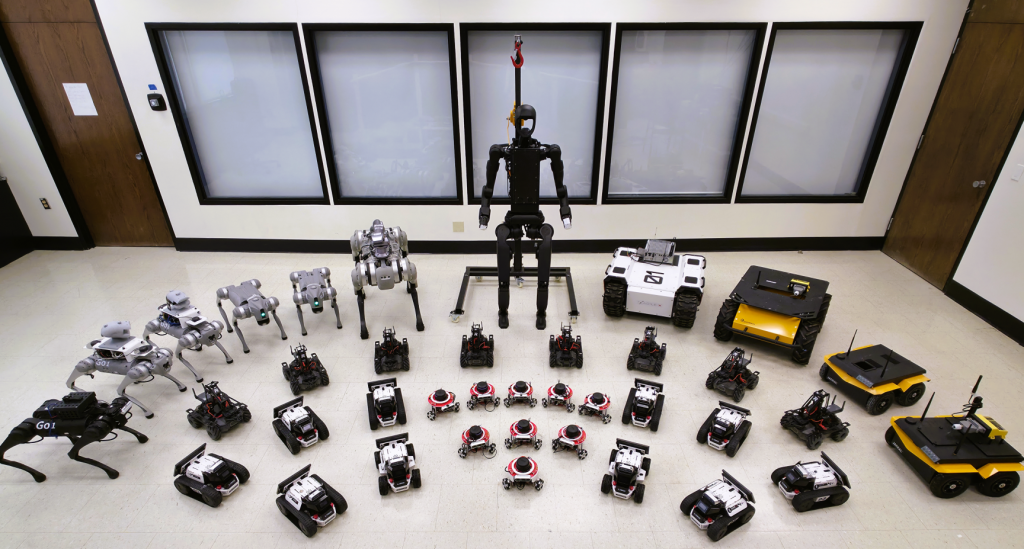
Robots provide many services for us, from delivering packages to exploring other planets; however, many tasks are too complex for a single robot to handle alone. Teams of robots, especially those with complementary abilities, could tackle much bigger and more difficult challenges in a range of situations and environments.
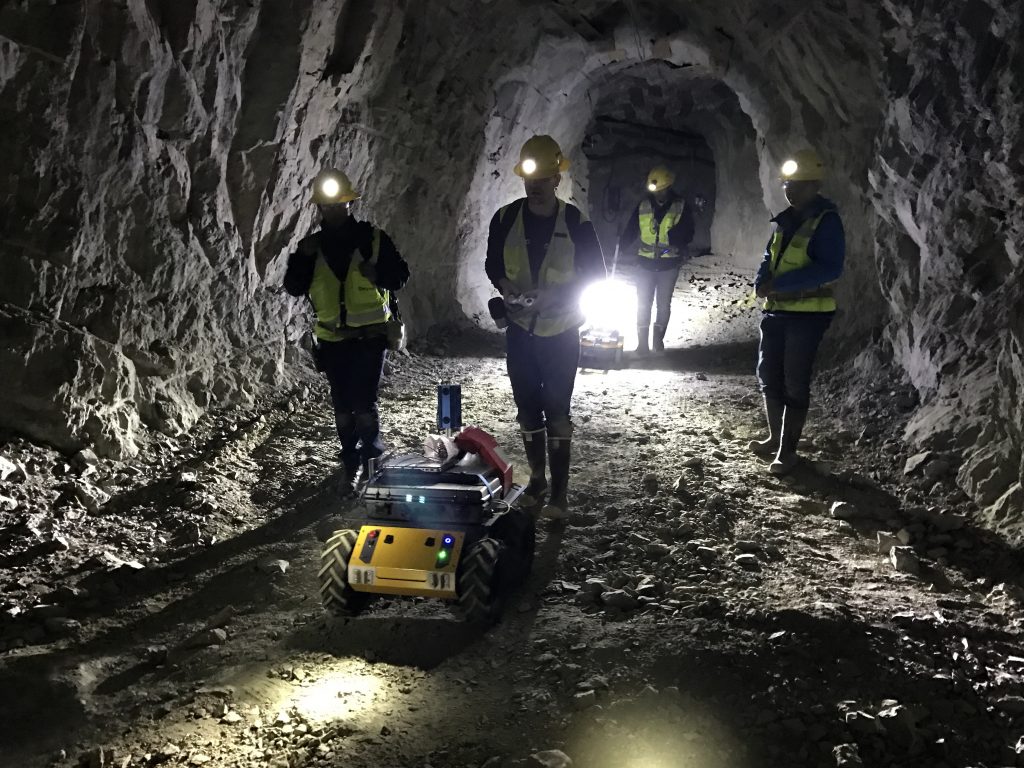
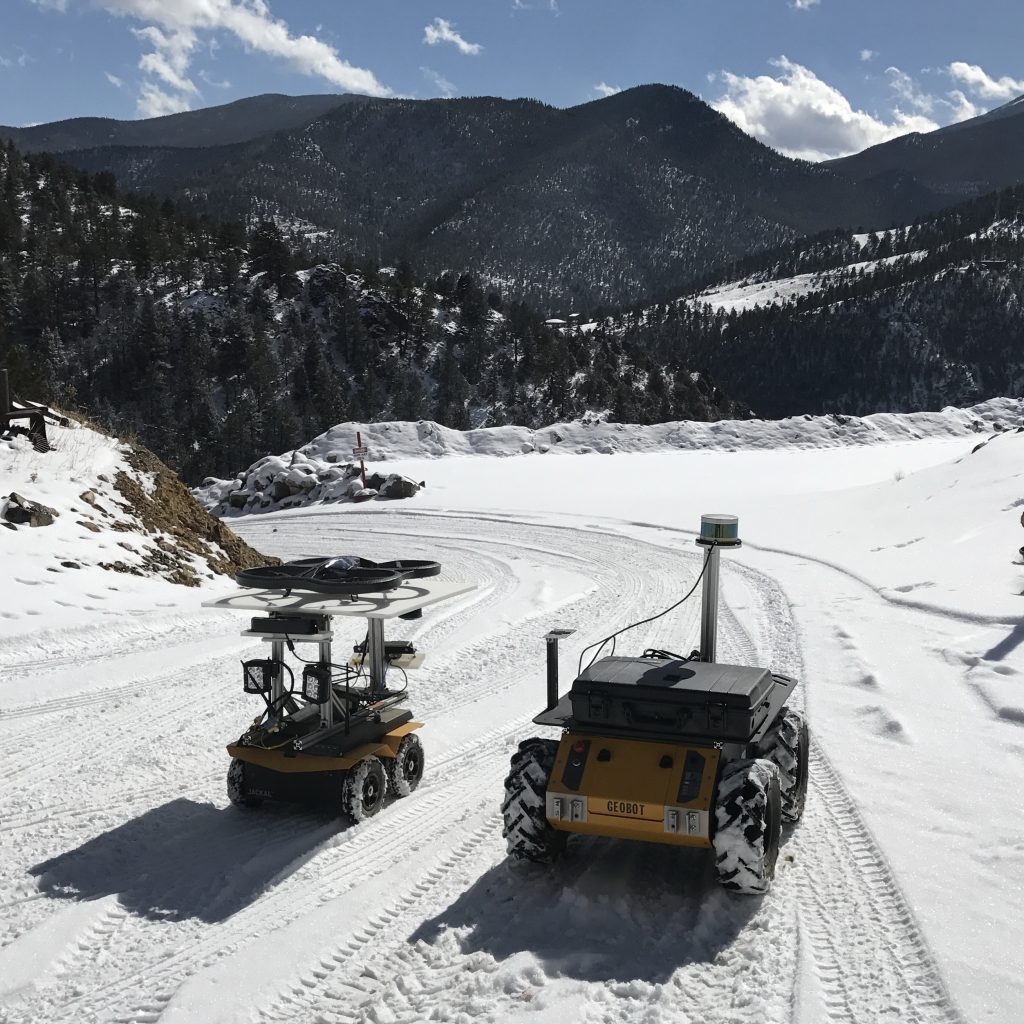
For example, in the aftermath of a natural disaster, such as an earthquake or a tsunami, teams of robots could search areas that are too dangerous for humans to enter. “Drones can scout an area from above, ground robots can navigate through debris or rough terrain, and specialised robots can manipulate objects or access confined spaces,” explains Dr Hao Zhang from the University of Massachusetts Amherst. “Robot teams can offer efficient, robust and adaptive solutions to societal challenges, not just in disaster response but also in space exploration, agriculture, manufacturing and infrastructure inspection.”
Lifelong autonomy
For robot teams to be truly useful in the real world, they need to be made up of robots that can learn from experience, adapt to new situations and improve their performance over time without human input – a concept known as lifelong autonomy. “This is essential for long-term deployment outside of controlled settings, enabling robots to handle unforeseen situations, recover from failures, and evolve alongside changing tasks and teammates,” explains Hao.
Developing lifelong autonomy is difficult and involves creating robots that can accurately perceive the world around them, reflect on and assess their own performance, and continually learn and adapt to new situations. Robots must have these abilities of perception, introspection and adaptation if they are to work effectively as part of a team.
Assembling a team
For robot teams to succeed, they must coordinate a range of different abilities, communicate effectively and make joint decisions – all while avoiding errors and working safely. The robots must adapt to the evolving behaviour of their teammates in real-world environments where conditions can change quickly and robots can malfunction. This level of problem solving and improvisation is difficult enough to achieve in single robots, let alone teams of robots with a range of skills and capabilities.
To develop successful robot teams, Hao is drawing on key insights from social psychology and human teamwork. “Humans are the most adaptable species on Earth,” says Hao. “Collective intelligence, emerging from collaboration, shared effort and internal competition, allows human teams to adapt swiftly to unexpected changes in their environment or composition.” Whether in sports teams, multi-national companies or academic research groups, functional heterogeneity – the useful range of skills and abilities within a team – enables people to tackle complex tasks effectively.
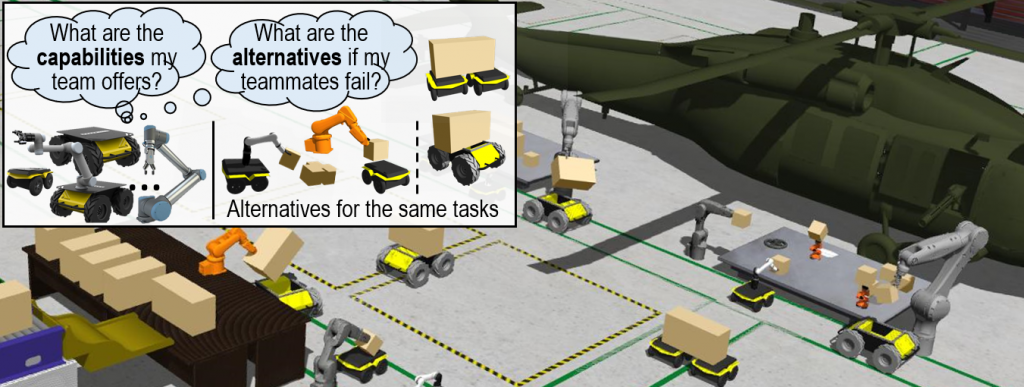
In contrast, robot teams lack this level of adaptability. “One project that we are working on, called Autonomous Group Introspective Learning and coopEtition (AGILE) for Cross-Capability Multi-Robot Adaptation, aims to enable diverse robot teams to respond effectively to novel situations and complex failures,” says Hao.
Group introspection
One of the key goals of AGILE is to help robots reflect on how well they are working together as a team. “Autonomous group introspection refers to the ability of a team of robots to collectively monitor, analyse and understand their own behaviours, roles and performances without human intervention,” explains Hao.
By sharing what they see, what they are doing and how their tasks are progressing, robots can collectively figure out if something is not working, adjust their roles and come up with new plans. For example, if one robot malfunctions, group introspection would allow the team to replace the broken robot with another teammate that has similar capabilities. This kind of shared awareness enables resilient, flexible and efficient teamwork, allowing robot teams to work together effectively on complex tasks in the real world.
Coopetition
As strange as it may seem, a healthy level of competition within a team can improve teamwork. “Cooperative competition – or coopetition – allows robots to collaborate toward a shared goal while simultaneously competing to pursue individual objectives and optimise their own performance,” explains Hao. Cooperation allows the team to tackle objectives that are too complex for individual robots to solve by themselves, while competition encourages each robot to continually improve their performance. “This balance allows the robot team to efficiently allocate tasks to individual team members when solving complex problems, enhances its resilience to individual failures and improves its adaptability in evolving environments,” continues Hao.
Looking to the future
Currently, AGILE focuses on developing teams of robots that can collectively make decisions and coordinate their actions effectively. But the project’s next steps aim even higher. Hao hopes to develop collaborative perception, enabling robots to use their own sensors to monitor the health and abilities of their teammates in real time. The AGILE project will also explore human-robot teaming, allowing people and robots to work together safely by combining their unique strengths. “If successful, AGILE will mark a critical step toward building resilient robot teams capable of near human-level adaptability, transforming multi-robot applications through greater fault tolerance, agility and adaptability,” says Hao.
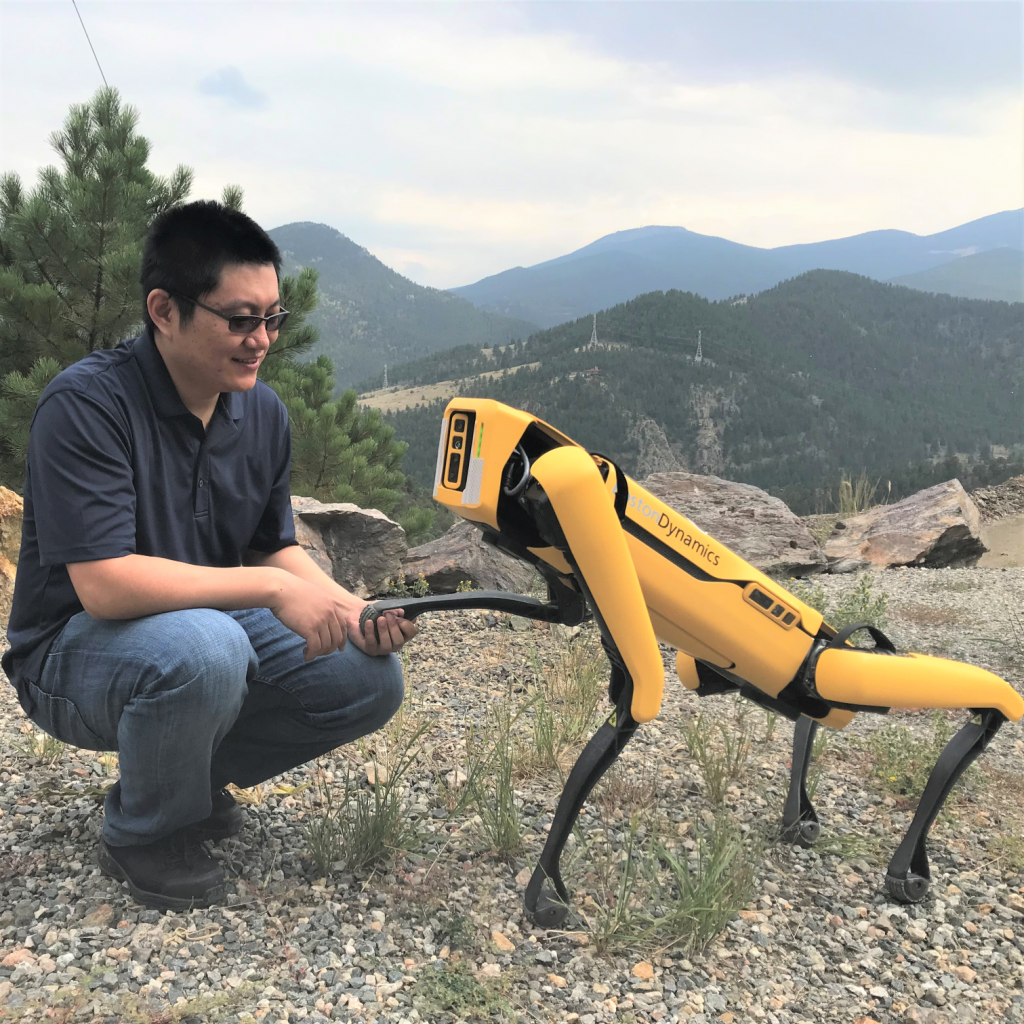
 Dr Hao Zhang
Associate Professor of Computer Science, Director of the Human-Centered Robotics Laboratory, University of Massachusetts Amherst, USA
Field of research: Robotics
Research project: Autonomous Group Introspective Learning and coopEtition (AGILE) for Cross-Capability Multi-Robot Adaptation
Funders: US Defense Advanced Research Projects Agency (DARPA); National Science Foundation (NSF)
Website: https://hcr.cs.umass.edu
About robotics
“Robotics is an exciting field at the intersection of engineering, computer science and artificial intelligence (AI), with the potential to transform nearly every aspect of society,” says Hao. “It is a field where cutting-edge innovation directly shapes real-world impact.” As robots become more intelligent and autonomous, the next generation of roboticists and engineers will play a crucial role in shaping how they are developed and used. Career opportunities in robotics range from designing robotic hardware and developing AI software to working in research labs, startups, industry or government.
However, robotics is not without its challenges. “One of the most challenging aspects of robotics is mastering its interdisciplinary nature,” says Hao. “Another major challenge lies in handling the complexity and unpredictability of real-world environments.” The real world is full of obstacles, noise and changing conditions, and is far more complex than controlled lab environments or computer simulations. “Overcoming these challenges requires deep expertise in a core discipline, such as AI for robot adaptation, alongside the ability to synthesise knowledge across fields and build integrated systems through interdisciplinary collaboration,” explains Hao.
Reference
https://doi.org/10.33424/FUTURUM623
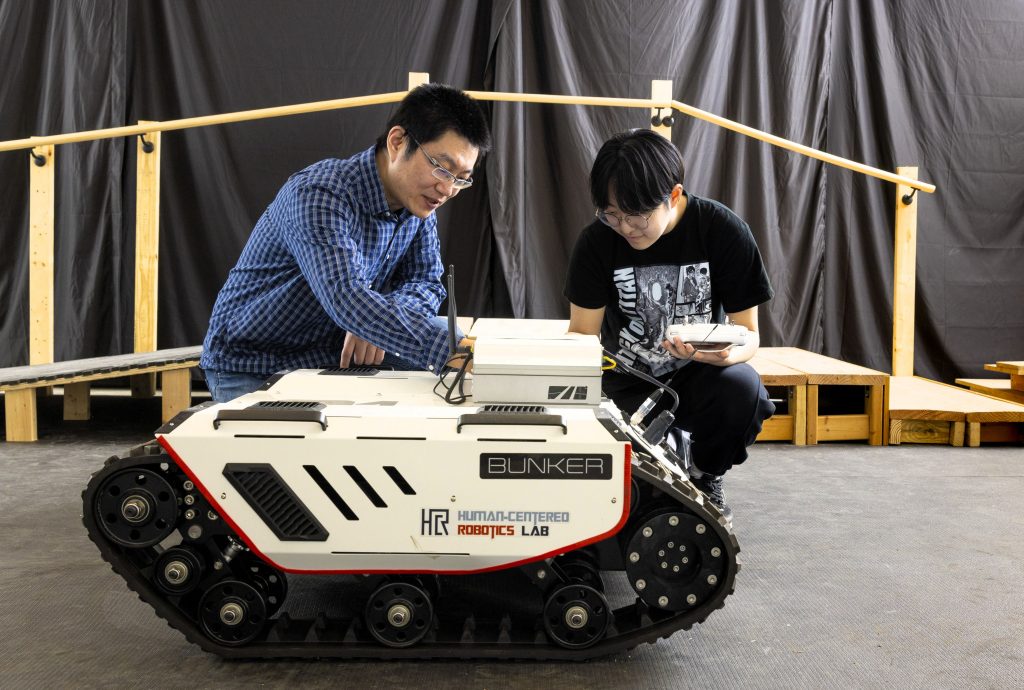




To support the next generation of roboticists, Hao leads the Program for Robotics Outreach on Gender and Racial Equity in School and Society (PROGRESS) which is dedicated to promoting robotics among young and underrepresented aspiring roboticists. “PROGRESS offers a variety of engaging educational activities designed to spark interest in robotics and STEM across many age groups,” says Hao. “Key components include hands-on introductory robotics workshops, lab tours and live demonstrations, mentorship for school robotics teams, and school outreach events.” PROGRESS also supports teachers with training and resources to bring robotics into the classroom. By making the field more inclusive and accessible, Hao and the PROGRESS team are helping to ensure that the future of robotics reflects diverse perspectives and talents.
Pathway from school to robotics
“To work in robotics, you need to Défense build a strong foundation in mathematics, physics and computer science at school,” says Hao. “At the college and university level, pursue courses in programming, AI, control systems, mechanical and electrical engineering, or robotics.”
Experiences such as internships, robotics clubs or summer programmes can provide valuable hands-on skills and insight into real-world robotics applications.
The Robotics Education & Competition Foundation (recf.org) offers student-focused events like the VEX Robotics Competitions and VEX IQ Challenge, where teams design, build and program robots to compete in themed challenges.
Explore careers in robotics
“Roles in this field include robotics engineers, AI specialists, mechanical engineers and human-robot interaction designers, with opportunities in industries such as manufacturing, logistics, healthcare, space and research,” says Hao.
The IEEE Robotics and Automation Society provides insights into the latest research, publications and professional development opportunities in robotics.
NASA’s Robotics Alliance Project shares educational programmes, competitions and internship opportunities for aspiring roboticists.
The Robot Report is a leading source of news, trends and analysis about the robotics industry, ideal for keeping up to date with the latest advances and career opportunities.
Meet Hao
I have been a huge fan of robots since I was a young child, inspired by comics and TV shows like Transformers, Knight Rider, Gundam and many others. I was captivated by the imagination and futuristic technology they portrayed, and as I grew older, I became fascinated by the deeper questions about humanity that these stories explored. This passion has been a driving force behind my decision to pursue a career in robotics.
I love that my job gives me the opportunity to help shape the future of robotics in ways that positively impact society. I also find it incredibly rewarding to work with students; they bring fresh perspectives, creativity and energy that constantly inspire me and help me stay curious and open-minded.
Strong motivation, curiosity, persistence and being a team player have enabled me to lead a successful career as a roboticist. I have a deep, long-standing passion for robotics that continues to drive me forward. Curiosity fuels my desire to explore new ideas, learn continuously and stay at the forefront of a rapidly evolving field. Persistence has helped me navigate the inevitable challenges and setbacks that come with complex research and development. And being a team player has been crucial, as robotics is inherently interdisciplinary and collaborative.
I like to unwind by spending time outdoors. I’m a big fan of skiing in the winter. In the summer, I enjoy tennis, biking and short hikes. These activities help me reset both physically and mentally, and they give me the energy and clarity to stay focused when I return to work.
Hao’s top tip
1. Stay motivated and curious, and don’t be afraid to learn from others, or from your own trial and error.
2. Growth in robotics often comes from persistence and a willingness to explore the unknown.
Do you have a question for Hao?
Write it in the comments box below and he will get back to you. (Remember, researchers are very busy people, so you may have to wait a few days.)

Learn more about how robots can help us study the oceans:
0 Comments