
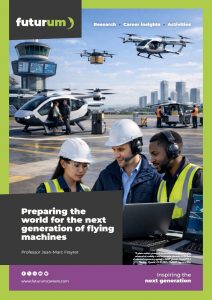
Preparing the world for the next generation of flying machines
Advanced air mobility could revolutionise how we transport people and goods. The technology for new aerial vehicles, focused on sustainability and automation, is developing fast – but to make them a reality, we need to understand how they can integrate into today’s world. In Canada, Professor Jean-Marc Frayret, of the Polytechnique Montréal, and his colleagues at the SDG Institute of Advanced Air Mobility are using advanced ‘digital twin’ simulations and other industrial engineering techniques to research how technologies such as drones, flying taxis and vertiports could move from science fiction to reality.
Talk like an industrial engineer
Advanced air mobility (AAM) — a rapidly-emerging aerospace sector focused on systems that support next-generation air transport
Aerospace — the science and industry of aircraft and spacecraft
Digital twin — a virtual representation of a physical system, object or process that uses real-time data to support design and operations decisions
Demographic — relating to different groups within a population of people
Drone — a flying device that can be controlled remotely
Hybrid — combining two or more energy sources (eg., a hybrid car can run on electricity or petrol/ diesel)
Optimise — making something the best it can be (for example, the most energy efficient)
Vertiport — a take-off and landing site for aircraft that take off and land vertically
Flying cars, electric planes and AI-powered delivery drones are regular features in science fiction, but it might not be long until they become a reality. However, it is not as simple as developing these technologies and releasing them into the world. Before these technologies can become part of our daily lives, a few conditions must be in place, such as supporting infrastructure and networks, operational knowledge and societal acceptance.
These new technologies are known collectively as advanced air mobility (AAM). “AAM is a new transportation system that uses innovative aircraft, often electric or hybrid, that are capable of vertical take-off and landing,” says Professor Jean-Marc Frayret of Polytechnique Montréal and the SDG Institute of Advanced Air Mobility. This transportation includes the movement of people and goods in both urban and regional contexts and opens up a wide range of possibilities: air taxis, flying ambulances, and drones of all sizes and capabilities, to name a few. “AAM can help reduce the carbon footprint of existing mobility systems, provide new flexible transportation options, accelerate supply chains and enable advanced data collection,” says Jean-Marc.
Why Canada?
The SDG Institute of Advanced Air Mobility is based in Montréal, Canada, and for good reasons. “Montréal is recognised as a global aerospace hub, home to major manufacturers and a highly developed industrial ecosystem closely connected to local universities and colleges,” explains Jean-Marc. “More broadly, Canada has a uniquely rich environment for studying and deploying AAM, combining real-world complexity with world-class expertise.”
The region has a wide array of terrains and environments, from fields to forests to cities. “This geographical variability is matched by Canada’s extreme climatic variability,” says Jean-Marc. “From winter snowstorms to summer heatwaves, we can test AAM systems under many different environmental conditions.”
Urban centres like Montréal suffer from severe traffic congestion and have a high demand for sustainable transport alternatives – challenges that AAM could provide solutions to. In contrast, Canada’s rural northern communities are very hard to reach over land, which impacts the services, resources and opportunities they can access. AAM could potentially connect these communities, offering easy transport of both people and resources between remote and highly-populated areas.
Preparing for take-off
Integrating such radically different vehicles into our current system will not be straightforward – which is where scientists, managers, social scientists and engineers, like Jean-Marc and his team, come in. “AAM is not just about new aircraft and propulsion technologies,” he says. “Its success depends on building a complete ecosystem of interconnected social and technical systems.” This will involve a huge shift in societal infrastructure, but the team is up for the challenge.
“One facet of this new ecosystem that we’re focusing on is ‘vertiports’ – the places where AAM vehicles can take off, land, recharge and board passengers or cargo,” says Jean-Marc. “This includes both high-tech hubs in urban areas and simple landing pads in remote areas.” Jean-Marc’s team is developing advanced decision-support systems to facilitate this process, considering suitable vertiport locations, energy requirements and how such ports will operate day-to-day.
In addition to designing, building and supplying these facilities, policymakers will need to design measures to effectively manage this new influx of vehicles. “This will require a new generation of air traffic management tailored to low-altitude operations, including unmanned vehicles,” says Jean-Marc. “Unlike traditional air traffic control, this system will consist of digital, automated systems designed to coordinate both piloted and autonomous aircraft.” Getting these systems right is crucial – errors could result in catastrophe. But a smooth system could enable fine control of many aircraft at once, far beyond what humans could achieve manually.
Digital twins
To trial such systems before they become a reality, Jean-Marc and his team use simulations. “A digital twin is a virtual replica of a physical system that simulates, predicts and optimises real-world performance,” explains Jean-Marc. “Digital twins can represent individual aircraft, vertiports or even the entire mobility network of a city.” An important factor that distinguishes digital twins from traditional systems is that they are directly connected to live operational data – meaning they evolve over time. “We can test scenarios such as weather disruptions, emergency landings or passenger demand peaks in a safe virtual environment,” explains Jean-Marc. “This supports decision-making in the real world around the development and eventual operation of AAM systems.”
These models will lay the groundwork for new AAM systems, as well as build societal confidence in these technologies. “We have to integrate societal realities,” says Jean-Marc. “This includes seasonal challenges, demographic diversity and social acceptance.” One aspect of this involves demonstrating how economically feasible AAM systems are – that, financially, they can be created and maintained. Another aspect involves thinking about how wider society will respond to these changes. Many people will have serious reservations about these technologies and how they may be used or abused. “Citizens must perceive AAM as beneficial, fair, safe, and not disruptive or elitist,” says Jean-Marc. “This means they must be designed and implemented with these perceptions in mind.”
Reference
https://doi.org/10.33424/FUTURUM664
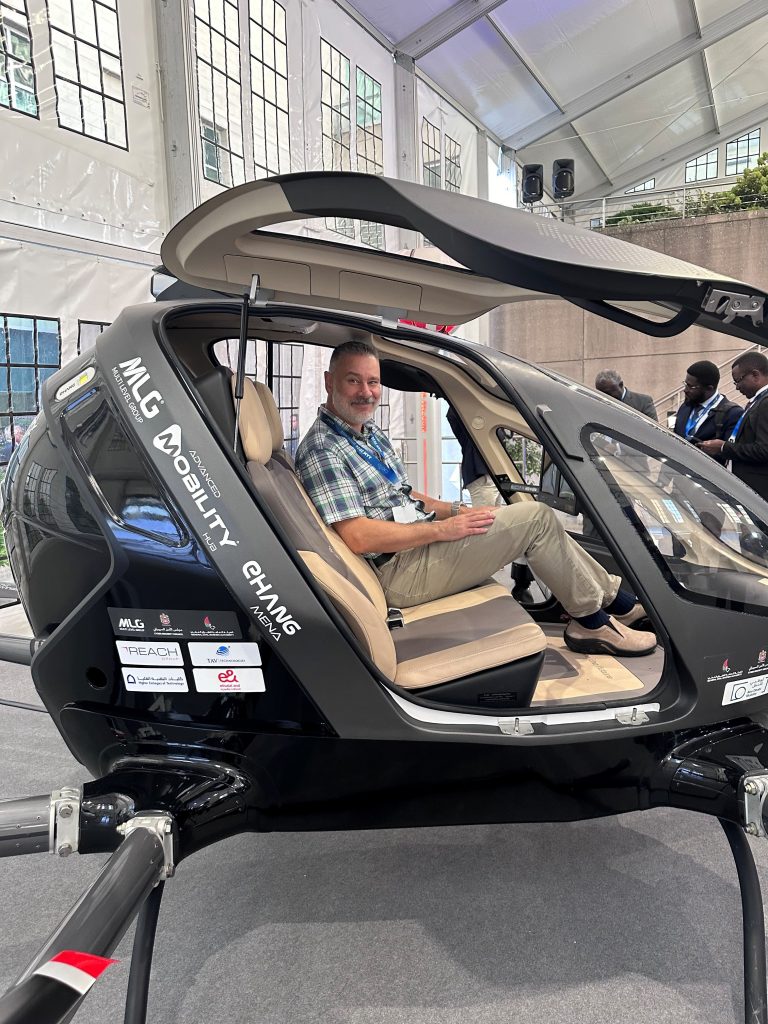
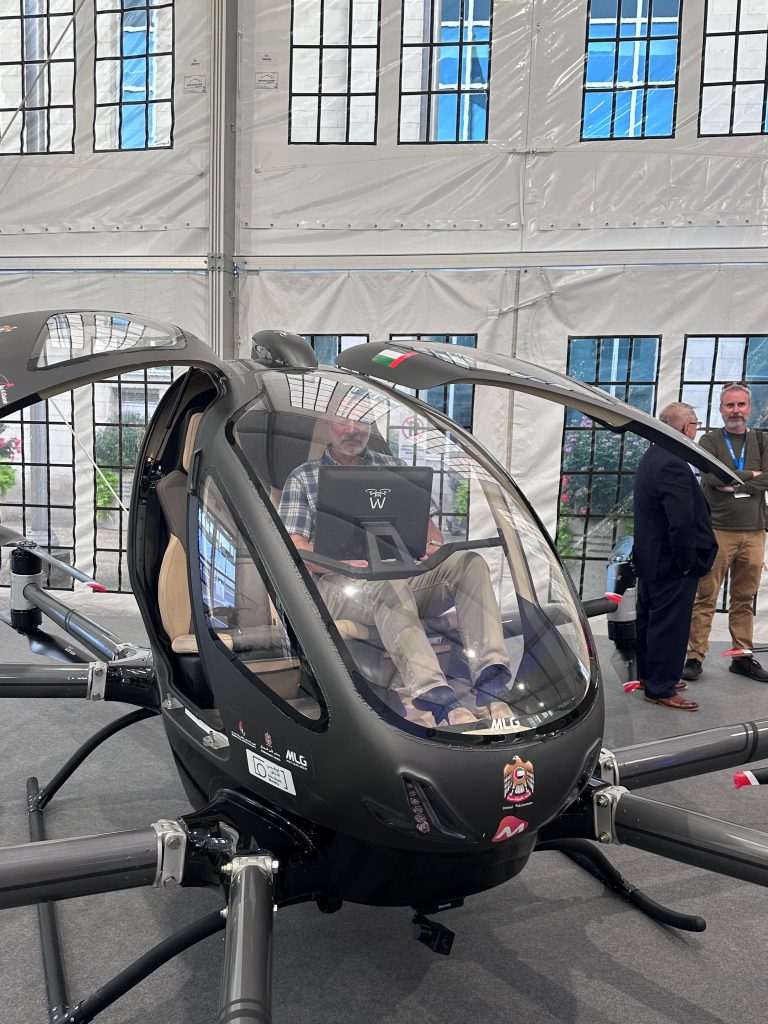
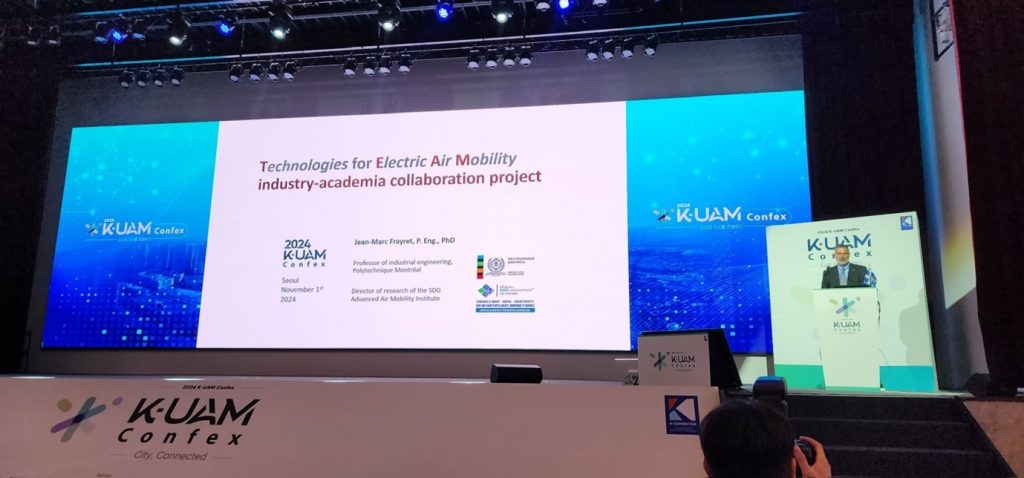
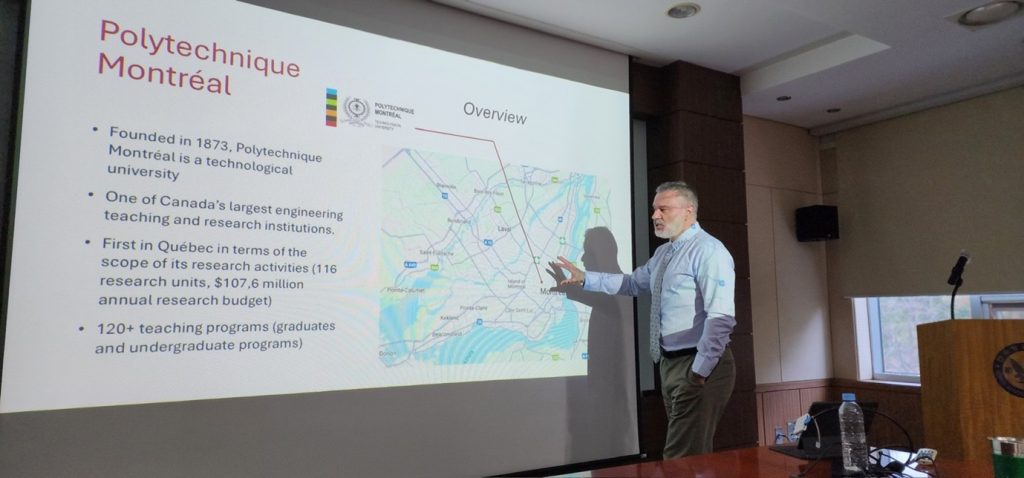
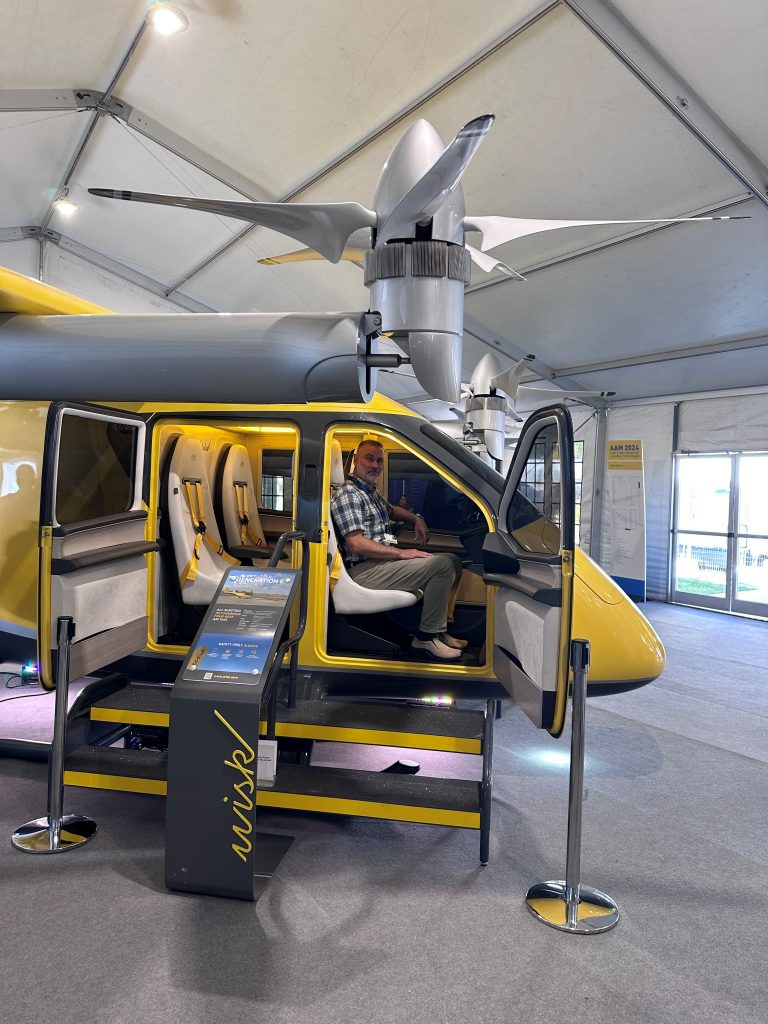
Wisk Gen 6 Model (presented at ICAO’S First Advanced Air Mobility Symposium, Montreal, 09/2024)
All photos © Jean-Marc Frayret




What’s next?
The team’s research is in its early stages but has already made significant leaps. “We have a running vertiport simulation model that enables us to study the flow of passengers through the travel process,” says Jean- Marc. “This means we will soon be able to assess the relationship between passenger experience and vertiport design features.”
The team has also begun creating a 3D model of Montréal’s airspace and how it is currently used, with the aim of integrating AAM systems to understand how all airspace users can coexist. “For the rest of the programme, we need to recruit students!” says Jean-Marc. “The work and ideas of the next generation of industrial engineers are essential for our success.”
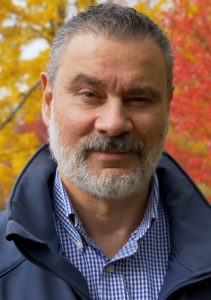 Professor Jean-Marc Frayret
Department of Mathematical and Industrial Engineering, Polytechnique Montréal;
Director of Research, SDG Institute of Advanced Air Mobility, Canada
Fields of research: Industrial engineering; aeronautics; business administration; computer sciences
Research project: Advanced air mobility research in Canada
Funders: Aéroports de Montréal; Humanitas Solutions
Collaborator: Espace Aéro
About industrial engineering
Industrial engineering involves the design, operation and continuous improvement of industrial processes, in particular optimising complex systems. “Industrial engineering can be applied to any complex system where people and technologies interact, which is intrinsically rewarding,” says Jean-Marc. Work in this field requires many different disciplines coming together, from expertise in fundamental engineering principles through to knowledge of how societies function and develop.
And given that new technologies are always developing and become ever-more complex, careers in the sector are continually growing and diversifying. “Research opportunities in the field are virtually limitless,” says Jean-Marc. “New technologies and systems are constantly emerging and must be integrated and adapted to meet societal needs such as profitability, sustainability and safety.”
Advanced air mobility (AAM) is one important example of the new frontiers that industrial engineering is embracing. “Working on AAM allows me to contribute to a creative process that is shaping entirely new forms of mobility that will have meaningful social impact,” says Jean-Marc. “The field requires continuous learning and exploration of methodological and technological solutions.” Given that such efforts could reshape the world as we know it, industrial engineers have a lot of responsibility – which entails exciting opportunities to work at the forefront of progress.
Pathway from school to industrial engineering
Jean-Marc says that a strong scientific or technological background is essential. At school, this could involve building strong knowledge and skills in physics, mathematics and computer science – supplemented, if possible, with humanities subjects to build understanding of society and human psychology.
At university, a wide range of degrees can lead to a career in industrial engineering. A degree in industrial engineering itself is the most straightforward, but many engineering disciplines, such as mechanical engineering, manufacturing engineering, electrical engineering and systems engineering are relevant, as are other disciplines such as mathematics and computer science.
Explore careers in industrial engineering
The Institute of Industrial and Systems Engineers’ website is full of resources to learn more about industrial engineering and ways to get involved.
The SDG Institute of Advanced Air Mobility, which Jean-Marc co-leads, organises an annual public forum to introduce AAM to a broad audience.
According to Glassdoor, an industrial engineer in Canada can expect to make an average of CAN $73,000 per year.
Meet Jean-Marc
An industrial engineer’s career can evolve in many directions over time. They will have expertise that can be applied to virtually any system with people and machines or organisational context.
I began my career as the junior research director of an academic group. The group went on to create a long-term research consortium on forest product logistics. When we began, we had no governance structure, no established processes and no students – it felt like launching a start-up. It was both intimidating and exciting!
As a PhD student, I knew a professor whose expertise and personality naturally inspired respect. I often hoped that one day I might earn that same kind of respect from my own students. You can imagine how proud I was when a student told me that I had achieved exactly what I had aimed for.
My goal is for the SDG Institute of Advanced Air Mobility to become an internationally recognised institution. I want it to make tangible contributions to Canada’s adoption of AAM, and to offer young people meaningful opportunities to build the careers they aspire to.
Jean-Marc’s top tip
Stay curious about the world. Never stop pursuing your desire to understand how things work. One day, that drive will lead you to something that changes your life.
Do you have a question for Jean-Marc?
Write it in the comments box below and he will get back to you. (Remember, researchers are very busy people, so you may have to wait a few days.)
Can robot teams work together and adapt to solve problems and save lives?
futurumcareers.com/can-robot-teams-work-together-and-adapt-to-solve-problems-and-save-lives
0 Comments