
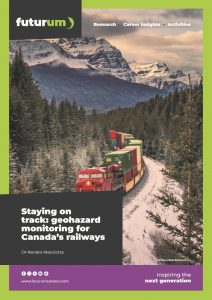
Staying on track: geohazard monitoring for Canada’s railways
Over 30,000 miles of train tracks are used to ferry goods across Canada’s vast landscapes. Predicting, detecting and averting hazards such as landslides and forest fires is critical for mitigating their impact on this crucial rail network – but this is not easy, as many train lines run through extremely remote and inhospitable regions. At the University of Alberta, Dr Renato Macciotta is part of a unique partnership using remote sensing technologies to address this challenge, providing the rail network with the tools needed to stay on track.
Talk like a geotechnical engineer
Civil engineering – the professional discipline focused on the design, construction and maintenance of the built environment, including public works such as roads, bridges, dams and buildings
Geohazard/ground hazard – earth processes that pose risks to life, property and infrastructure, such as landslides, earthquakes and volcanic activity
Geotechnical engineering – a branch of civil engineering concerned with the engineering behaviour of earth materials (soil and rock)
Machine learning – computer systems that can learn and adapt without following specific instructions, drawing inferences from patterns in data
Laser scanning system – technology that uses laser light to accurately capture the 3D shape and geometry of physical objects or environments
Satellite-based radar – an active remote sensing technology located in orbit that emits pulses of energy to scan Earth’s surface and detects the reflected signals
Canada is the world’s second-largest country, and much of it is sparsely inhabited wilderness. To transport goods from one side of the nation to the other, there is only one viable option: rail. “Rail is the main mode of transport for Canada’s goods and a critical part of its economy and sustainable development,” says Dr Renato Macciotta at the University of Alberta. “Although many people live in Toronto, Montreal and Ottawa, which do have busy rail systems, this is a small section of the country. People in small towns have learned to live with the railway system, however they do not always appreciate that it is the backbone of Canadian life.
Canada’s vastness and scattered population raise significant challenges for its rail network. “Hazards such as landslides can happen at points far from populated areas, making it challenging to address them – or even detect them in the first place,” says Renato. “Particularly with the growing impact of climate change, we are seeing more frequent and more serious hazards happening.” To tackle this, a multi-stakeholder research programme has been established to investigate the characteristics of these hazards, using its findings to develop safety and prevention measures to avoid damage and danger to the railways and other transportation corridors like highways.
The Railway Ground Hazards Research Program
To keep railways safe, it is necessary to have systems in place to detect geohazards and, ideally, pre-empt them before they happen. “I’m involved with the Railway Ground Hazards Research Program, which is a collaboration between Canada’s largest rail companies, the transport arm of federal government (Transport Canada), and a number of research and academic institutions,” says Renato. “We are identifying techniques and technologies that can be deployed in the Canadian environment.” The partners meet virtually every month, and in-person every year, to assess progress and work out next steps.
Due to its northern latitude, Canada sees some harsh and highly variable weather conditions, not to mention challenges related to the remoteness of some regions. Given these factors, remote technologies are proving especially handy, in combination with on-the-ground measurements when feasible. “So far, we’re using technologies such as satellite-based radar, laser scanning systems and high-resolution photography that can be combined to build three-dimensional models of any area of interest,” explains Renato. “And we’ve developed a range of algorithms, methodologies and workflows that enable us to process the information we get from these models.”
For instance, high precipitation and rapid snowmelt may increase landslide risk, which the team can model. “Climate change is also affecting these characteristics, by leading to an increase in the frequency and volume of rockfalls, for example,” says Renato. “This ties into our risk management framework that gives decision-makers the information they need.” If a landslide falls onto a train track, the worst-case scenario is that it causes an accident, but the best-case scenario also involves closing the line for clearance and repair, which is damaging for businesses and consumers.
From analysis to action
“Always at the front of our minds is the question: what do we do with the data we collect?” says Renato. “For example, when we model landslide characteristics, we need to model how and when it is likely to damage the railway.” Renato and the team are implementing machine learning techniques, which are proving effective in processing huge amounts of data and helping stakeholders make well-informed decisions. “For instance, our work helps decision makers decide how much to invest in stabilising a slope or protecting a section of the transportation corridor from rockfalls,” says Renato.
These coordinated efforts have been in place for over two decades, but technological advancements have massively increased their usefulness in recent years. “When these technologies were in their infancy about twenty years ago, they were not developed enough for railways to rely on them,” says Renato. “But today, it is a very different story.” For instance, the team monitored a slope in northern British Columbia at high risk of landslides using laser scanning and other techniques that detect changes in a landscape to understand and predict its behaviour. “That enabled our partners to design stabilisation measures, which were then deployed in the field,” explains Renato. “We also did some monitoring after the work and confirmed the success of the design.” In another instance, laser-based technologies detected a slope at risk of landslides, leading to bespoke protection structures being put in place. “When the landslide occurred, there was very little damage to the protection structure and the track was unharmed,” says Renato.
Future climate
Though the technologies Renato uses are improving exponentially, accelerating climate change is making mitigation and prevention efforts more challenging. “For instance, fifteen years ago I barely thought about forest fires at all when considering our field work schedule,” says Renato. “Now, they are affecting safety not just for railways, but also for our teams that go out into the field to take measurements.” While air quality was previously never a concern, wildfire smoke can impact the safety and health of people in the field, impeding their work significantly.
Reference
https://doi.org/10.33424/FUTURUM691
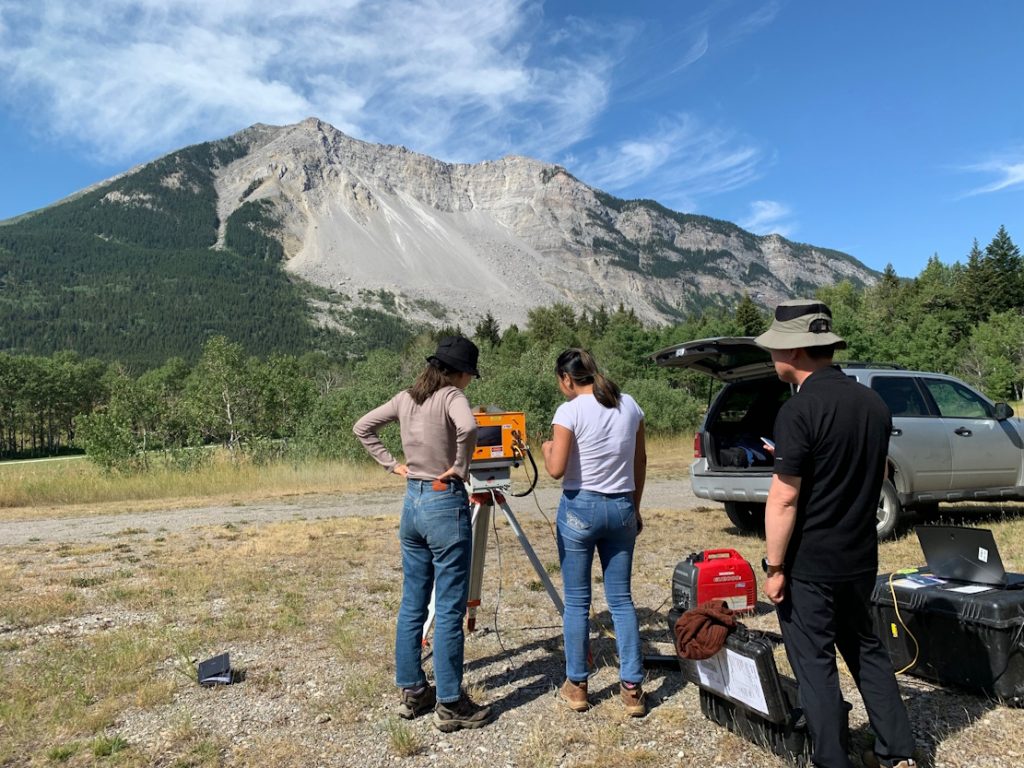
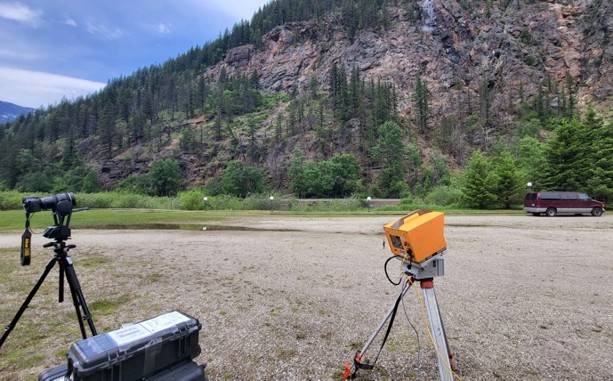
Remote sensing tools (LiDAR scaner and high-resolution camera) capturing data at a rock slope in Western Canada. © Renato Macciotta, University of Alberta
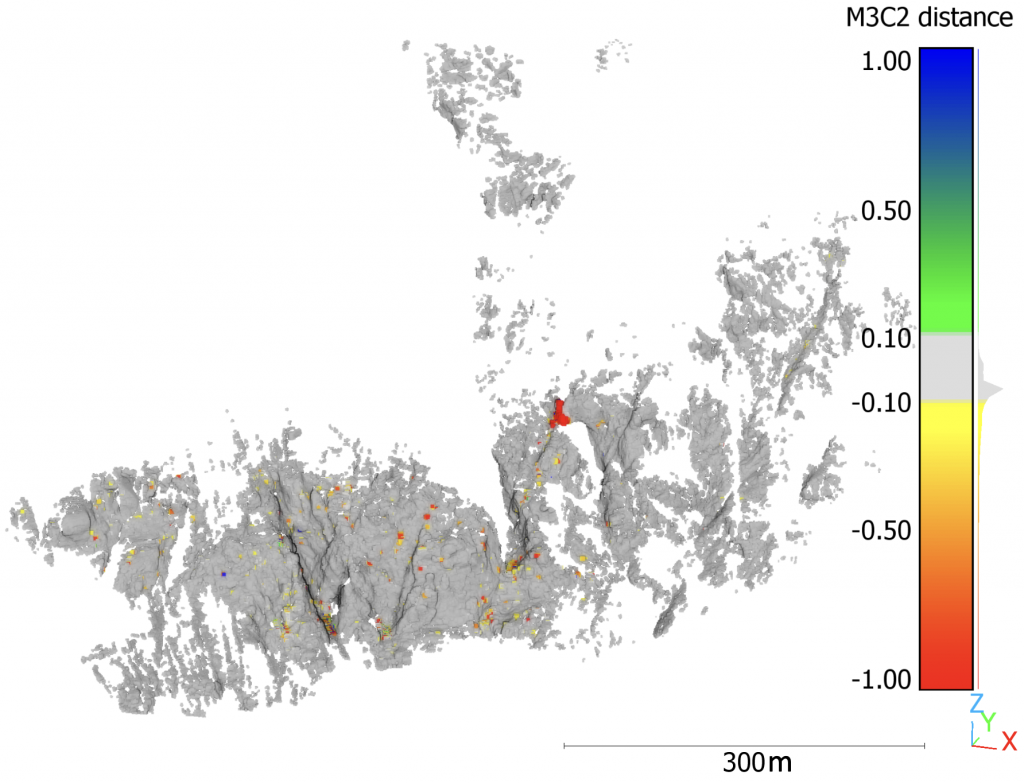
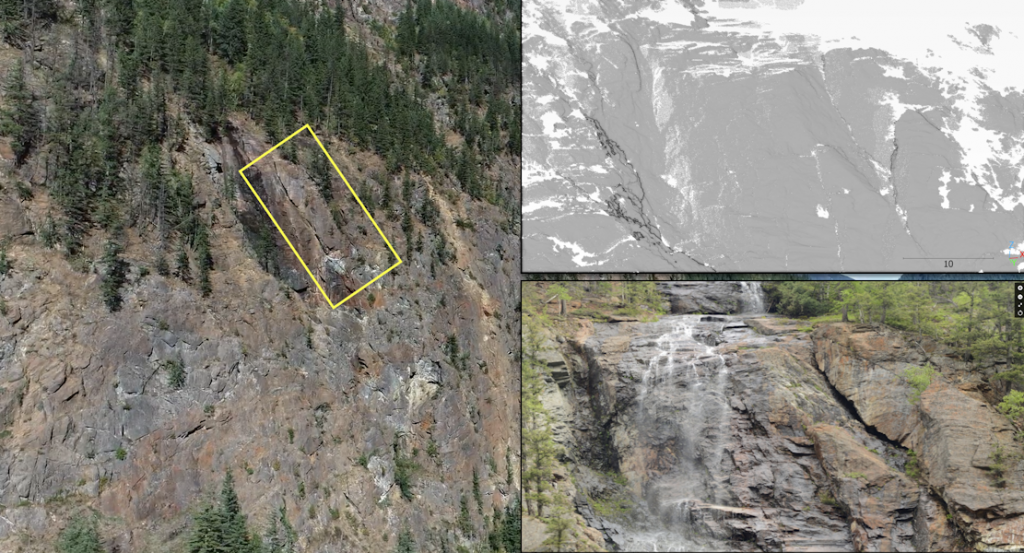
Example change detection results on a rock slope in Western Canada indicating the locations where rockfalls have initiated (red). © Essa Gierc, University of Alberta






Due to the loss of vegetation making slopes more unstable, there are also links between forest fires and landslide risks. “One of the slopes that we are monitoring experienced a forest fire five years ago,” explains Renato. “Since then, we have noticed substantial increases in the frequency of rockfalls there.” Meeting these new challenges will involve increasingly detailed data, closer analysis and more coordination than ever before.
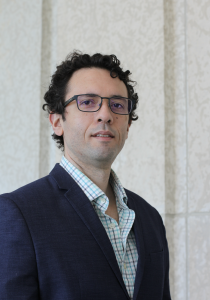 Dr Renato Macciotta
Professor, David and Joan Lynch School of Engineering Safety and Risk Management, Department of Civil and Environmental Engineering, University of Alberta, Canada
Field of research: Geotechnical engineering
Research project: Using remote sensing technologies to provide the transportation industry and government agencies with practicable and cost-effective tools for geohazard monitoring and management
Funders: Canadian National Railway; Canadian Pacific Kansas City Railway; Transport Canada; Klohn Crippen Berger; Alberta Transportation; Natural Sciences and Engineering Research Council of Canada (NSERC)
About geotechnical engineering
Geotechnical engineering is the branch of civil engineering that researches and models how earth materials, namely soil and rock, behave. Given that most infrastructure is built on soil and rock, understanding how they behave is critical to ensuring that structures are safe and stable. This expertise is also essential to industries such as mining. “Geotechnical engineering offers a fantastic balance between field and office life,” says Renato. “If you like being out in nature and assessing real things, but also enjoy flexing your analytical, technical and imaginative skills in the office, then it could be for you.” Research in this field always offers new and fulfilling rewards because every geotechnical project is unique – after all, the ground is different in every location.
Renato says that sustainable development is at the forefront of where research in the field is likely to go next. “We need to keep developing, but environmental health has to go alongside economic and safety concerns,” he explains. “What’s more, we need to know how climate change will impact our infrastructure, and plan accordingly.” Artificial intelligence is proving critical in this regard given its ability to process huge quantities of data and find meaningful patterns. “But AI, even with proper expert guidance and review, can’t do it all,” says Renato. “We will continue to need engineers with a highly robust understanding of the ground, current and upcoming challenges, and how we can use new AI techniques most effectively.”
Renato emphasises the importance of diversity in the field, both in terms of disciplines and sociocultural backgrounds. “If you only work with people like you, you don’t have the opportunities to think outside the box and come up with novel solutions,” he says. “Diversity impacts research positively. We need people of different backgrounds, genders and perspectives, all feeding into potential solutions.”
Pathway from school to geotechnical engineering
Renato says that science and mathematics are highly useful in any field related to geotechnical engineering. “Even if your field isn’t as technical as mine, these subjects will give you the skills to problem solve, which is critical across the board,” he says.
At university, degrees or courses that lead most directly to a career in geotechnical engineering include civil engineering and geological engineering. Some may focus more on geology and Earth sciences, while others will focus more on structural or geotechnical engineering.
Explore careers in geotechnical engineering
Renato says that the professors at the University of Alberta – and at other universities – are always happy to discuss their programmes and their specialisms. Find courses and staff details on the University of Alberta website.
The Canadian Geotechnical Society is a network of geotechnical engineers and professionals in related industries across the country that can help you build contacts and knowledge of the sector.
Meet Renato
At school, I liked both science and humanities. I got into civil engineering because I saw myself designing bridges: I loved the maths and procedures. I trained with a famous structural designer in Peru, but spent more time in front of a computer screen than I’d have liked. At university, a combination of studying, doing summer jobs and gaining a variety of other experiences helped me identify which stream of civil engineering I liked best, which is when I chose geotechnical engineering.
Then, I moved to construction to see the action! It was fun to deploy the skills I’d studied in the real world. In my early twenties, when I thought I had my next life chapter planned out, I got the opportunity to work for a Canadian-based consulting firm as a geotechnical engineer. Even though it wasn’t on my radar beforehand, I jumped at the chance.
The department I teach in is known worldwide due to its legacy of pioneers in the field, particularly emeritus professor Dr Norbert R. Morgenstern – who is literally the living legend of this field – Dr Derek Martin and Dr David Cruden. If you had told me years ago that I would complete a PhD and then go on to teach here, I would never have believed you. Just the fact that I’m sitting here has exceeded all my expectations!
It’s very fulfilling to interact with my graduate students. I love seeing how they grow in terms of their research and communication skills and go on to have meaningful careers in industry. We keep in contact – and now they’re colleagues! Canada gave me an opportunity, and now I’m giving back by training highly qualified people. That makes me very proud.
Within the university, I want to sustain and develop this programme, so it keeps its excellent international reputation. As well as being passionate about my work, I’m family focused. I have a twenty-year-old daughter who’s studying at the University of Alberta right now, and a two-year-old who keeps me busy at home!
Renato’s top tip
Make a plan, but always be open to change and taking up exciting opportunities when they appear.
Do you have a question for Renato?
Write it in the comments box below and he will get back to you. (Remember, researchers are very busy people, so you may have to wait a few days.)
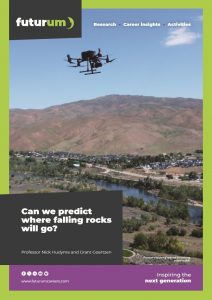
Learn more about how we can predict rockfalls:
futurumcareers.com/can-we-predict-where-falling-rocks-will-go
0 Comments