
How can people with haemophilia reduce the risk of long-term joint damage?
Haemophilia is a genetic disorder that prevents blood from clotting properly. It can cause prolonged bleeding from minor cuts and scrapes, internal bleeding into joints and muscles, and spontaneous bleeding that occurs without any obvious injury. Dr Jesus Ardila collaborated with adult and paediatric haematologists who care for patients across Colombia to study haemophilic arthropathy, a form of joint damage that occurs as a result of long-term bleeding into joints. This research initiative, supported by Roche, aims to translate clinical findings into better care strategies and a higher quality of life for affected patients.
 Talk like a …haematologist
Clotting factors – specialised proteins that stop bleeding by forming blood clots
Haemophilia – a genetic disorder that prevents blood from clotting properly
Haemophilic arthropathy – a progressive, disabling joint condition caused by repeated bleeding inside joints
Prophylaxis – a medical treatment used to prevent a condition from occurring, rather than treating it after it starts
If you’ve ever fallen over and scraped your knee, you’ll know that your body acts quickly to stop the bleeding. The injured blood vessels constrict to slow the bleed, tiny cells called platelets clump together to block the leak, and proteins in the blood called clotting factors create a blood clot to protect the wound as it heals.
However, for people with haemophilia, small scrapes and scratches present a much bigger problem. Haemophilia is a rare, inherited disorder that prevents blood from clotting properly due to a lack of clotting factors. This poses a serious risk, not just from external wounds but also from internal bleeding, which can go unnoticed and lead to long-term, debilitating joint damage known as haemophilic arthropathy.
Dr Jesus Ardila is part of a team of Colombian haematologists and orthopaedists who care for paediatric and adult patients and who are studying the factors that lead to the development of haemophilic arthropathy. They are also educating patients, families and clinicians about how to avoid it. “What drives me every day is a promise I made to myself years ago while examining a boy who was no longer able to extend his arm: not one more preventable bleed,” says Jesus. “Prevention begins with education and becomes a reality through training professionals; that is what this research is for.”

Dr Jesus Ardila
Scientific Director, Hemo&Onco, Colombia
Field of research: Haematology
Research project: Investigating the factors that cause haemophilic arthropathy
Research paper: Factors contributing to the development of hemophilic arthropathy: A real-world study. Ardila et al (2026) doi: 10.1007/s00277-026-06866-9
Funder: Roche
Websites: roche.com.co; hemoonco.com
Suggested further reading: Diagnosis and management of hemophilia A and B. Lim, Ardila et al. (2026) doi: 10.1016/j.jtha.2026.04.005
DOI: doi.org/10.33424/FUTURUM734
What causes haemophilic arthropathy?
When bleeding happens inside a joint, it causes irritation and the joint becomes inflamed. The repeated cycle of bleeding and inflammation slowly destroys cartilage and bone, and over time the joint becomes painful, stiff and hard to move.
“No quantity of blood inside a joint is harmless; that is something I try to make clear to my patients and their families,” says Jesus. “The damage begins with the very first bleed.” Preventing bleeding from the earliest possible age and catching joint change before it becomes irreversible will determine whether a child grows up with physical freedom or not.
How does haemophilic arthropathy affect patients?
“Haemophilic arthropathy reaches far beyond the joint itself,” says Jesus. “As the damage progresses, everyday activities – climbing stairs, playing sports and even holding a spoon – can become exhausting challenges.” And the condition can cause psychological and emotional damage too. For example, the fear of triggering a bleed makes people reluctant to move and exercise. This creates a vicious cycle: less activity makes joints more vulnerable to bleeding, which increases the reluctance to be active. Limited mobility affects school attendance, social participation, self-confidence and mental well-being. “The emotional burden of haemophilic arthropathy should never be underestimated,” says Jesus. “Protecting joint health is not just about preventing physical damage; it is about preserving a person’s autonomy, dignity and right to live a full life.”
How does Jesus study haemophilic arthropathy?
“Haemophilic arthropathy is not caused by a single factor,” says Jesus. “It develops through an intricate interaction of biology, treatment decisions, lifestyle choices and healthcare access, so no single source of data could tell the complete story.” To investigate this complex interplay of factors, Jesus and his research team used three types of evidence.
First, they reviewed scientific literature to identify everything that previous research had already suggested as a factor in haemophilic arthropathy. They then gathered real-world data from 90 Colombian patients with haemophilic arthropathy, collected from patient diaries completed by their doctors. Finally, the team interviewed nine experienced haematologists, allowing them to interpret their findings through the lens of people who care for these patients every day.
What did the team discover?
“The clearest message across every part of our study was ‘start prophylaxis early and prevent bleeding’,” says Jesus. Prophylaxis is a preventative treatment given to reduce the risk of bleeds. “Patients who started prophylaxis in early childhood before any joint damage had occurred were significantly less likely to have haemophilic arthropathy compared to those who started later or were treated only once bleeding had occurred,” continues Jesus. “And patients who experienced at least one bleed per year were approximately six times more likely to develop haemophilic arthropathy compared with those who had no bleeds.”
Crucially, the study emphasised that monitoring joint health must extend beyond simply counting bleeding episodes. Physicians need to proactively evaluate for haemophilic arthropathy using validated clinical scoring scales, alongside appropriate imaging like ultrasound. The team’s research revealed real-world gaps in how frequently these objective assessments are performed in routine care.
The team also found that physical activity was a major protective factor. Patients who remained physically active were less likely to develop joint damage and arthropathy than sedentary patients. This does not mean that exercise is risk-free for someone with haemophilia. “The type and intensity of activity must always be individualised,” says Jesus. “But it does confirm that encouraging safe, appropriate physical activity is an important part of joint protection.”
How can patients avoid haemophilic arthropathy?
Patients with haemophilia should stick to their prescribed prophylaxis regimen, maintain regular follow-ups and communicate any new symptoms straightaway. “Staying physically active is equally important,” says Jesus. “Rather than avoiding exercise because of haemophilia, to preserve mobility patients should work with their healthcare team to choose safe, rewarding activities that strengthen the muscles that support the joints.”
However, protecting joint health should not be the patient’s responsibility alone. Healthcare professionals, medical researchers and clinicians all have a role to play in improving the quality of care for patients with haemophilia. And maybe you do too. “To any young person reading this who is considering a career in medicine: this work is hard, and the problems are real, but they are solvable,” says Jesus. “The science to prevent haemophilic arthropathy already exists; what we need now are committed physicians, nurses and educators to bring that science to the communities that need it most.”
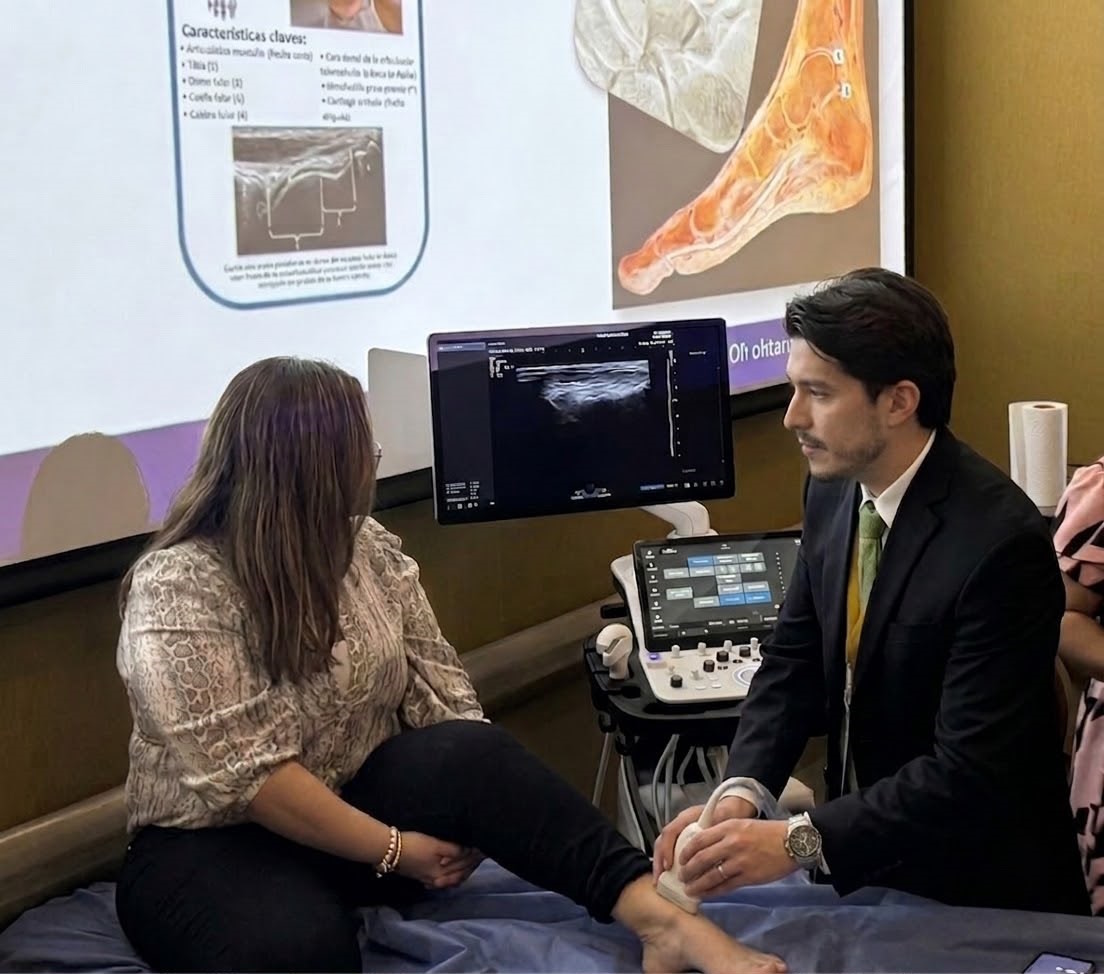
Jesus performs an ultrasound scan on a patient


Do you have a question for Jesus?
Write it in the comments box below and he will get back to you. (Remember, researchers are very busy people, so you may have to wait a few days.)
0 Comments