
Driving road safety forward through connected insurance
Traditionally, car insurance prices are based on factors such as the driver’s age and driving history. The introduction of technologies such as GPS tracking and in-built cameras presents the opportunity to monitor driver behaviour, which could allow for more personalised car insurance. At New York University in the US, Daniel Vignon is using mathematical models to explore how monitoring driver behaviour could impact the car insurance industry, road safety and the future of automated driving.
Talk like a transportation economist
Automaker – a car manufacturer
Automated vehicle – a vehicle that can drive to its destination without human intervention
Car insurance – a legally required financial product that provides drivers with compensation if they have an accident
Demographics – information about a group of people, such as age, gender or occupation
GPS (Global Positioning System) – a satellite-based navigation system that provides precise location information
Mathematical model – a description of a real situation using mathematical equations to explain or predict how the situation may change given changes in the variables
Telematics – the use of technology to record and analyse data about how a vehicle is driven, such as speed, location, braking or acceleration, often in real-time
What do you have in common with your classmates? You are all students, roughly the same age, and probably live in the same region. But on the whole, that is where things end. These similarities do not make you all equally artistic or interested in sports. So, after you have learnt to drive, how would you feel if you were all deemed equally good at driving?
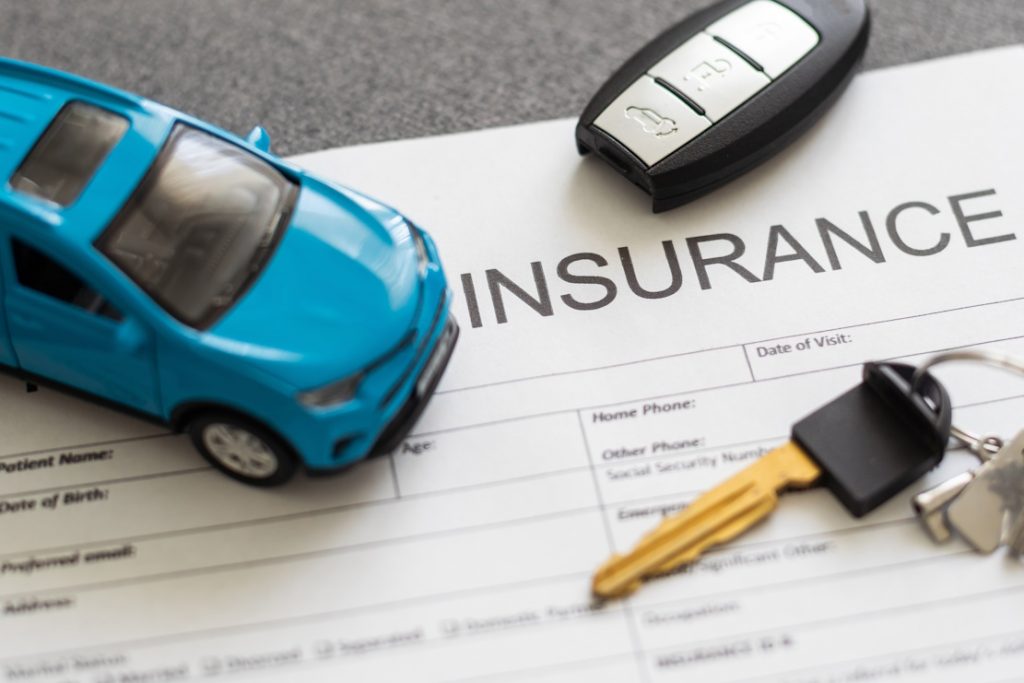
Currently, car insurance costs are calculated based on driver demographics such as age, occupation and driving history. But does this give the whole picture? “Historically, factors used to determine a driver’s risk and insurance costs are not necessarily tailored to that particular driver,” says Daniel Vignon, a transportation economist at New York University. “By tracking individual drivers, insurers can determine more accurately how risky they are. That is, they can decide how likely a given driver is to be in an accident and, therefore, how expensive such a driver might be to insure.”
How can we monitor driver behaviour?
Companies could monitor individual drivers with a combination of tools and technologies. For example, they could use in-car cameras to check for risky behaviours (like using a phone while driving) or cameras outside the car to observe how drivers deal with obstacles and other road users. However, privacy issues and the high volume of footage that would need processing tend to put the brakes on video monitoring tools. Instead, many insurers use phone and vehicle sensor data (e.g. GPS tracking, accelerometers, etc.) to monitor where, when and how fast drivers are driving.
“A number of insurers partner with telematics companies who build tools to collect and analyse driver data for pricing insurance for individual drivers,” says Daniel. For many vehicles manufactured in the past decade, automakers are also able to collect such information. “Thus, there are potential opportunities here for cooperation and competition: automakers could provide personalised insurance to their customers or they could sell the driving data they collect to insurers.”
Accelerating road safety
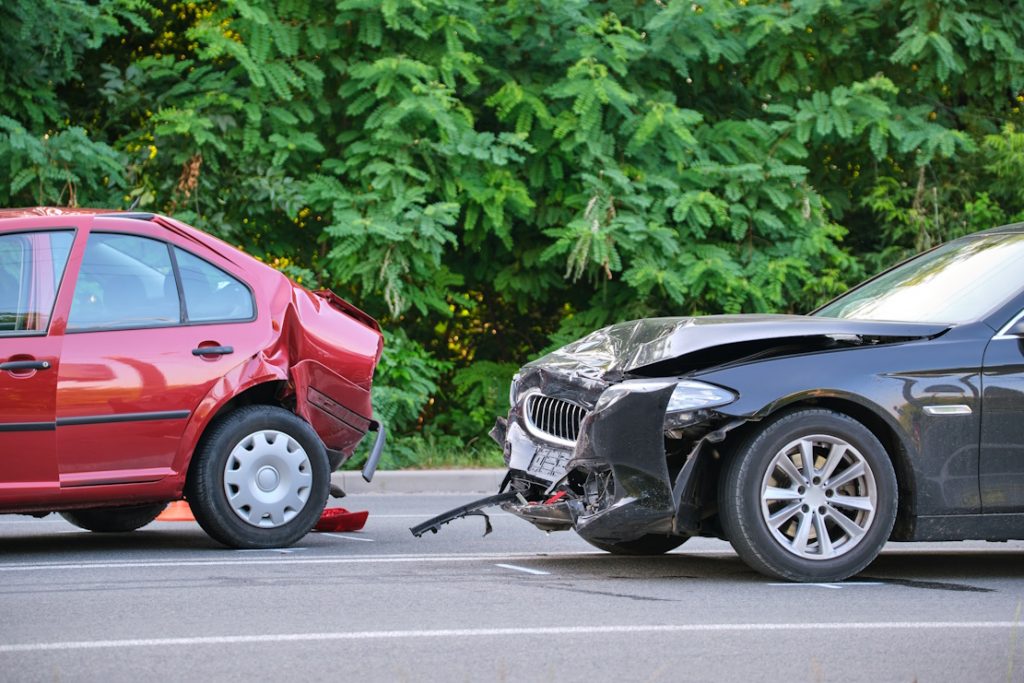
It seems logical that closer monitoring of driver behaviour would improve road safety, partly through the promise of reduced insurance costs for safe driving, but also by drawing drivers’ attention to the things they may be doing wrong. But will these factors really make roads safer? And how significant will these safety gains be? Daniel is keen to explore these questions and the many ramifications the answers may have.
For example, increased road safety is often put forward as an argument for automated vehicles. However, Daniel suggests that monitoring driver behaviour could be a cheaper way to improve road safety, potentially weakening the safety rationale for automated vehicles. “There are, of course, other advantages to automated driving such as convenience and accessibility,” he says. “But there are many questions that need to be answered about how personalised insurance will affect road safety and the value of future technological innovation.”
Steering solutions
Reference
https://doi.org/10.33424/FUTURUM697
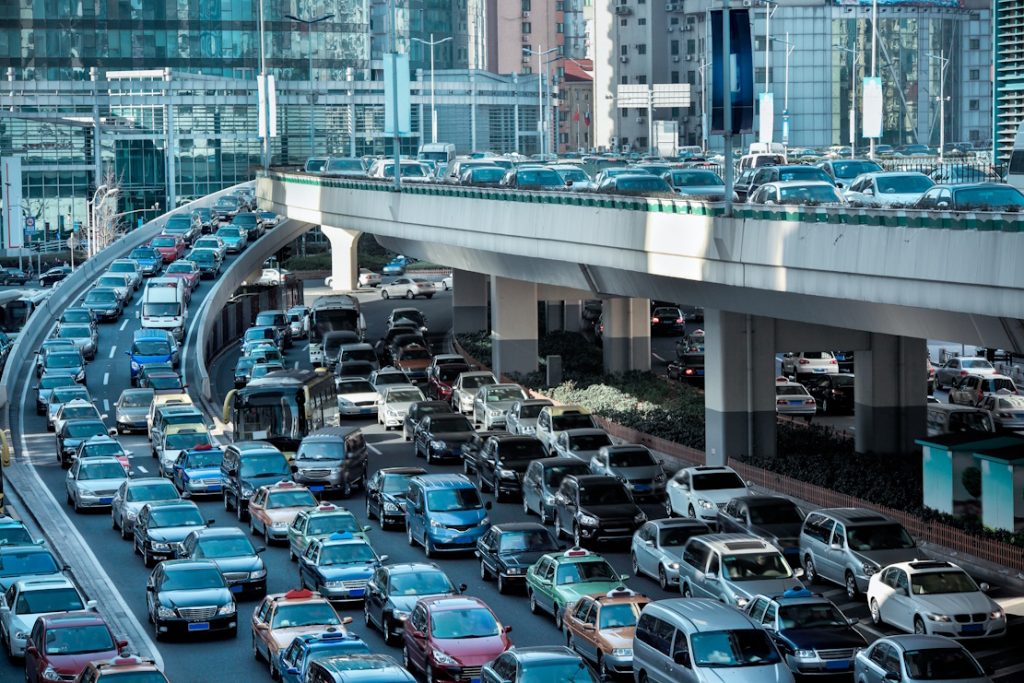



To drive his research forward, Daniel and his PhD student Sen Yan have been building mathematical models of personalised insurance markets. “We start with a model of an insurer choosing the premium and coverage for a given driver,” Daniel explains. “The insurance contract could be personalised and based on the driver’s behaviour (or not) so that drivers have a choice of the type of contract they sign-up for.” Daniel and Sen add more layers to the model, such as drivers interacting with other road users and competition between different insurers. “We build up to a model with many drivers and many insurers, and then examine how the interactions change if, for example, data is shared between insurers or between automakers and insurers,” Daniel says.
Daniel is also interviewing stakeholders to understand how monitoring affects driver behaviour. The discussions centre around how tracking drivers impacts the insurance market, whether automakers prefer to sell driver behaviour data or provide personalised insurance themselves, and how companies manage privacy.
So far, his interviews have been with telematics companies. “I ask who should own driver data – the telematics company that collects it or the driver who generated the data?” he says. “And I ask what they think their role will be when automated vehicles are integrated into transportation systems.” Automated vehicles will need to include tracking devices, so this data could be sent directly to insurers without the need for telematics companies. “So I want to understand whether this is a cause for concern for telematics companies,” he says. “Surprisingly, it is not, because telematics companies have the expertise in analysing large driver data that many insurers and automakers lack.”
Later, Daniel will interview insurers and automakers to understand how they think technology will change their respective industries, and the challenges they will need to address to remain relevant.
The long-term journey
Daniel is keen for drivers to be supported as well as monitored. “It’s not just observing drivers that makes a difference to their behaviour,” he says. “It’s also important to educate drivers and give them easily digestible information about how they are driving. This helps them understand what they could change to improve their safety, reduce their risk and, therefore, their insurance costs.”
In the future, Daniel hopes to move beyond focusing on just insurance and monitoring. “Instead, can we quantify the benefits of monitoring at a system level?” he asks. “For example, what percentage of drivers should be monitored to improve the safety of the whole road system? By answering these questions, we hope to inform policy conversations about the benefits of personalised insurance.”
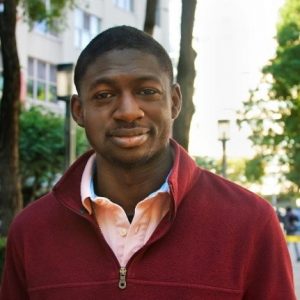 Daniel Vignon, Ph.D.
Assistant Professor, Department of Civil and Urban Engineering, Tandon School of Engineering, New York University, USA
Field of research: Transportation economics
Research project: Investigating how monitoring driver behaviour could impact car insurance, road safety and automated driving
Funder: US National Science Foundation (NSF)
Website: featsnyu.com/wordpress
About transportation economics
Do you want to make people’s morning commute to work or school easier? Are you interested in how to make the taxi and ride-share industries operate fairly and effectively? Transportation economists examine the problems that millions of people face every day as they commute to work or school, or journey to visit loved ones.
“Economics is the study of situations in which individuals working towards their own personal objectives affect each other’s abilities to achieve said objectives,” says Daniel. “For example, if I want to arrive at work at 9 am and the journey takes me half an hour when there is no traffic, then I would leave at 8:30 am. But everyone else is also trying to get to work at 9 am and this creates congestion.” Economists refer to these types of situations as ‘games’ and the outcome of these games (such as congestion levels) as ‘equilibrium’.
Transportation economists study these problems with the aim of providing solutions. They do this by using mathematical models to understand how changes to different conditions might affect equilibrium. “For example, if we began charging drivers to use the freeway at 8:30 am, would congestion fall? And would I be able to leave at 8:30 am and arrive on time if I paid?” says Daniel. “Transportation economists can model the effects of congestion charges, increased public transport services or wider roads.” This allows them to recommend better policies and management strategies. Transportation economists validate their models by collecting data and making sure the models remain consistent with these data.
“Transportation economics is exciting because you get to think about and answer interesting problems that affect people’s day-to-day lives,” says Daniel. “You can use theoretical models to analyse and solve real-world problems.”
Pathway from school to transportation economics
Build a solid foundation in mathematics and computing at school, which will get you ahead when it comes to mathematical modelling.
At university, a degree in economics, engineering or mathematics could lead to a career in transportation economics. “The key is to study a degree in which you learn to think and analyse systems quantitatively,” says Daniel.
Develop your reading and writing skills. “This is key for being able to understand the work others have done and translate your own work back to people,” says Daniel. “At university, take writing classes (in any topic) alongside your main field of study.”
Get involved in internships or work experience opportunities, or volunteer to support research projects being carried out in university departments.
Explore careers in transportation economics
From academia to data science to logistics, there are many career paths in transportation economics. “There are roles in consultancy, policy and urban planning,” says Daniel. “This could be for city agencies, government think tanks or private companies.”
Explore the websites of the International Transportation Economics Association (itea.science) and the Chartered Institute of Logistics and Transport (ciltuk.org.uk) for useful information, resources, career advice, and opportunities to volunteer and meet professionals in the field.
Meet Daniel
As a teenager, I considered a few career paths ranging from professional basketball player to commercial airline pilot. I was about to settle on studying business when my uncle (an engineer) recommended that I study engineering because I was good at math and physics. He advised that I could always switch to business after studying engineering, while the reverse wouldn’t be so easy. I decided to pick mechanical engineering because it seemed the broadest of the engineering disciplines and would allow me to specialise in whatever interested me later.
While studying mechanical engineering, I enjoyed learning about fluid mechanics and thermodynamics which involved modelling systems and processes. I did an undergraduate summer internship with EDF, a large energy company, after my second year. I helped create simulations for understanding some of the components in their power plants, which involved lots of computer modelling. It was fun because I was applying my classroom knowledge of thermodynamics and fluid mechanics in a real-world context. It showed me how modelling can help companies make decisions.
But I wanted to model bigger systems and the interactions between their components. When I took a class in civil engineering taught by a professor of transportation, I realised that the field of transportation would allow me to do just that. Indeed, transportation systems have many different components and features, such as individual decision-making, regulations, engineering and technology. I was particularly drawn to understanding individual decision-making and how it shaped, and was in turn shaped by, the performance of transportation systems. So I decided to study economics.
Both the most interesting and most challenging thing about the field of transportation economics is that you’re asking interesting questions. These questions are interesting because they are complex and challenging, but also relevant to everyday life.
In my free time, I enjoy reading, playing music, seeing friends in town and watching movies.
Daniel’s top tips
1. Observe the world around you – that’s how you get ideas and understand what’s happening.
2. Talk to people – collaboration is important and talking to other people will give you new ideas and perspectives.
Do you have a question for Andrea?
Write it in the comments box below and she will get back to you. (Remember, researchers are very busy people, so you may have to wait a few days.)
Insurance is important in many areas of our daily lives. Discover how cyber insurance can impact cyber crime:
0 Comments