
How are sea slugs helping us understand human health conditions?
Sea slugs have a simple nervous system, making them easy to study. At the National Aplysia Resource at the University of Miami in the US, Professor Danielle McDonald and her team are breeding and raising Aplysia californica for scientific experiments. By understanding the nervous system of these sea slugs, scientists can learn more about the human nervous system and discover new ways to treat health conditions.
Talk like a marine biomedical scientist
Aplysia – a type of marine mollusc, also known as a sea slug
Husbandry – the act of breeding, raising and caring for animals
Hypoxia – a condition in which the brain does not receive enough oxygen
Ischemia – a condition in which blood supply is stopped or reduced
Macroalgae – large marine plants, also known as seaweed
Metamorphose – to change into a completely different form during development
Microalgae – microscopic single-celled aquatic plants, also known as phytoplankton
Model organism – an animal that scientists study to learn more about human health
Nervous system – the body’s control centre, including the brain and nerve cells
You probably think that you don’t have much in common with a sea slug, and you would be correct! However, although Aplysia californica look nothing like humans as they crawl along the seafloor in their colourful, slug-like bodies, they are incredibly important model organisms for understanding human health and disease.
Why are Aplysia useful model organisms?
“Aplysia have a simple nervous system with large, easy-to-study nerve cells,” says Professor Danielle McDonald from the University of Miami. “This makes them especially useful for understanding how the brain and nervous system work. Aplysia also have a fairly short life span, which makes them useful for studying how the nervous system ages.” Once scientists have learnt about the nervous system in Aplysia, they can apply this knowledge to understand more about the nervous system in humans.
Danielle is the Director of the National Aplysia Resource, the only place in the world where Aplysia californica are bred and raised for scientific research. Every year, the facility sends over 10,000 of these animals to researchers around the globe for use in their experiments, providing a vital service for the scientific community.
How does Danielle’s team care for Aplysia?
Breeding and raising Aplysia is not an easy task. “They have a complicated life cycle and are hard to raise,” says Danielle. “They are very sensitive to water quality but produce copious amounts of faeces and mucus, and their soft tissues are easily damaged by pumps and filters.” To ensure the National Aplysia Resource produces high-quality Aplysia, a dedicated husbandry team meticulously cares for the animals throughout their time at the facility.
Aplysia are simultaneous hermaphrodites, meaning they have both male and female reproductive organs, but they cannot fertilise themselves. Every day, the husbandry team collects thousands of fertilised eggs from each breeding pair, which are incubated until they hatch into tiny larvae. The larvae are reared in bottles kept under carefully controlled temperature, light and salinity conditions. As the animals grow and metamorphose into their adult form (weighing about 2 mg), they are moved into tanks with a continuous water flow where they are sorted by size. By the time they are six months old, Aplysia will have grown to 200 g, or 100,000 times their original size! They have a maximum lifespan of one year and can reach over 1 kg.
To ensure consistency, reliability and repeatability in their experiments, scientists need to know that each batch of Aplysia they are using has the same genetic make-up, so animals are kept in sibling groups as they develop and progress through the system, and they never share water with unrelated animals. Depending on the aims of their research projects, scientists will buy Aplysia of different size, age and developmental stage from the National Aplysia Resource, so the husbandry team carefully tracks each sibling group as it develops.
“Every week, the husbandry team changes the water in the larval Aplysia bottles and monitors them with a microscope to check that they are reaching developmental milestones, such as the appearance of pink spots and digestive glands,” says Danielle. “Adult Aplysia require daily care such as removing faeces and uneaten food from their tanks and ensuring they have adequate water flow, and the team sterilises their tanks every week.”
As well as growing sea slugs, the National Aplysia Resource also grows the seaweed needed to feed them. Larval Aplysia eat microalgae, which is added to their bottles in careful quantities to ensure the animals have enough algae to eat but not too much that it starts growing on them. Adult Aplysia eat macroalgae, and are fed every Monday, Wednesday, Friday and Sunday. The facility produces over 130 kg of macroalgae every week. It is grown in large tanks which the husbandry team hand-sterilise every week, after first removing all the algae and draining 2100 gallons of water.
How are researchers using Aplysia to study human health conditions?
Danielle and other researchers use animals reared at the National Aplysia Resource to conduct research into the effects of ageing, infection, hypoxia and ischemia on the nervous system. “Hypoxia happens when the brain doesn’t get enough oxygen,” Danielle explains. “It can be caused by stroke (when the blood supply to the brain is cut off – known as ischemia), heart or lung disease (which reduces oxygen delivery), and conditions like sleep apnoea (when you periodically stop breathing in the night).”
To study hypoxia and ischemia, Danielle and other scientists expose Aplysia to low-oxygen conditions or surgically manipulate them to cut off the blood supply (technically, Aplysia have hemolymph, not blood) to particular parts of their nervous system. They then use molecular, physiological and behavioural tools to study how the nervous system responds and to understand how the animals survive and recover.
“We have found that Aplysia can tolerate low oxygen better than many animals, and they have protective responses that help their cells stay alive,” says Danielle. “Next, we want to figure out if there is a way to leverage the hypoxia or ischemia tolerance of Aplysia to benefit human health. By understanding how Aplysia protect their cells, we can learn new ideas about how to protect human brain cells during stroke and other injuries.”
“I hope researchers around the world use our Aplysia to better understand the nervous system and how it is affected by stress and ageing,” Danielle concludes. “This will help us learn more about human health conditions and develop new treatments for them.”
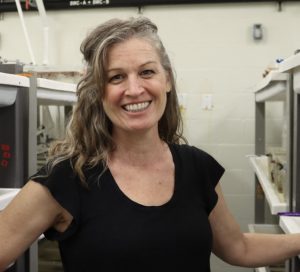 Professor Danielle McDonald
Director of the National Aplysia Resource and Director of the Glassell Family Center for Marine Biomedicine, Rosenstiel School of Marine, Atmospheric and Earth Science, University of Miami, USA
Field of research: Marine biomedical science
Research project: Breeding and raising Aplysia for use as a model organism
Funder: US National Institutes of Health (NIH)
Website: aplysia.earth.miami.edu/index.html
About marine biomedical science
Marine biomedical science is an interdisciplinary field that investigates how marine organisms can help us understand and treat human health conditions. For example, Aplysia can help us learn more about how to treat the effects of stroke in humans, which requires knowledge from marine biology, neuroscience and medicine. “An important aspect of the field is that it requires researchers from different disciplines to come together to solve problems,” says Danielle. “Connecting with researchers from different backgrounds who approach problems in different ways will open up new pathways for exploration.”
Many important discoveries and innovations have been made thanks to research conducted on marine organisms. Scientists have used starfish larvae to understand the immune system because they are transparent and so it is possible to observe immune cells in the larvae destroying bacteria, and they have used squid to discover how nerve cells transmit signals because squid nerve cells are much larger than mammal nerve cells and so are easier to work with. Other examples of marine biomedical research include studying coral growth to learn about bone development and healing, and studying the chemicals produced by microalgae to search for new medicines. Health technologies inspired by marine organisms include medical dressings to treat wounds and burns based on cod skin, and medicines to treat asthma and arthritis based on compounds found in mussels.
Despite all these incredible advances, the oceans still hold many secrets, so there is plenty of work for future marine biomedical scientists!
Pathway from school to marine biomedical science
At high school, study biology, chemistry, mathematics and computer science to learn foundational knowledge and skills for studying marine biomedical science.
At university, Danielle recommends taking courses in marine biology, comparative physiology, neurobiology, animal behaviour, genetics, molecular biology, toxicology, bioinformatics and statistics.
“If you are interested in aquaculture (breeding and raising marine animals for biomedical research), it helps to build a strong foundation in science and math early on,” says Danielle. “As your studies progress, specialise in courses such as marine biology, environmental science and veterinary science.”
Danielle recommends getting hands-on lab experience, even if it is not specifically in marine biomedical research.
“Local high school students can tour the National Aplysia Resource,” says Danielle. “It also offers part-time employment opportunities to University of Miami students.”
Reference
https://doi.org/10.33424/FUTURUM708
Aplysia californica are important model organisms for understanding human health and disease. © Phillip Gillette
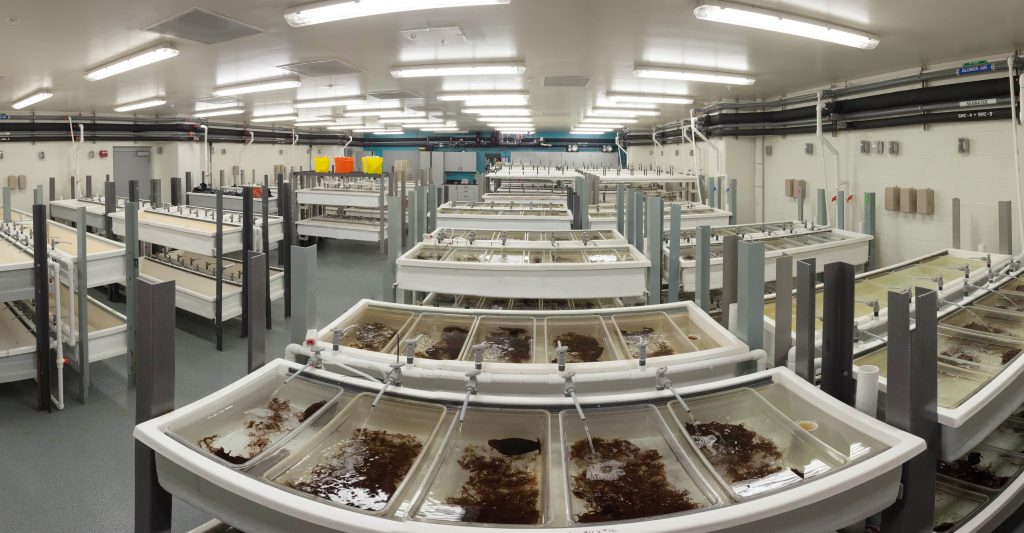
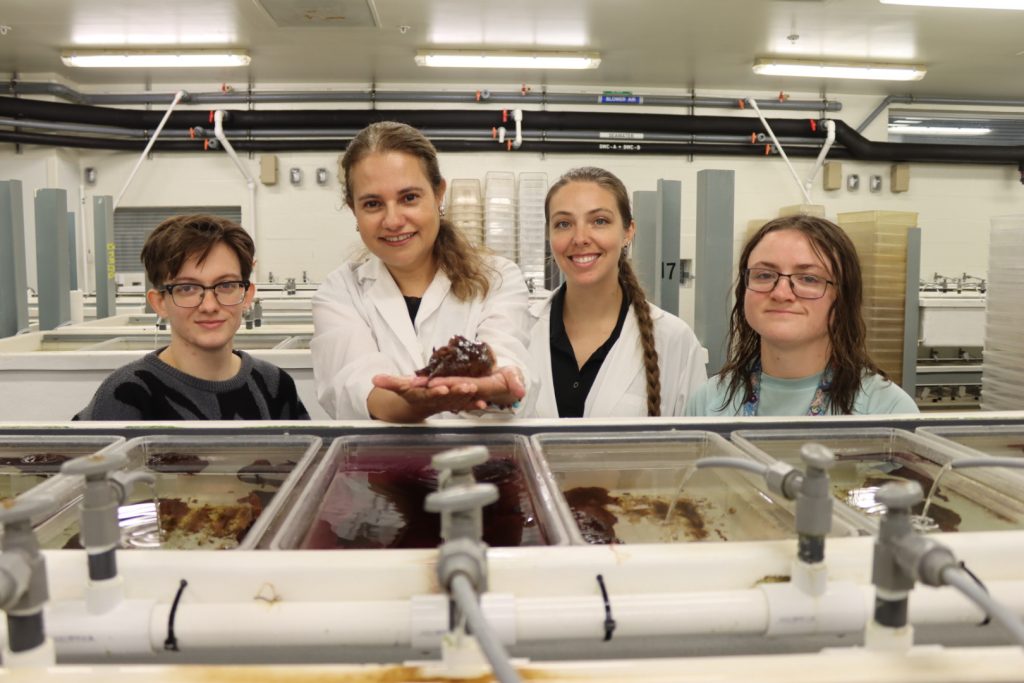
The husbandry team at the National Aplysia Resource, led by manager Claudia Alvarez, breed and raise Aplysia californica for scientific research. © Danielle McDonald
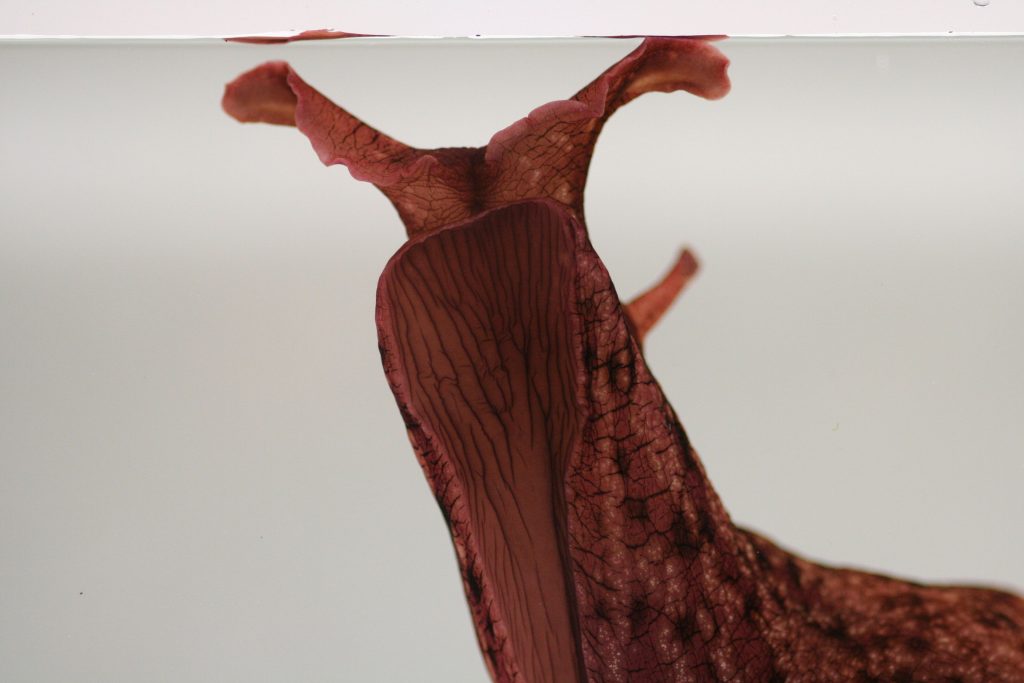
Aplysia are a type of marine mollusc, also known as a sea slug. © Phillip Gillette
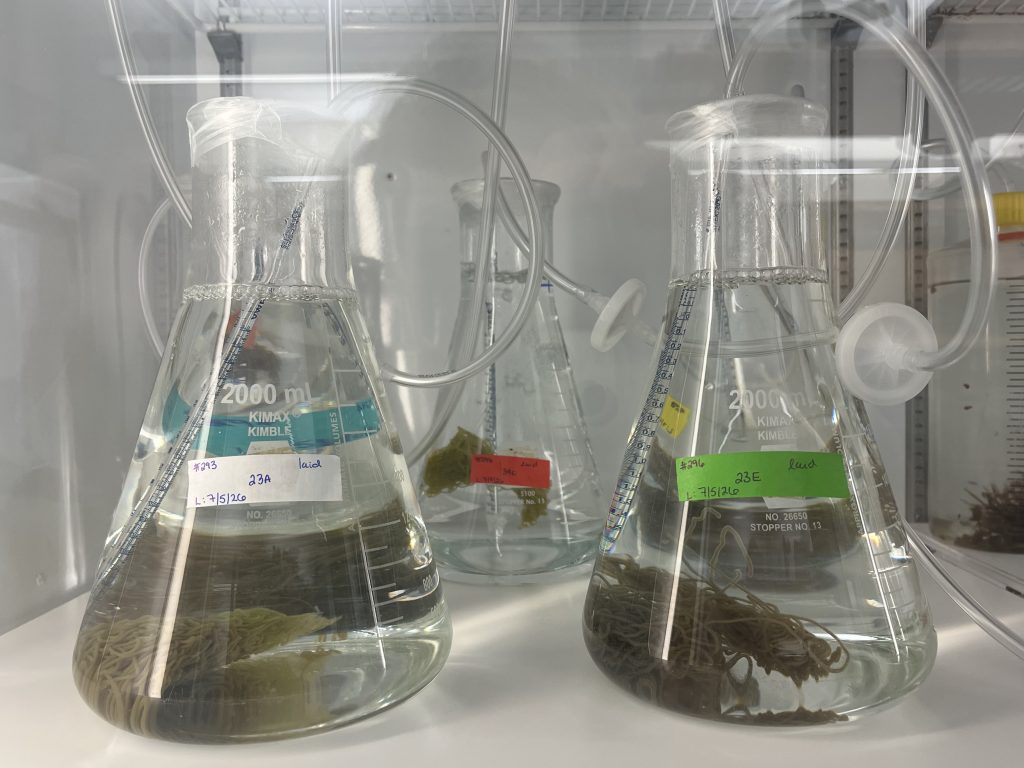
Aplysia egg masses are collected by the husbandry team and incubated until they hatch into larvae. © Danielle McDonald
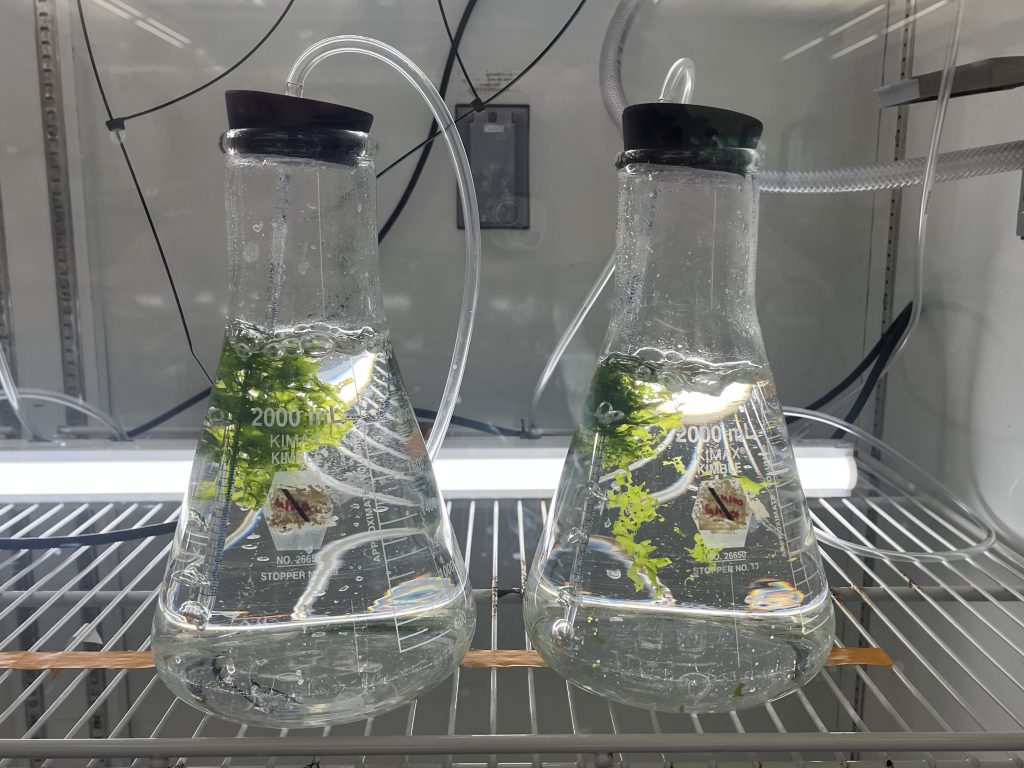
Microalgae is grown in flasks to feed the larval Aplysia. © Danielle McDonald
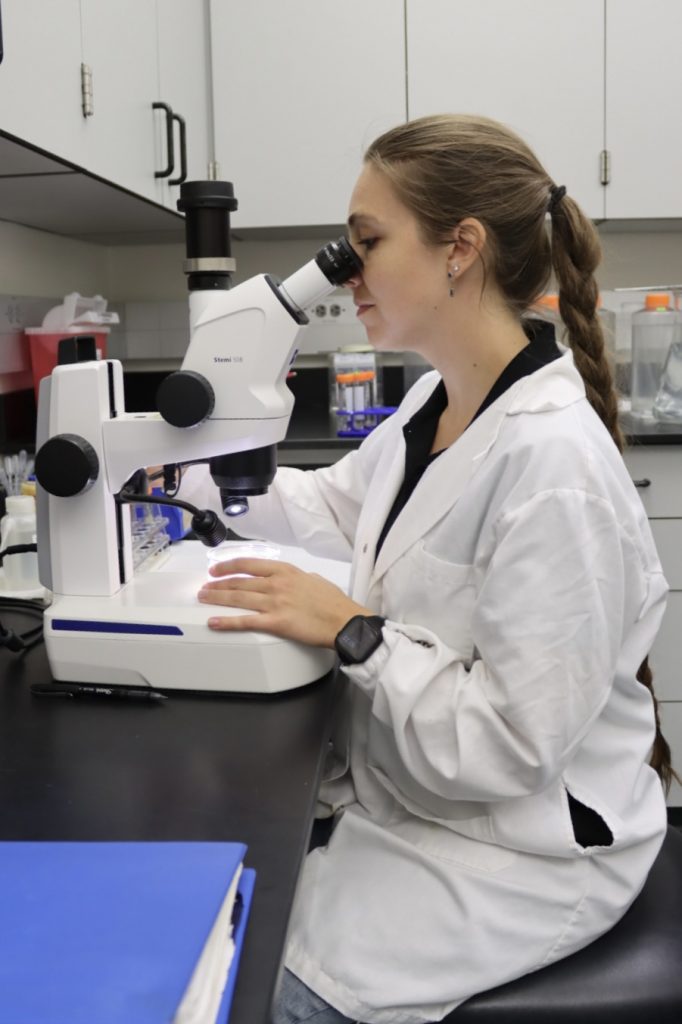
Sadie examines larval Aplysia under the microscope to monitor their development. © Danielle McDonaldk.com
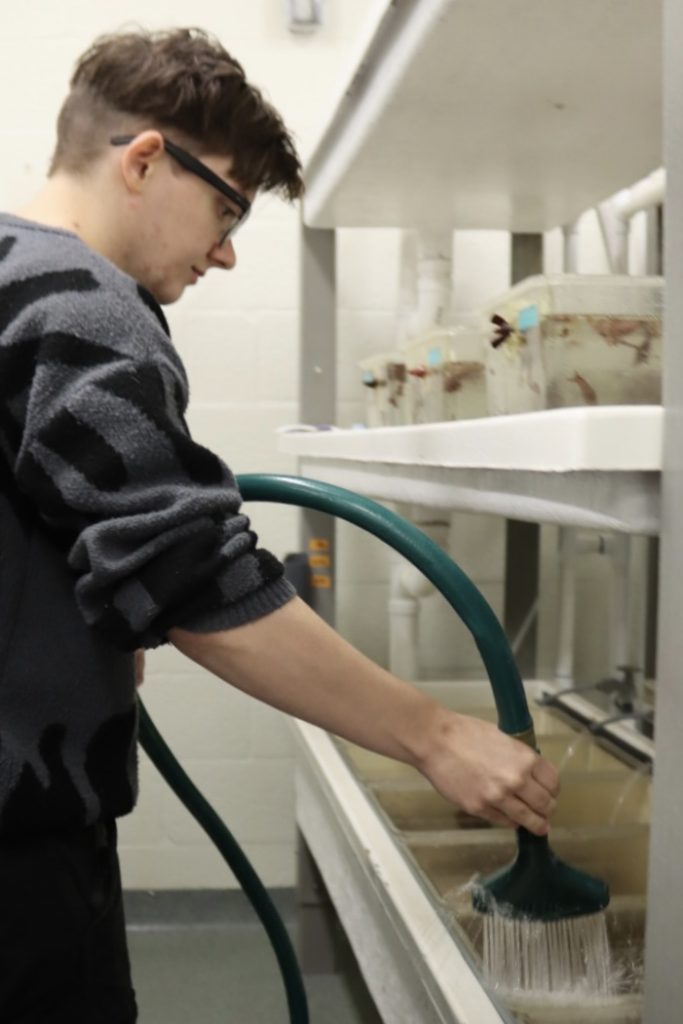
Adrian cleans the Aplysia tanks. © Danielle McDonald
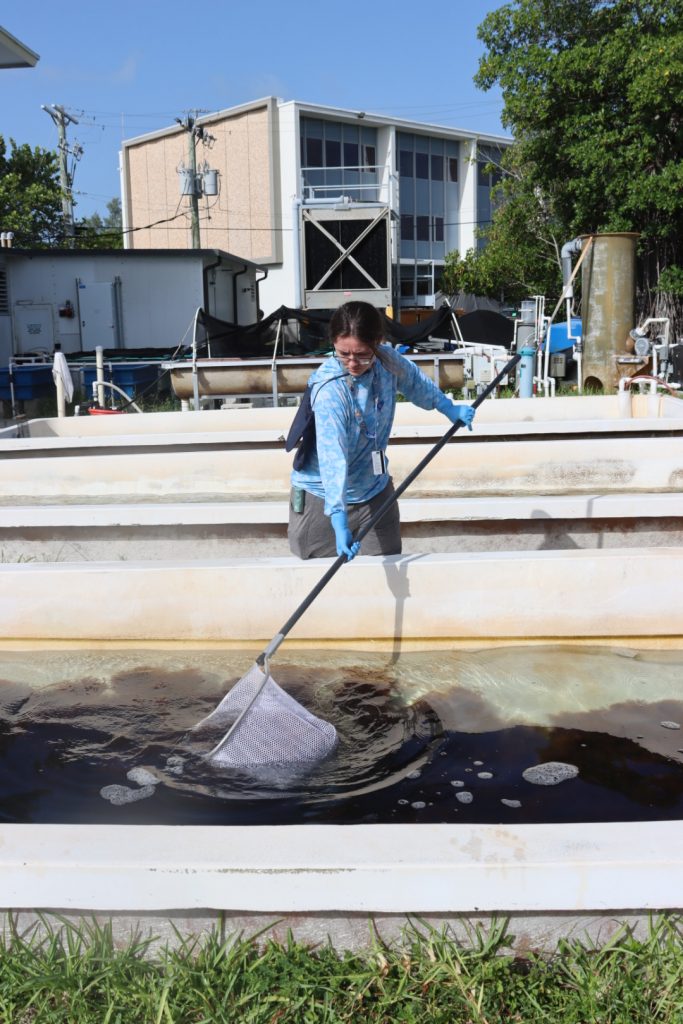
Lily collects macroalgae grown at the National Aplysia Resource to feed the adult Aplysia. © Danielle McDonald
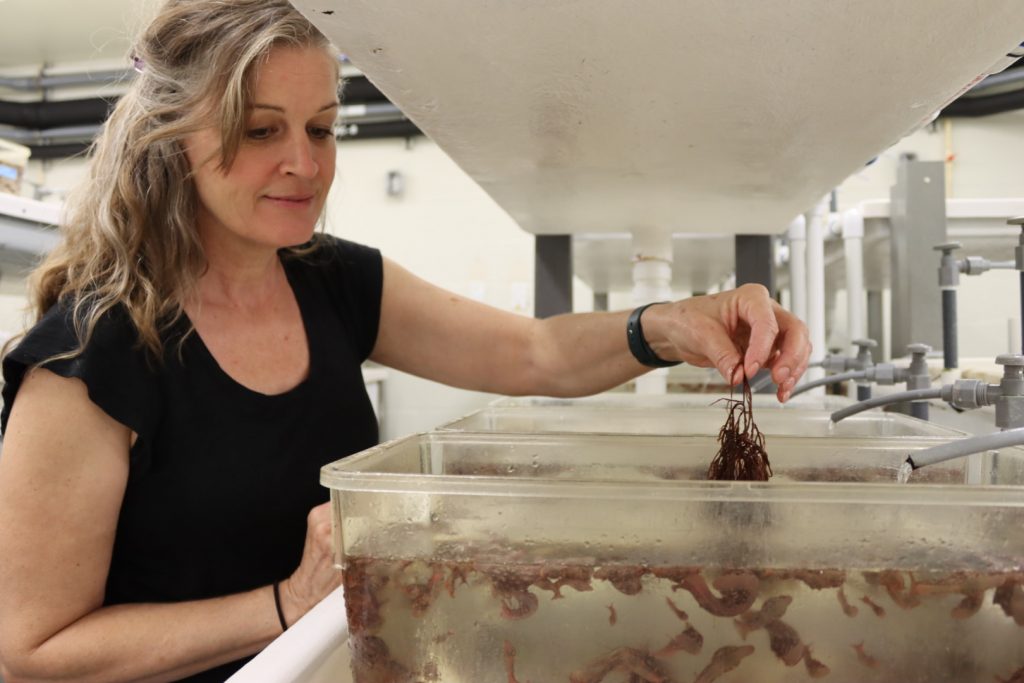
Danielle feeds Aplysia with macroalgae. © Danielle McDonald

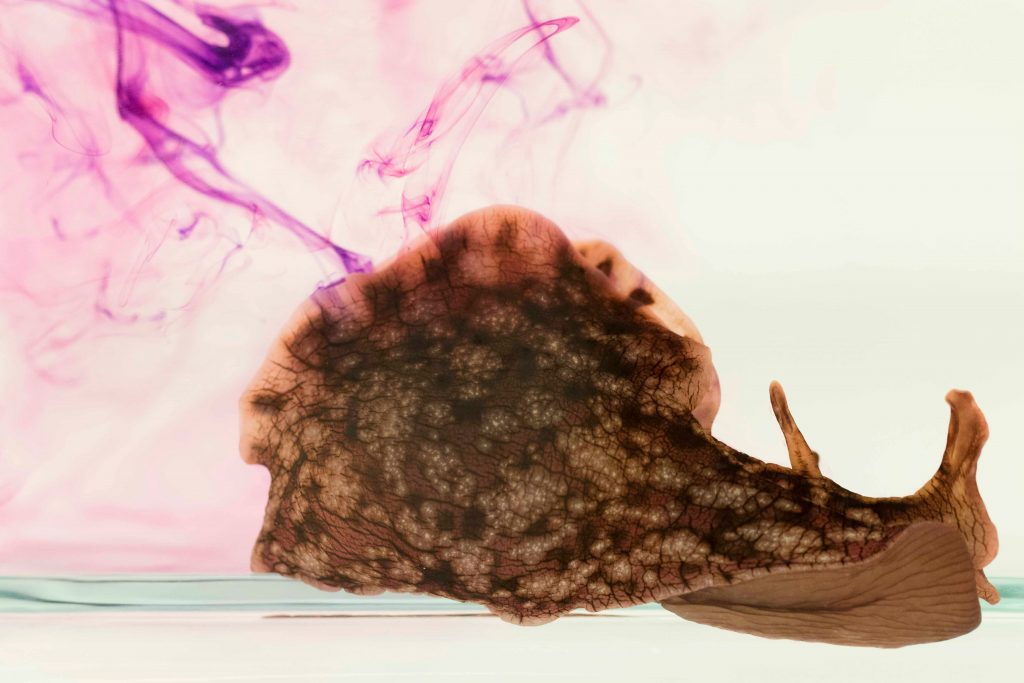
When they are scared, adult Aplysia release ink as a defence mechanism, which is purple due to the colour of the macroalgae they eat. © Phillip Gillette

Explore careers in marine biomedical science
Careers in marine biomedical science generally fall into the research and aquaculture sides of the field. “You should be excited to pursue any of these careers because they can help us solve real-world health challenges,” says Danielle.
Research careers include scientists and medical doctors who study marine animals as model organisms for human health and disease, as well as environmental toxicologists who study how toxic chemicals interact with marine ecosystems. Many researchers also work as university professors, teaching the next generation of marine biomedical scientists.
Careers in aquaculture include biotechnology specialists and roles in husbandry teams caring for research animals.
The Society for Integrative and Comparative Biology (sicb.org/resources/career-information) and the American Physiological Society (physiology.org/career/teaching-learning-resources/student-resources) provide information about careers in the field of marine biomedical science.
Meet Danielle
 As a teenager, I wanted to become a veterinarian. I loved animals, was interested in biology, and loved learning about the natural world.
I studied biology at university, followed by a PhD in fish physiology. Throughout my career, I have trained as a comparative physiologist, which involves studying how different species function and comparing their similarities and differences. For my PhD, I investigated kidney and gill function in different fish species. To explain my results, I had to learn about mammal physiology as well. So, even though I was studying fish, I incorporated information about humans into the interpretation of my findings, which led me to think about marine animals as model organisms.
Marine biomedical science is like solving a very complex puzzle. Studying marine animals can lead to important discoveries about human health and disease. Several Nobel Prize winners have used marine animals to answer human health questions, including Dr Eric Kandell who used Aplysia to study learning and memory.
Science is a collaborative effort and working with people from different backgrounds often leads to the most exciting discoveries. I enjoy working with colleagues and students to answer scientific questions by collecting data and trying to interpret our findings. It is exciting when our results support our hypotheses, and it is almost equally exciting when they don’t because it means we need to do more experiments to figure out why not.
In my free time, I enjoy hiking, birding, photography, reading, and watching TV and movies, as well as being a mom!
Danielle’s top tips
1. Be curious and keep asking questions.
2. Don’t be afraid to make mistakes, and don’t let your failures define you.
Do you have a question for Danielle?
Write it in the comments box below and she will get back to you. (Remember, researchers are very busy people, so you may have to wait a few days.)

Discover how cell biologists are using amoeba as model organisms to learn why problems with mitochondria in our cells can lead to disease:
futurumcareers.com/what-can-amoebas-teach-us-about-mitochondrial-dynamics
0 Comments