
Uncovering the biotechnological potential of microalgae
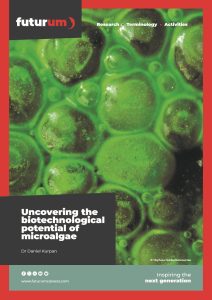
Microalgae are tiny organisms with huge potential. As well as being found in food supplements and skincare products, they could provide us with new drugs and be a source of sustainable fuel. However, most commercially cultured microalgae species are not adapted to grow in the regions where biotechnology companies want to use them. Which is why, at Agroscope in Switzerland, Dr Daniel Kurpan is collecting native microalgae species and analysing them to determine how they could be used for biotechnological applications.
Talk like a biotechnology researcher
Biofilm – a layer of microorganisms (e.g., slime that accumulates on a damp surface)
Biotechnology – the use of biological organisms to create products that benefit humans
Colorimetric method – a laboratory technique to measure the concentration of a compound based on its colour intensity
Culture – (noun) cells that have been grown in a laboratory; (verb) to grow cells in a laboratory
Lipid – an organic water-insoluble molecule (e.g., fats and oils)
Microalgae – a very diverse group of microscopic photosynthetic organisms (technically, they are not classified as plants)
Productivity – a measure of how much biomass can be produced per unit of volume per unit of time
Spectrophotometer – a device that measures how much light a sample absorbs and refracts
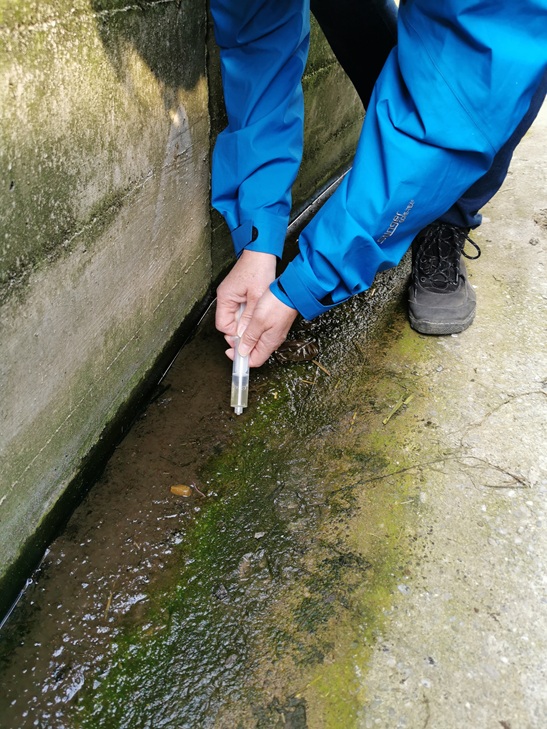
After a rainy day in the Swiss mountains, you might find Dr Daniel Kurpan poking around in puddles. He is on a mission to collect microalgae: microscopic photosynthetic organisms that are found in lakes, ponds, rivers, biofilms, oceans and – you guessed it – puddles!
“Microalgae are a group of very diverse organisms which can be used in various industrial sectors,” says Daniel, a biologist at Agroscope. “However, the incredible diversity of microalgae remains largely unexplored in today’s biotechnology sector.” Around the world, only a few species are currently grown and used for commercial applications, meaning we are missing out on the huge potential benefits that microalgae could bring to society.
Why are microalgae useful?
Have you ever had a drink or smoothie containing spirulina? If so, you have consumed microalgae! Spirulina is commonly used as a dietary supplement due to its many health benefits, and scientists are looking to microalgae as a sustainable, plant-based way to feed the world’s growing population. Many microalgae species are high in protein and vitamins, making them an ideal food source for humans and animals. Microalgae with a high lipid content can be used to produce biodiesel, providing a sustainable source of energy. And microalgae containing anti-inflammatory compounds and antioxidants are used in the pharmaceutical industry to develop new drugs and cosmetic products.
Why is Daniel collecting Swiss microalgae?
Most of the microalgae species that are currently used for biotechnological applications come from tropical regions. However, biotechnology companies in non-tropical parts of the world can benefit in two ways from using local microalgae instead. “First, native species are already adapted to local conditions,” explains Daniel. “Second, they do not pose environmental risks associated with the introduction of exotic species.”
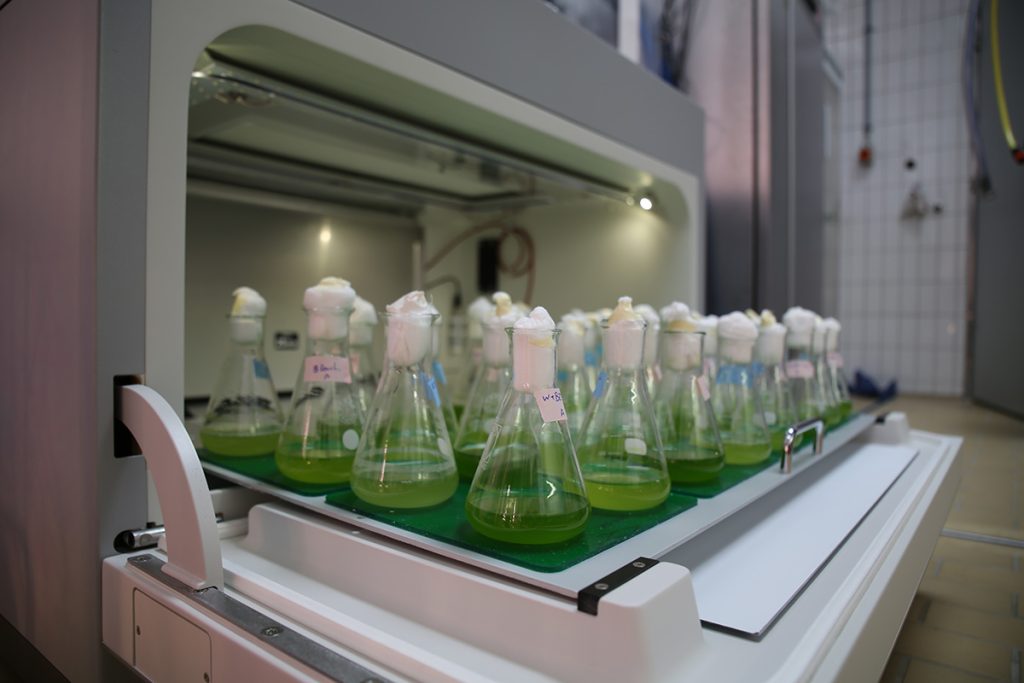
Daniel is part of the team that has been creating AlgoScope, the first public Swiss microalgae culture collection. “We conduct sampling campaigns throughout Switzerland to collect samples of native microalgae species,” he explains. “Back in the laboratory, we isolate each species, characterise them to determine their properties, then maintain them as cultures so they will survive in the collection for extended periods.” So far, AlgoScope contains over 120 Swiss microalgae species. “This culture collection provides new biological and genetic resources for study and exploitation,” Daniel continues. Scientists can examine the collection to find microalgae species that could be used to improve the national biotechnology sector.
How is Daniel analysing native microalgae species?
Having built up the microalgae culture collection, Daniel is now analysing some of the species it contains to explore their biotechnological potential. Characteristics such as productivity and biochemical composition impact whether a microalgae species will be useful for commercial applications, so these are key properties that Daniel is investigating. “Market demand must be met in terms of both quantity and quality,” he explains. “For example, if the goal is to create a protein source for food, the microalgae biomass must contain an adequate amount of high-quality proteins.”
To be commercially useful, a species must have a high enough productivity that growing it is economically viable. To test the productivity of different species, Daniel measures the growth rate of samples that he cultures, using three different techniques to monitor cell growth. At regular intervals, he uses a microscope to count the number of microalgae cells in a sample, he dries and weighs a known volume of culture, and he uses a spectrophotometer to track changes in the colour of the culture as the cells grow.
The biochemical composition of a microalgae species will determine what applications it can be used for, with protein-rich species being useful for food supplements and lipid-rich species being useful for energy production. To analyse the composition of different species, Daniel uses colorimetric methods and physical separation methods. “Colorimetric methods involve a molecule that binds to the specific compound of interest, resulting in a colourful complex,” he explains. “The intensity of the resulting colour is proportional to the concentration of the compound of interest and can be measured using a spectrophotometer.” Physical separation methods, such as filtration, evaporation and distillation, physically separate the compound of interest out from the sample, where it can then be measured (e.g., by weighing or comparing with known standards).
Reference
https://doi.org/10.33424/FUTURUM725


What has Daniel discovered?
“We have discovered that microalgae growth characteristics are extremely diverse and species-specific, which aligns with the huge physiological diversity of microalgae,” Daniel says. “We have also discovered that, despite the great diversity among microalgae, the amino acid profiles of most species are very similar.”
In a recent study, Daniel characterised the productivity and biochemical composition of seven native Swiss microalgae species from AlgoScope. He identified two species (C. saccharophilum and T. brasiliensis) that have great potential for being used as animal feed, as both have high productivity, protein levels and fatty acid content. “Based on our results, these species are good candidates for feed material,” he says. “However, scale-up feasibility analysis and animal acceptance tests need to be conducted before actual implementation.”
Through his research, Daniel is exposing the incredible potential of microalgae for solving some of the world’s most pressing problems, such as how to sustainably feed and power an ever-growing population. These amazing organisms will have an exciting role in the biotechnology of the future!
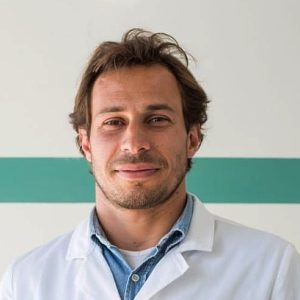 Dr Daniel Kurpan
Agroscope, Switzerland
Fields of research: Biotechnology; microbiology; phycology
Research paper: Isolation, characterization, and maintenance of native Swiss microalgae for biotechnological prospection. Kurpan et al. (2025) doi: 10.1038/s41598-025-10989-w
Funders: Lidl Switzerland; Swiss Federation
Do you have a question for Daniel?
Write it in the comments box below and he will get back to you. (Remember, researchers are very busy people, so you may have to wait a few days.)
2 Comments
Submit a Comment
Biologists are exploring how microalgae can improve the health of honeybees by acting as edible vaccines:
How did you come up with the idea? and how is it going now?
Dear Keith,
I have been working with microalgae cultivation and physiology for a long time.
First, I worked with small cultures (a few milliliters) to investigate the metabolic and biochemical features of microalgae. Then, the scientific community, industrial partners, and stakeholders naturally raised the question: Can microalgae be used to increase the sustainability of industrial processes?
Today, I focus on trying to link the scientific knowledge with the potential industrial exploitation of these microorganisms. And I must say it is going pretty well. Several industrial sectors are interested and investing, and the microalgae sector itself has grown substantially over the last few decades.
One recent example is that this year’s Nobel Prize in Physiology and Medicine was awarded for a groundbreaking medical discovery that began with the fundamental research on how a microalga perceived light!
Let me know if you have more questions!