
What are lakes revealing about the impacts of permafrost thaw?
As a limnologist at York University in Canada, Dr Jennifer Korosi spends her summers collecting water samples and mud from the bottom of lakes in the Dehcho region of the Northwest Territories. By analysing these mud and water samples, Jennifer is uncovering how lakes in peatland environments are responding to permafrost thaw, helping communities to manage the impacts of climate change.
Talk like a limnologist
Logger — an instrument that continuously measures water properties
Peatland — a type of wetland in which waterlogged soils prevent the full decomposition of organic matter
Permafrost — ground that remains frozen for two or more consecutive years
Sediment core — a tube of mud collected from the bottom of a lake
Sporadic discontinuous permafrost — land in which 10-50% of the ground is permafrost
Two-Eyed Seeing — combining Indigenous knowledge with western science
Watershed — the land that drains into a river or lake
As the world warms up, the permafrost underlying Canada’s northern forests is thawing, resulting in dramatic changes to the landscape and significant impacts for communities in the region. Dr Jennifer Korosi, a limnologist at York University, is studying northern peatland lakes to understand the impacts of permafrost thaw on water quality.
How is permafrost thaw impacting peatlands?
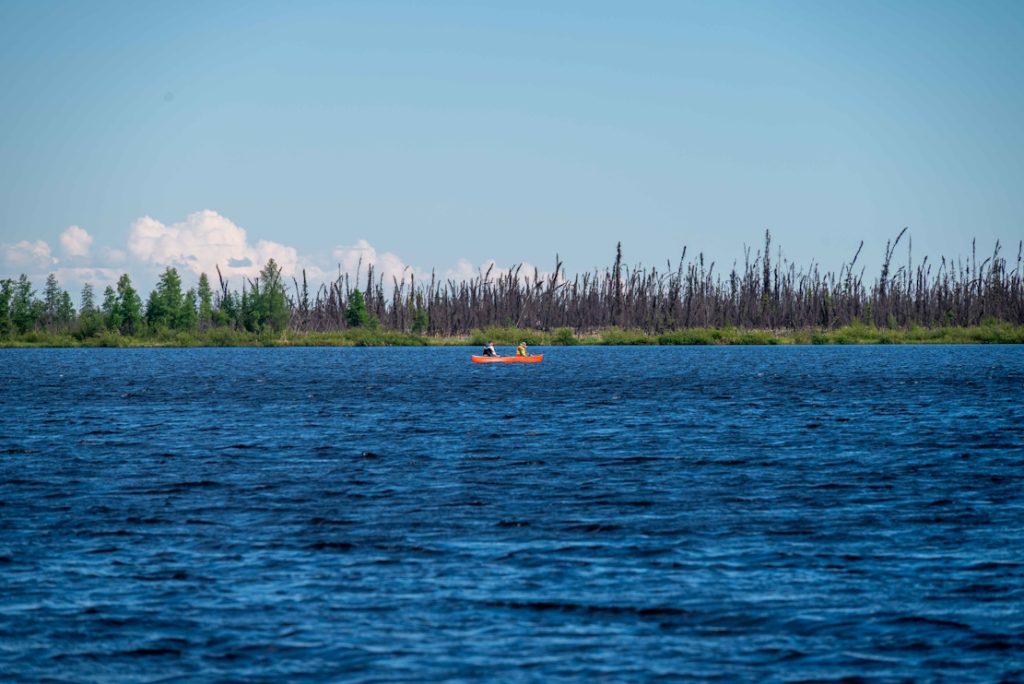
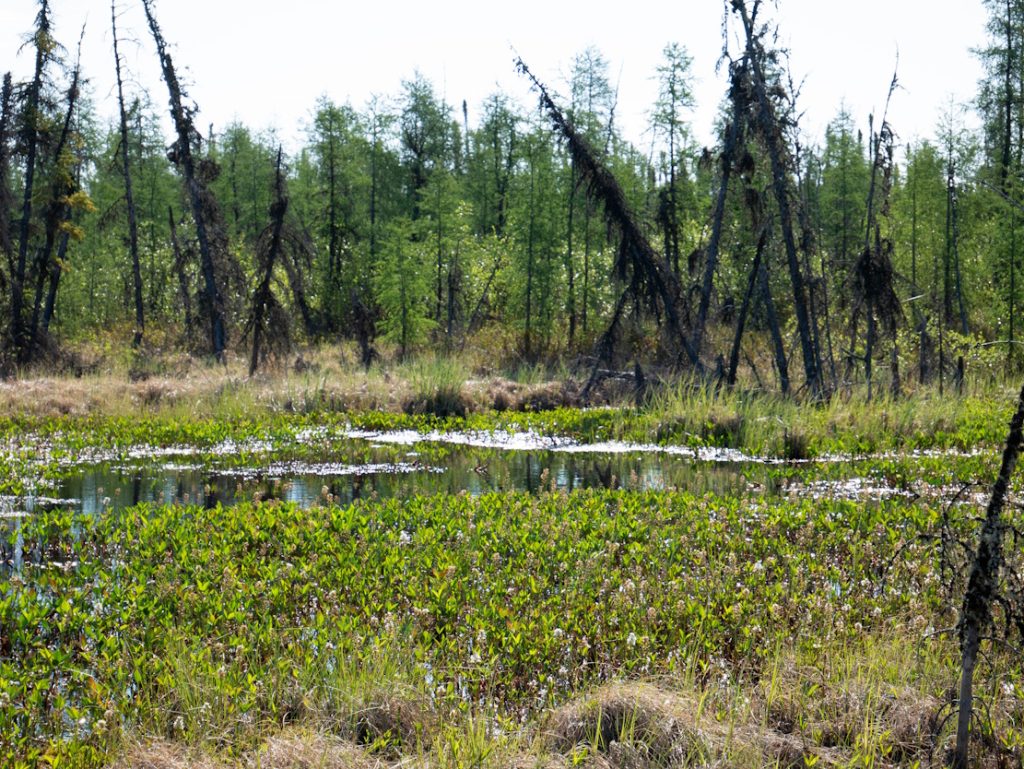
“The sporadic discontinuous permafrost zone is very sensitive to increases in air temperatures, so climate warming is causing widespread permafrost degradation,” says Jennifer. “As the permafrost thaws, peatlands collapse causing trees to lean over (what we call ‘drunken trees’). And as the ground converts into wetland, the trees die due to the wetter soil conditions.”
Jennifer and her team are examining the impacts of permafrost thaw on inland waters by studying the lakes around the Scotty Creek Research Station, an Indigenous-led field research station in the Dehcho region of the Northwest Territories of Canada. Run by the Łı́ı́dlı̨ı̨ Kų́ę́ First Nation in partnership with Sambaa K’e and Tthets’éhk’edélî First Nations, the research station allows environmental scientists to study sporadic discontinuous permafrost peatlands in collaboration with Indigenous knowledge keepers. “The station provides a space for community members and academic researchers to learn from each other to understand how the lands and waters of the region are being transformed by climate change, and how communities can respond,” says Jennifer.
How is Jennifer studying peatland lakes?
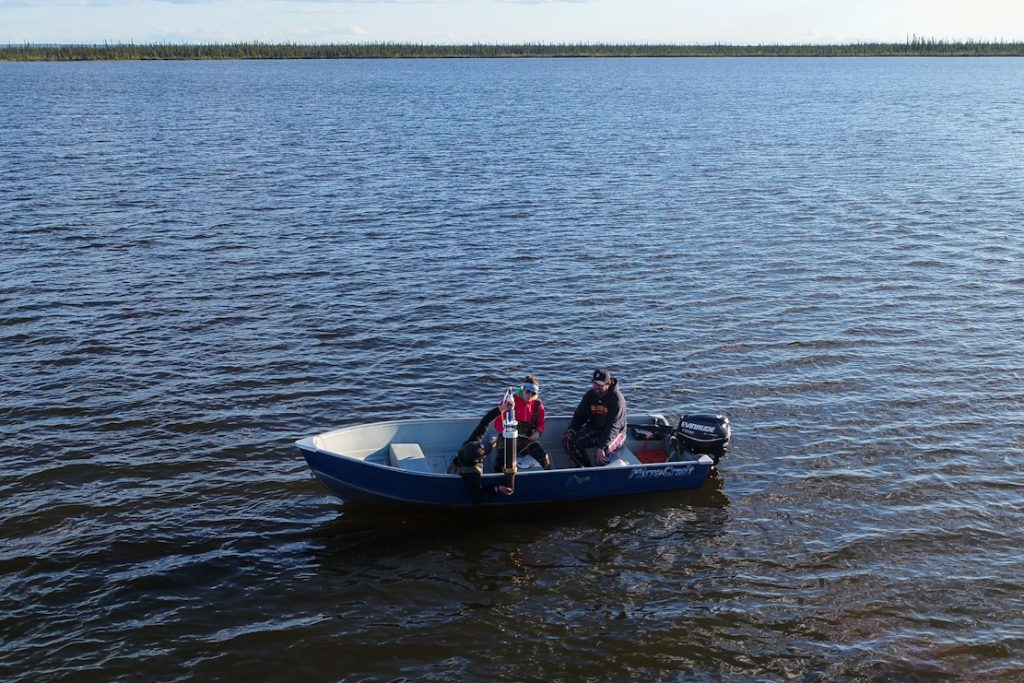
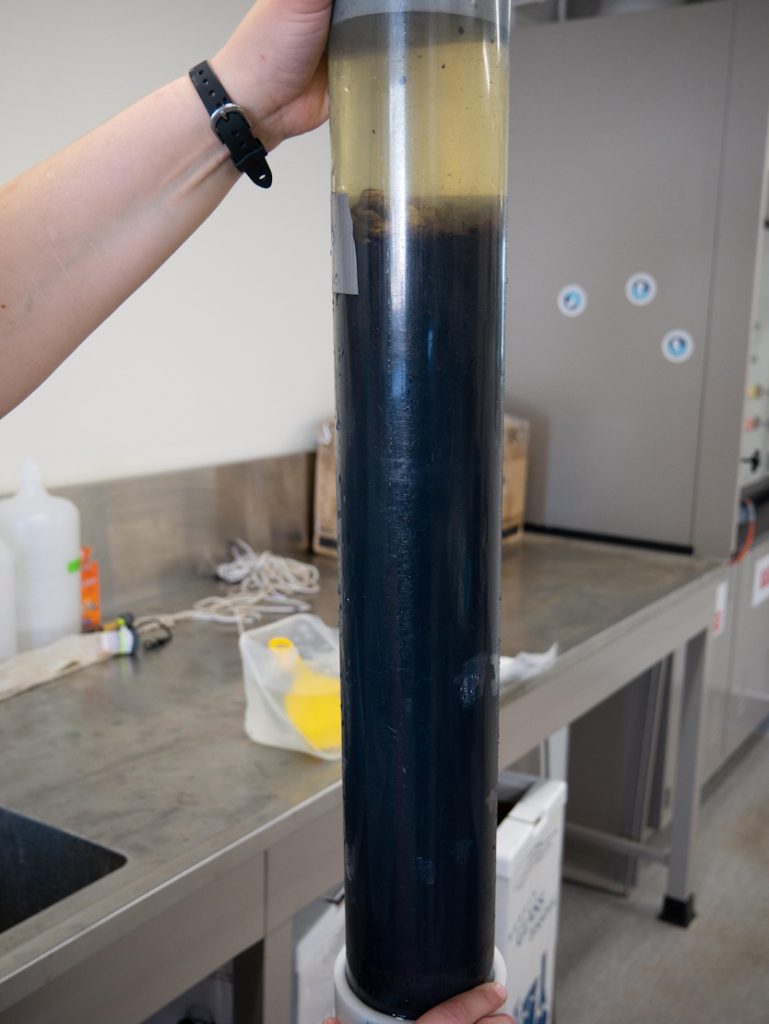
“Our work combines lake sediment coring with intensive lake field studies to better understand the structure and function of the lakes, and how they are connected to their watersheds,” says Jennifer. She uses gravity coring to collect sediment cores, which involves lowering a tube from a boat to the bottom of a lake and allowing it to slowly sink into the mud. The top of the tube is then sealed, allowing the team to pull the tube back up through the water while keeping the sediment inside. “It’s much like if you put a straw in liquid, seal the top with your finger, then lift the straw up,” Jennifer explains. “Before we pull the tube fully out of the water, someone reaches under it and seals the bottom end to stop the mud from falling out.”
But extracting the mud is only the beginning of the process. “Lake sediment coring is a quick process – we can core several lakes in a day,” says Jennifer. “It then takes a year or more to analyse the cores back in the lab!” Mud builds up on the bottom of a lake over time, so the sediment at the top of the core is younger than the sediment at the bottom. This means sediment cores provide a history of the lake, and by analysing changes in the sediment throughout the core, Jennifer can uncover changes in the lake’s conditions through time.
For example, changes in sediment chemistry and the types of tiny fossils (e.g., algae, zooplankton and invertebrates) preserved in the sediment tell Jennifer how nutrient, temperature and light levels in the lake have changed throughout the past, how food web structures have evolved, whether there were past fires in the surrounding landscape, and if potential contaminants like mercury have increased in lakes. “All this information can be found in the lake mud!” she says.
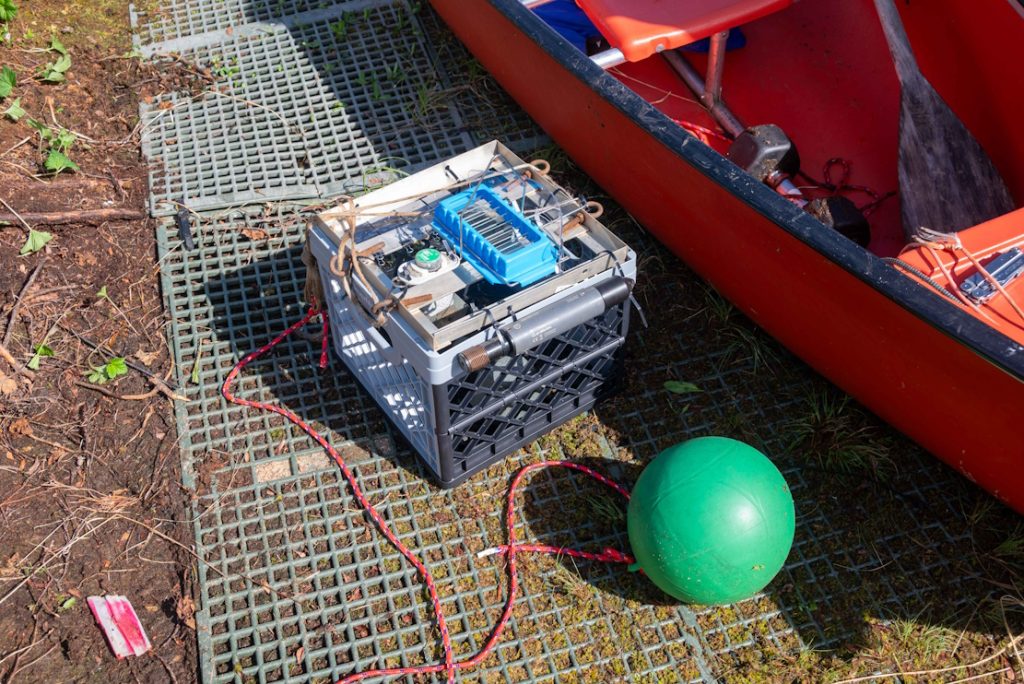
To study how the watershed characteristics and weather conditions affect present-day lake conditions, Jennifer and the team put loggers in the lakes each year in early June. These continuously record measurements such as temperature, dissolved oxygen and light levels over the summer, before Jennifer returns in late August to collect them and retrieve the data. “We also collect water samples at the beginning and end of the summer to look at water chemistry and algal communities,” she says. “We’ve been doing this for several years now, building up a long-term dataset of lake conditions and how they are changing from year to year”.
What has Jennifer discovered?
“Lake responses to permafrost thaw are unique,” says Jennifer. “All lakes in the region are being impacted by accelerating permafrost thaw, but we aren’t seeing any consistent regional trends in how the lakes are responding.” Her team’s research indicates that fire is likely an important trigger for long-term lake change, which Jennifer suspects is because wildfires increase permafrost thaw.
As the peatland thaws, more nutrients and organic matter are being delivered to lakes via rivers, which is having various impacts on the lakes. Some, but not all, are turning darker in colour due to this organic matter.
“Overall, we’ve learnt that each lake has a unique relationship to its surrounding landscape,” concludes Jennifer. She is continuing to investigate how lakes reflect changes in their watersheds so she can better predict how they will respond to permafrost thaw. “By working together with community members, we can use a Two-Eyed Seeing approach to gain deeper insights into how and why lakes are changing,” says Jennifer. “I hope our research responds to concerns identified by communities about how their lands and waters are changing, and that they can use our findings in a meaningful way.”
 Dr Jennifer Korosi
Limnology and Paleoenvironmental Research Group, Faculty of Environmental and Urban Change, York University, Canada
Field of research: Limnology
Research project: Studying past and present changes in northern peatland lakes to understand the impacts of permafrost thaw
Funders: Natural Sciences and Engineering Research Council of Canada (NSERC); ArcticNet
Website: lprg.ca
About limnology
Limnology is the study of inland waters. This includes lakes, ponds, rivers and streams, as well as wetlands like the permafrost peatlands Jennifer studies. Limnology is vital for conserving freshwater supplies and protecting aquatic ecosystems.
Jennifer’s research falls in the subdiscipline of paleolimnology – the study of lake sediment cores to reconstruct environmental change over time. “Paleolimnology lets us look back in time (decades, centuries or millennia – depending on how deep the sediment core is) to track environmental changes and better understand how human impacts like pollution and climate change have altered lake ecosystems,” she explains.
Reference
https://doi.org/10.33424/FUTURUM722
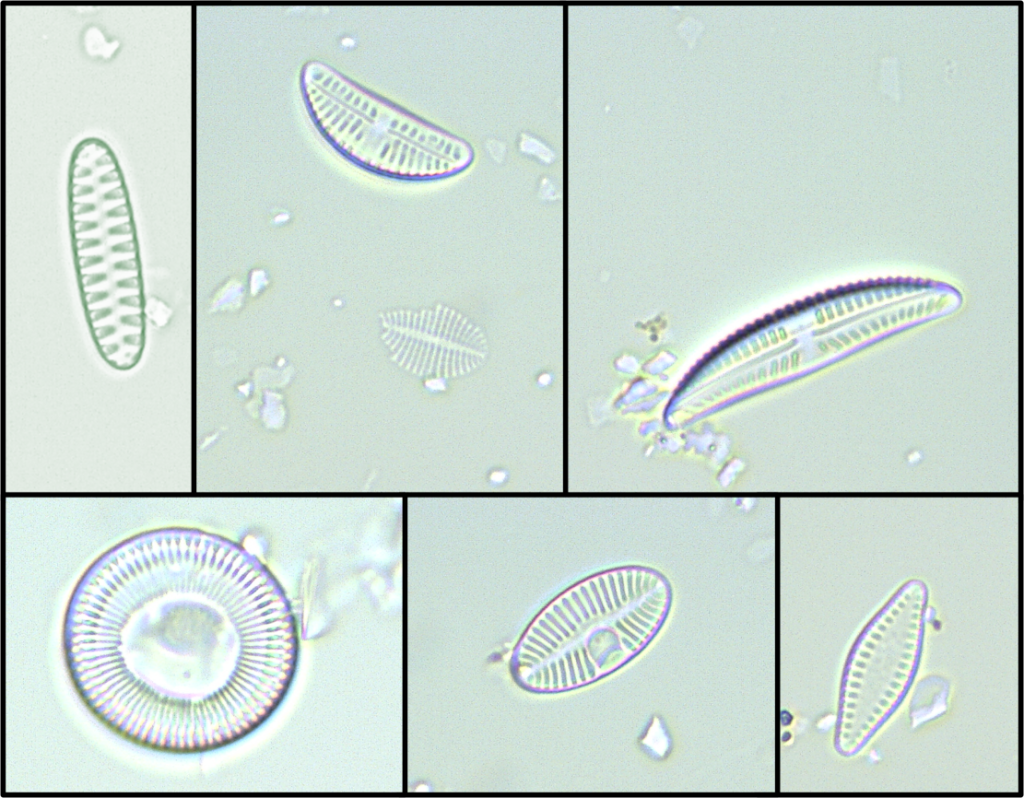
Photos of algal (diatom) cells that are preserved as fossils in lake sediment cores. Different species thrive under different environmental conditions, which allows Jennifer to understand how the lake and its watershed have changed over time.
All images © Jennifer Korosi
What does limnology fieldwork involve?
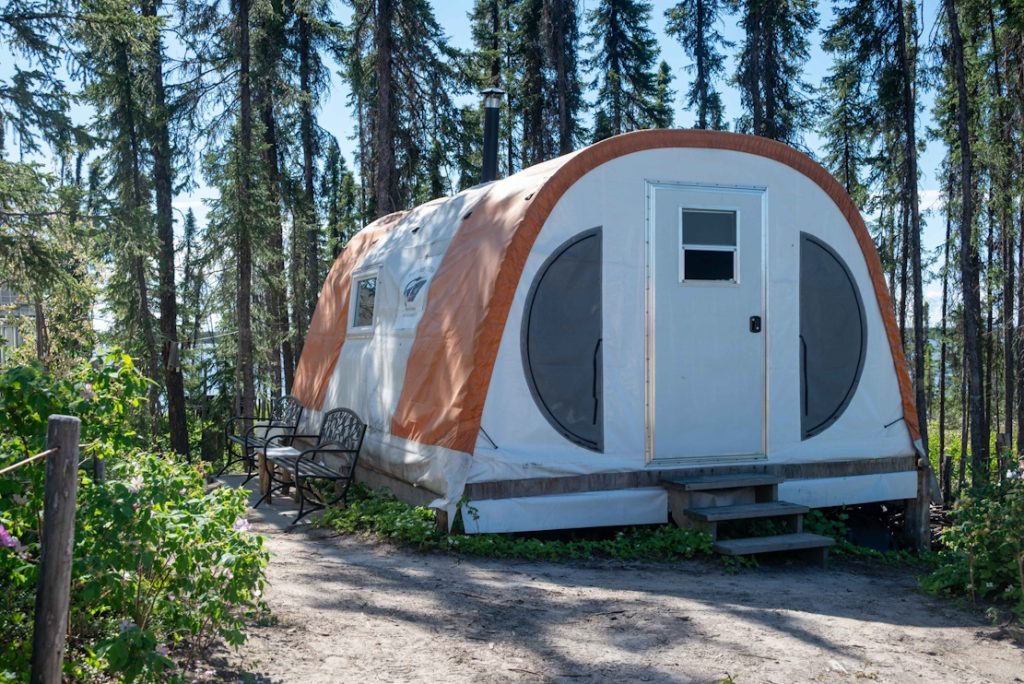
The Scotty Creek Research Station has not been immune to the effects of permafrost thaw – it has had to be relocated twice since it was first constructed in the 1990s as the peatland has collapsed, and it had to be rebuilt after being burnt down by a forest fire in 2022. The station is composed of permanent tents connected by a series of boardwalks that allow people to walk around on the wet peatland. There are no roads to access the station, so Jennifer and her team arrive by float plane. The station operates all year round, and in winter, researchers travel there by snow machine.
“A typical day of fieldwork involves hiking to the lakes from the station with our gear, then spending several hours collecting cores and water samples, before carrying everything back to base,” says Jennifer. “It’s hard work and involves a lot of heavy lifting, but fieldwork is the best part of the job!”
Fieldwork can also be challenging. The weather can be bad, equipment can break and the remote location means researchers can’t just go to the store to get new supplies. “To overcome this, we prepare extensively for field seasons,” says Jennifer. “We try to anticipate what might go wrong and have back-up plans in place to deal with them. But we can’t anticipate everything, so the most important thing is to be able to think creatively and stay calm in stressful conditions.”
Pathway from school to limnology
“Limnology is a field that integrates biology, chemistry, physics, physical geography, geology and social sciences to better understand and protect our inland waters,” says Jennifer.
At high school, studying geography, biology and chemistry will teach you about water systems, while mathematics will give you the skills limnologists need to statistically analyse data.
“The most common university degrees for studying limnology are biology, physical geography and environmental science,” says Jennifer. “There are also several environmental technician programmes at colleges that train students in limnological sampling.”
“The most important advice I have is to spend time on or near the water,” says Jennifer. “There is so much you can learn from lakes that you can’t easily learn in a classroom. And if you are interested in field-based limnology work, learn to be comfortable working in bad weather!”
Explore careers in limnology
“Limnology work has never been more important, as urbanisation and natural resource development accelerate in the context of a warming climate,” says Jennifer. “We need people who can understand and appreciate the complexity of our inland aquatic ecosystems and help in the search for solutions.”
Limnologists can find work with governments, conservation authorities, environmental consulting companies, not-for-profit organisations and research institutions.
Look for opportunities to volunteer with conservation authorities and lake stewardship societies to gain practical experience and meet like-minded people. For example, organisations such as Freshwater Conservation Canada (freshwaterconservationcanada.org) and the Canada Lakes Conservation Association (canadalakesconservation.com) run activities and events for community members.
Academic organisations provide information about limnology research and careers. Explore the websites of the International Society of Limnology (limnology.org), the Association for the Sciences of Limnology and Oceanography (aslo.org), the International Paleolimnology Association (paleolim.org) and the Society of Canadian Aquatic Sciences (scas-scsa.ca).
Meet Jennifer
In high school, I played hockey and soccer, and I was an avid reader. I’ve also always loved to be outside. As a teenager, I enjoyed hiking, camping and paddling – activities I still love today. I also now enjoy gardening, skiing and fishing – anything that gets me outside!
I took a limnology course during my undergrad in biology, and that was the moment I knew I wanted to be a limnologist. I got a summer research assistant position with the professor of that course, which involved three weeks of fieldwork taking sediment cores from lakes in the Halifax metropolitan area. I then did my undergraduate honours thesis with the same professor, studying zooplankton fossils in sediment cores from lakes in the Muskoka region of Ontario, which led me to graduate school.
I’ve been lucky to have so many amazing field experiences! One of my favourite memories is of a community event at the Scotty Creek Research Station. It was a beautiful day, and it felt meaningful for us to all come together, especially as it came shortly after COVID.
Permafrost thaw is a complicated issue. Bringing together people with diverse experiences and knowledge leads to better research, as well as research that is more likely to lead to tangible benefits for the communities who are most impacted by climate change. As a researcher from a university in southern Canada, I’ve learned so much from the Dene communities of the Dehcho who have taken care of the land since time immemorial.
I love to be out on the water. The landscapes of the Dehcho region are beautiful, and I feel very fortunate to spend so much time there. I am also passionate about freshwater conservation. I’m grateful to have a job where I can make a difference in raising awareness about the challenges facing our lakes and helping make better decisions about freshwater stewardship.
My favourite fact about lakes is that they have memory! The history of the lake, including how it formed and any disturbances it experienced in the past, influences how resilient a lake is to future stresses.
Jennifer’s top tip
Don’t be afraid to make mistakes. When I look back on my career path, the most important and transformative moments came from difficult times and when I made mistakes. Those mistakes will help you learn and teach you what is important to you and what you are capable of. So focus more on your personal growth rather than comparing yourself to others.
Do you have a question for Jennifer?
Write it in the comments box below and she will get back to you. (Remember, researchers are very busy people, so you may have to wait a few days.)

Learn how wetlands are being impacted by human activities and climate change:
futurumcareers.com/wetlands-in-a-changing-world-the-climate-benefits-of-wetlands
0 Comments