
Exposing the beauty of mathematics with fractals
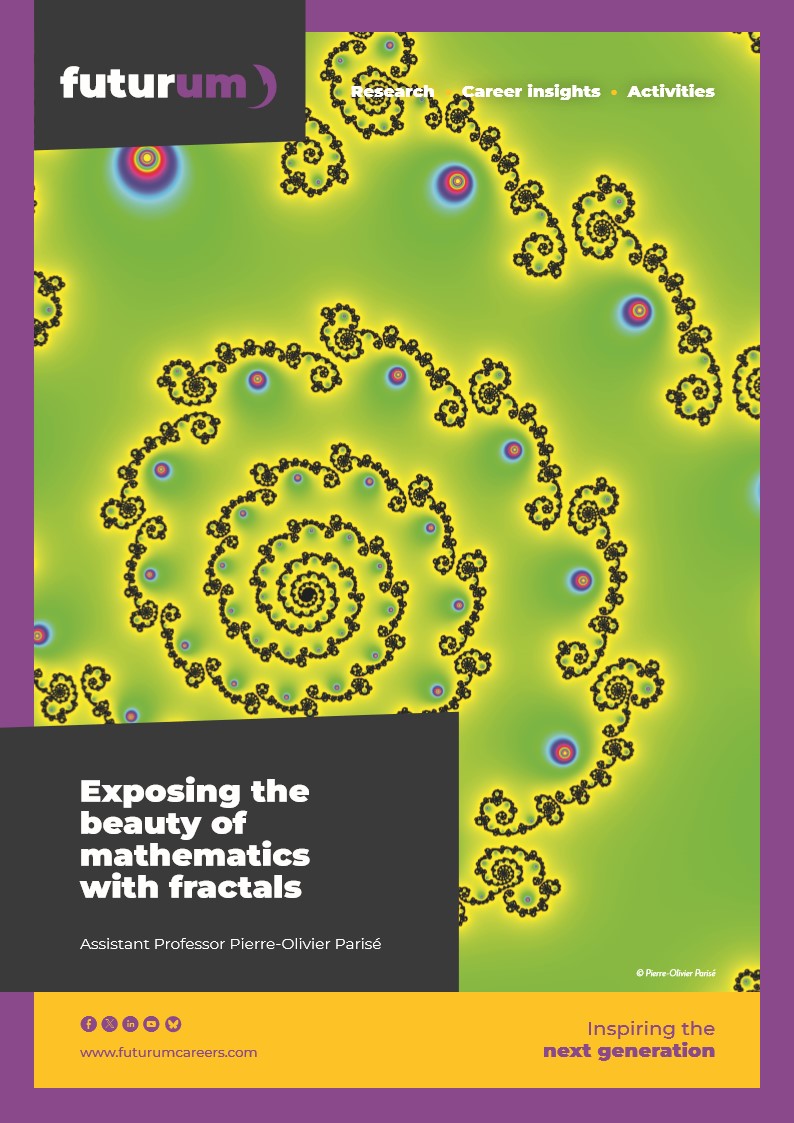
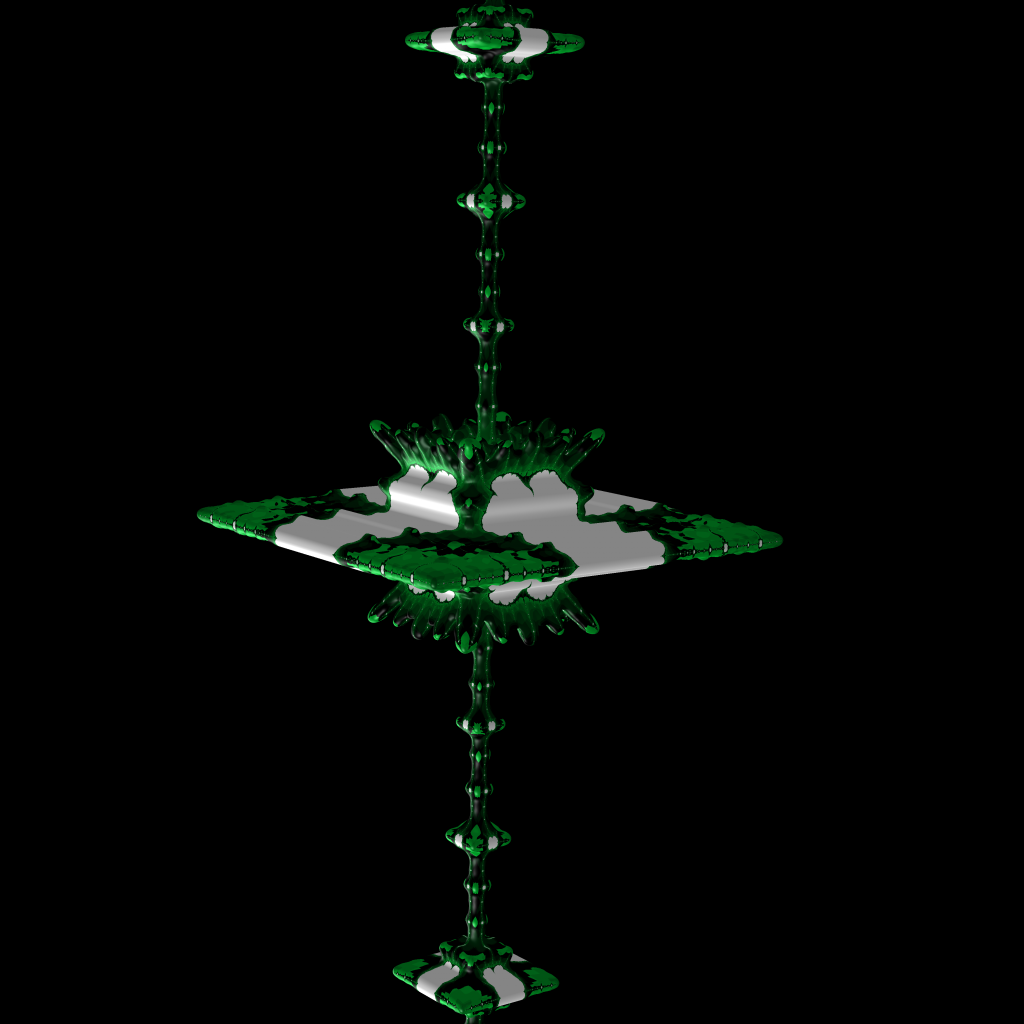
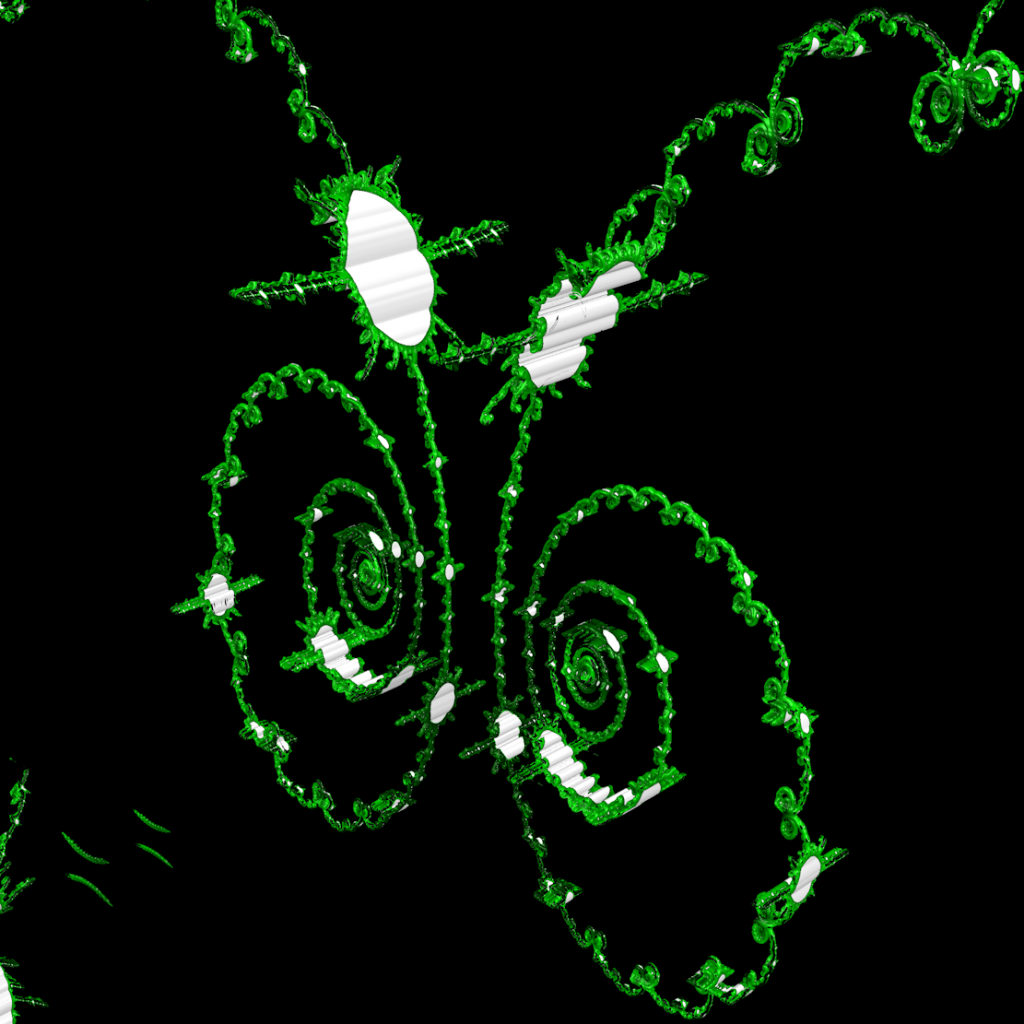
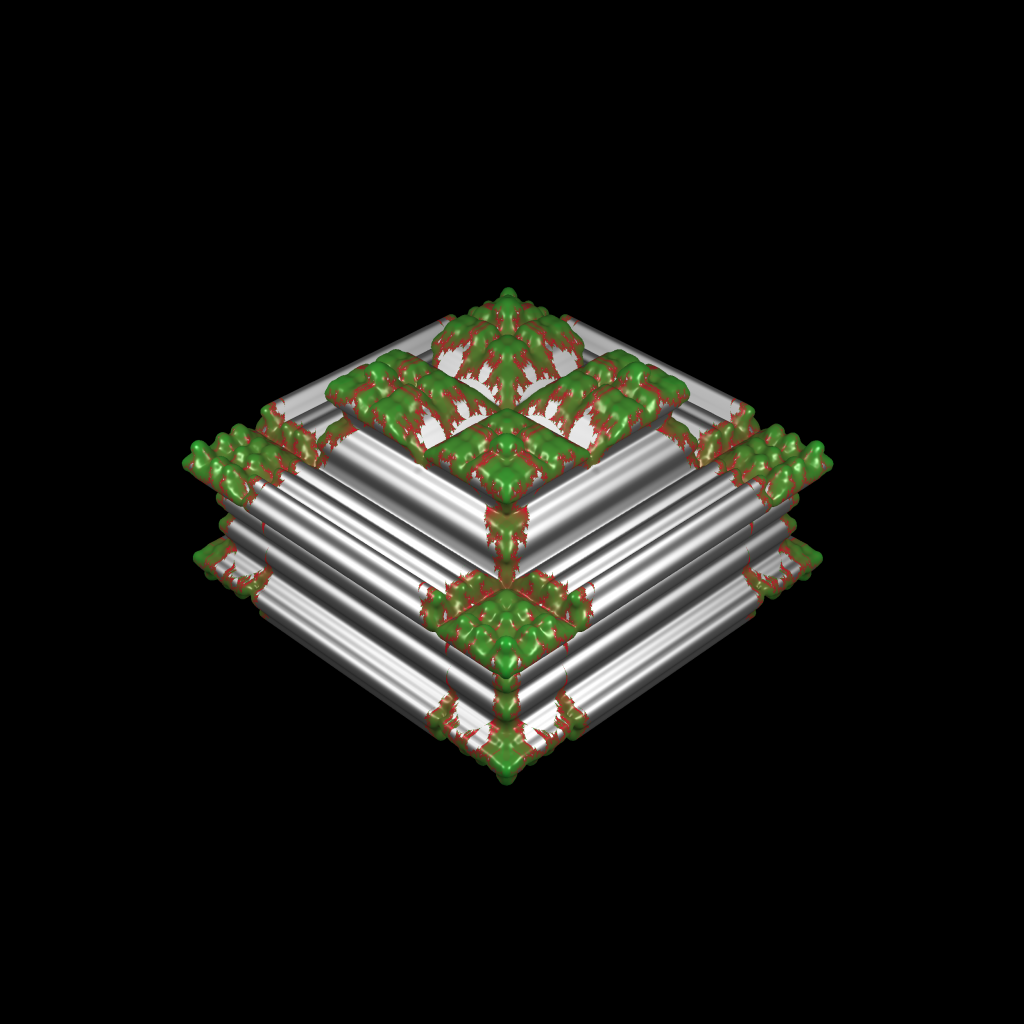
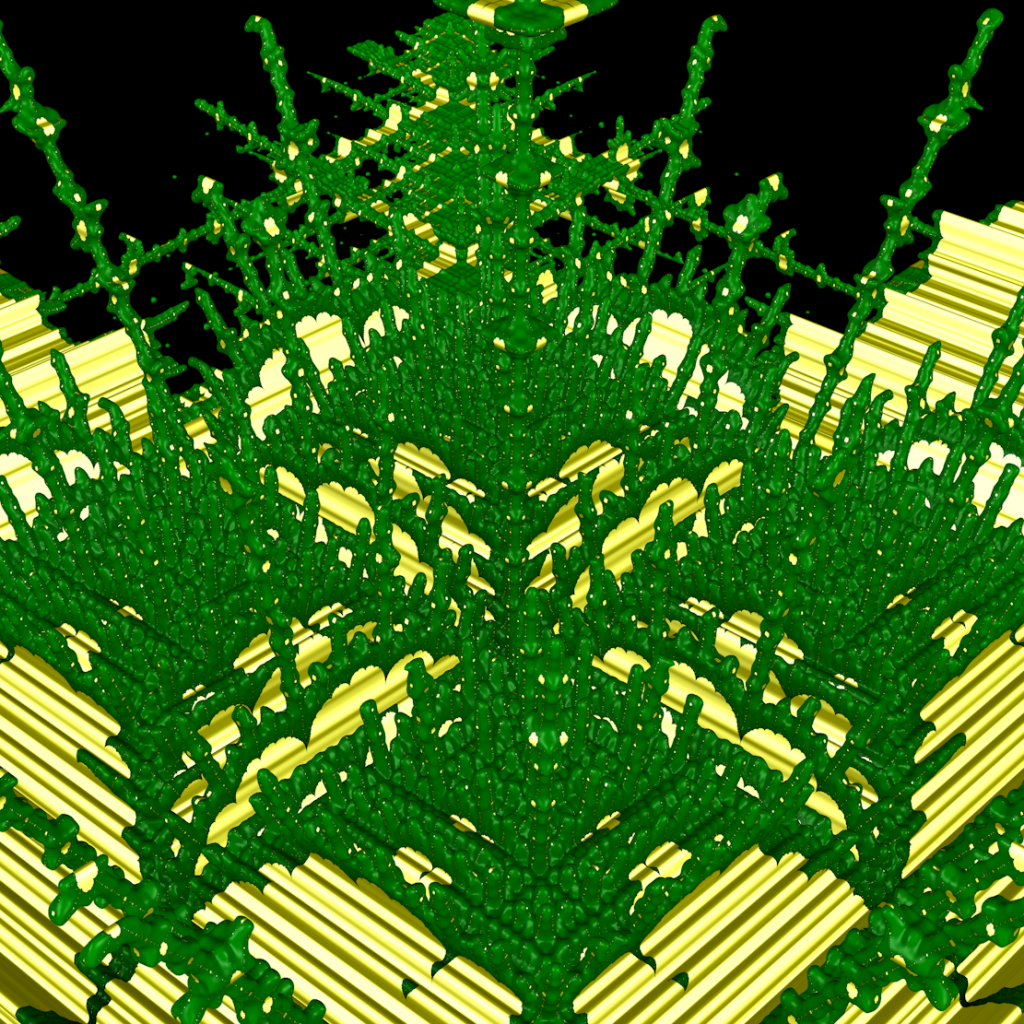
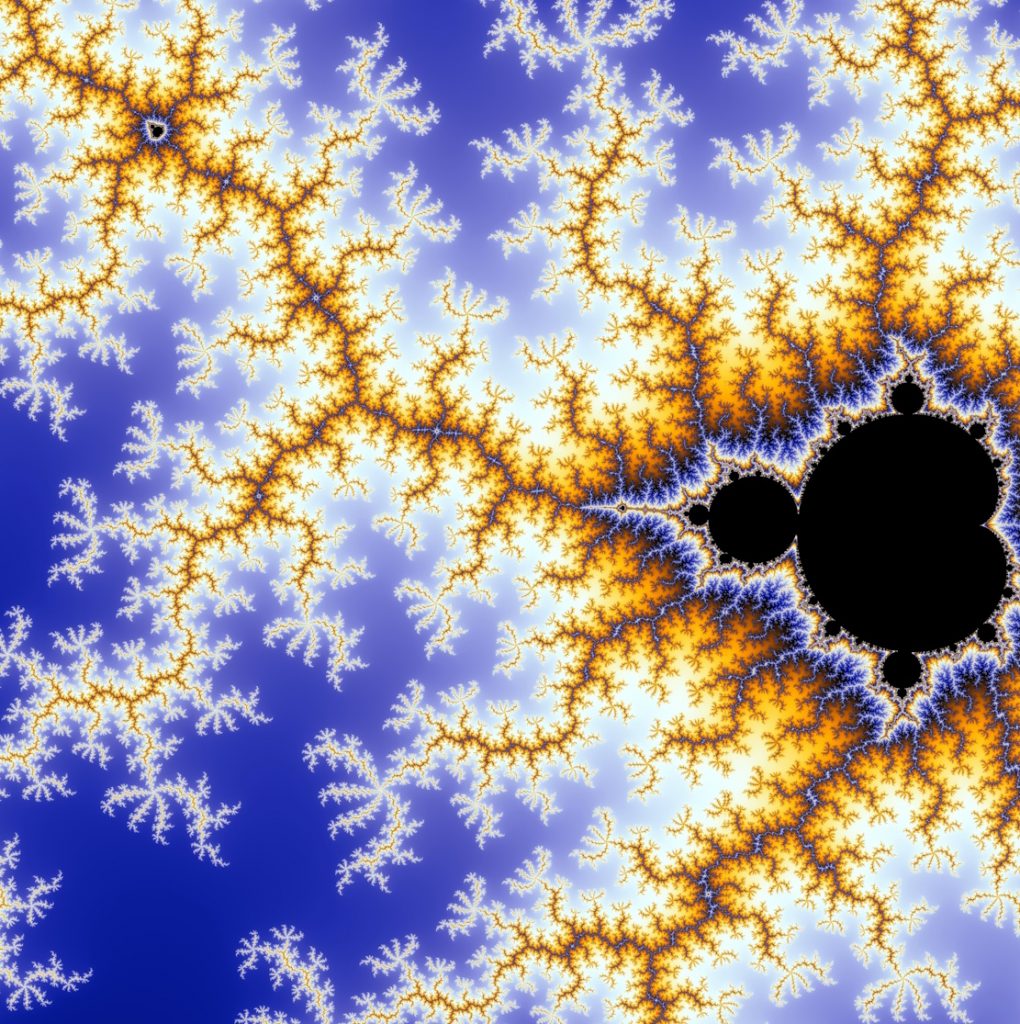
Fractals are intricate mathematical patterns that repeat forever. At Université du Québec à Trois-Rivières in Canada, Assistant Professor Pierre-Olivier Parisé has helped to expand a method to visually render fractal objects, showcasing the beauty of these intriguing patterns and enabling mathematicians to uncover the extraordinary mathematics that define them.
Talk like a mathematician
Fractal – an image or object that infinitely repeats itself
Render – to create a realistic computer-generated image
Ray tracing – a rendering technique that calculates the paths of individual rays of light through a computer-generated scene
Ray marching – an adaptation of ray tracing in which each ray is advanced along its path in steps
Distance estimator – a mathematical function used in ray marching to estimate how far a ray is from a surface
Multicomplex numbers – a multidimensional extension of complex numbers (imaginary numbers –the square roots of negative numbers – are examples of complex numbers)
Commutative – a system in which the order you apply an operation does not change the result (e.g., a + b = b + a)
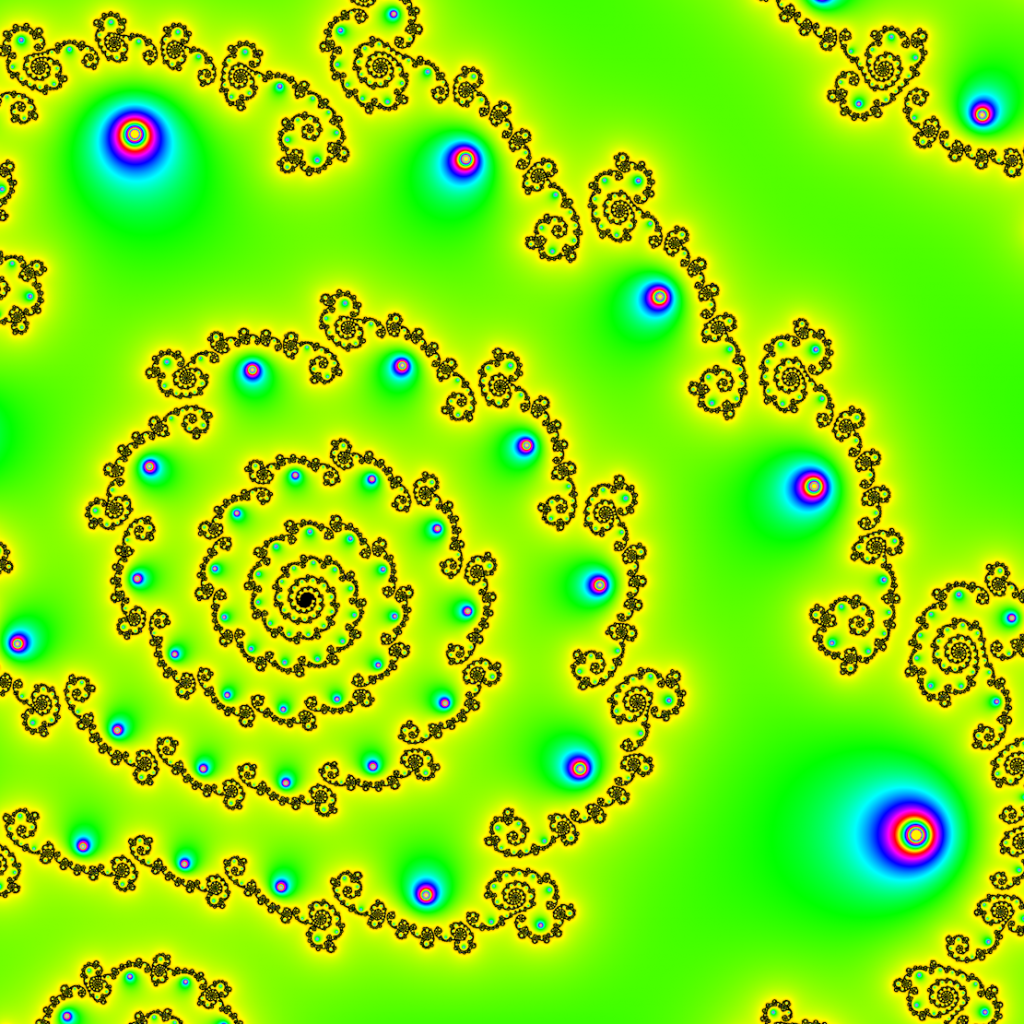
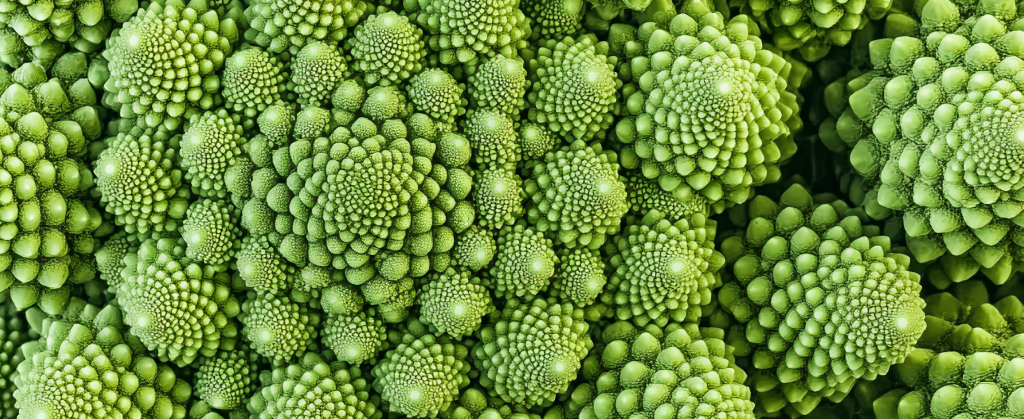
What do trees, ferns and broccoli have to do with mathematics? The answer: they represent the mathematical concept of fractals – objects that repeat themselves at smaller and smaller scales. A tree trunk splits into large branches which split into smaller branches which split into twigs, while each fern leaf and broccoli floret is a miniature version of the whole fern frond or broccoli head.
“Strictly speaking, these natural examples are only approximate fractals as they repeat over a limited range,” explains Assistant Professor Pierre-Olivier Parisé, a mathematician at Université du Québec à Trois-Rivières. “In a true mathematical fractal, the object appears within itself infinitely, with new details that keep appearing no matter how far you zoom in.”
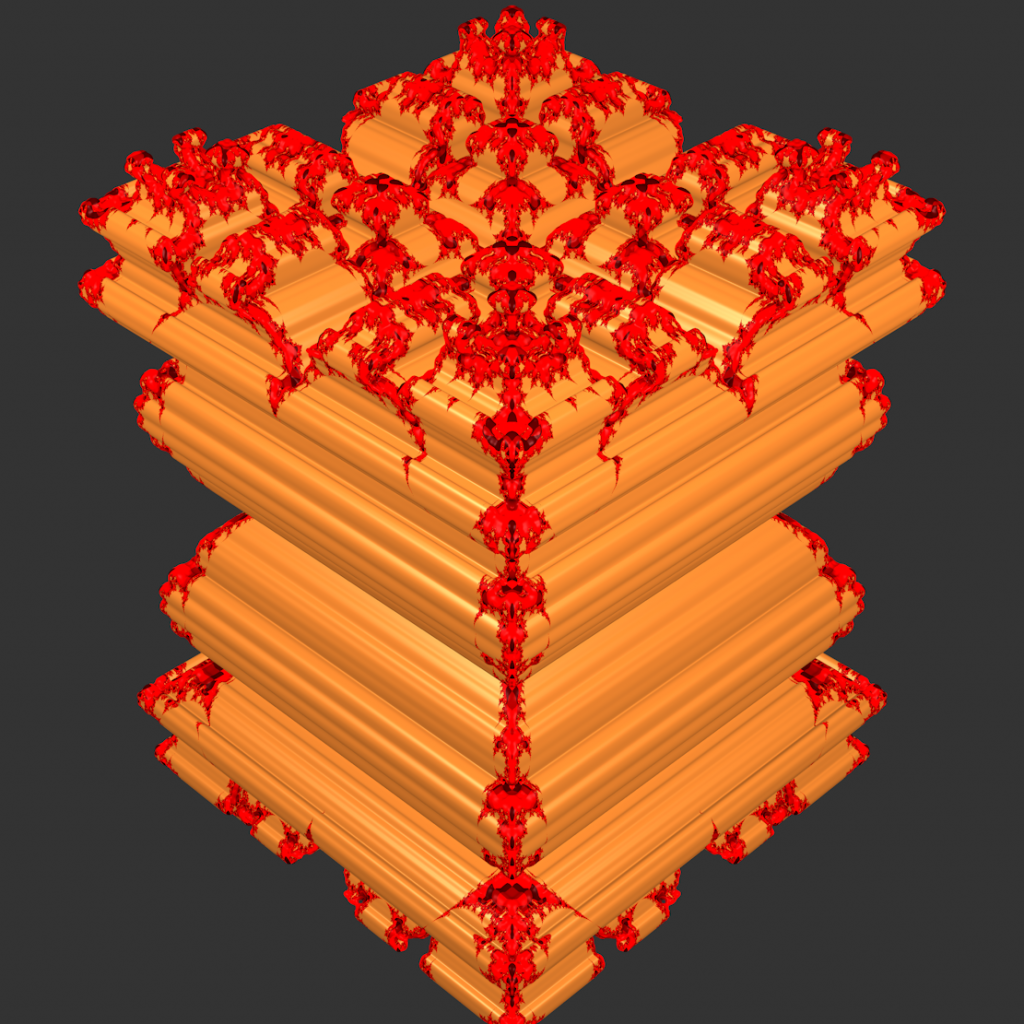
Previous mathematicians have created techniques to visually render 3D fractals, and Pierre-Olivier and his collaborators have built on these, which has involved developing new mathematical methods. “This is, first and foremost, a piece of foundational mathematics,” he says, highlighting that one of the joys of being a mathematician is having the opportunity to simply push the boundaries of our knowledge. However, his technique can also be used for practical applications. “Fractals have always been good at drawing people into mathematics because you can appreciate their beauty without understanding them,” he says. “I hope these 3D images can serve the same purpose – showing that even something as forbidding as multicomplex analysis has a vivid tangible side that can simply be an object of art.”
What is ray tracing?
Ray tracing is a rendering technique used in computer graphics to produce realistic images (complete with accurate shadows, reflections and lighting) by simulating the physical behaviour of light. It calculates the paths that individual rays of light take as they travel through a scene to reach a viewer. However, as most light emitted from a source will scatter into the scene and never reach the viewer, tracing every ray from a light source would be a waste of computational power. Instead, the ray tracing technique starts from the viewer’s perspective and traces rays backwards into the scene, calculating the path of one ray for every pixel in the image.
“Each ray is followed until it hits the first surface in its path, and at that point the program must work out what colour the pixel should be by gathering information about the lighting where the ray landed,” explains Pierre-Olivier. To do this, the program casts a shadow ray to detect if the object is lit by the light source or if it is in the shadow of another object, plus a reflection ray to see what the surface reflects and a refraction ray to see how light bends through transparent objects. “A single frame in an animated film can require millions of rays which takes hours of rendering time but produces high quality images,” says Pierre-Olivier. “For example, Pixar first used ray tracing for Cars in 2006 to render realistic reflections, shadows and metallic surfaces.”
Why does ray tracing not work for fractal objects?
While graphic designers can use ray tracing to create realistic-looking objects in animated scenes, the technique does not work for rendering true fractal objects. “The real difficulty appears the moment we pass to a genuinely 3D fractal,” says Pierre-Olivier. “As a solid object sitting in space, to obtain a realistic image we must cast rays, find where each one meets the fractal object and light the surface it lands on.” But this is where the assumptions built into ordinary ray tracing break down. Because fractals have infinite detail at every scale, no matter how far you zoom in, the computed ray will never actually reach the object’s surface.
How does Pierre-Olivier render 3D fractals?
To solve the problem of rendering 3D fractals, graphic designers need to use an adapted version of ray tracing known as ray marching, where the ray is advanced along its path from the viewer into the scene in steps, until it is close enough to the fractal to be considered to have reached the surface. At this point, the program follows the usual ray tracing technique to determine what colour the pixel should be. The length of each step in the ray marching technique is defined by a distance estimator – a mathematical function that estimates how far the ray is from the fractal at each step. “Producing such an estimator is a genuine mathematical problem,” says Pierre- Olivier.
Inspired by a distance estimator found for complex numbers, Pierre-Olivier and his collaborators have developed a new mathematical method for calculating distance estimators that uses multicomplex numbers in a commutative number system that models higher dimensional space. “As a result, the properties of 3D fractals can be mathematically proved, rather than merely observed as an image on a screen,” he says. “This means they can be rigorously analysed. The key value of this technique is that it provides a method for exploring the mathematics behind fractals.”
Pierre-Olivier’s work sits at the intersection between mathematical multicomplex dynamics and practical computer graphics, and he hopes both mathematicians and graphic animators will benefit from his distance estimator method to share the incredible beauty of mathematics with the world.
 Assistant Professor Pierre-Olivier Parisé
Department of Mathematics and Computer Science, Université du Québec à Trois-Rivières, Canada
Field of research: Mathematics
Research project: Developing a mathematical method to create and analyse 3D fractals
Funder: Natural Sciences and Engineering Research Council of Canada (NSERC) Discovery Grant RGPIN-2026-04740
Website: mathopo.ca
About mathematics
“Mathematics is one of the few subjects you can pursue with almost nothing but your own mind,” enthuses Pierre-Olivier. “Once you have learnt its language, you are free to wander wherever your curiosity leads.” For Pierre-Olivier, the hardest part of being a mathematician is not solving mathematical problems but finding the right problem to tackle in the first place. “I want to solve problems that are hard enough that cracking them will actually mean something,” he says. “Searching for a solution to a difficult mathematical problem feels like a quest! And the quest never ends, because every problem you solve opens new questions.”
Reference
https://doi.org/10.33424/FUTURUM714
What does the life of a mathematician look like?
“There is no typical day as a mathematician, and that is part of what I like about the job,” says Pierre-Olivier. “The popular image of a mathematician – someone standing alone at a blackboard all day – captures only a sliver of the reality.” As a researcher, Pierre-Olivier attends conferences to share his research with the mathematics community. “These conferences give me the opportunity to travel around the world and visit incredible places: Vancouver, Toronto, Nashville, Honolulu, London and more,” he says. As a teacher, he prepares and delivers lectures to classes and supervises students conducting research projects. “My record was teaching 147 students where the class had to be taught in an auditorium, like you see in the movies Beautiful Mind and Good Will Hunting!”
What will the future of mathematics look like?
“It’s tempting to think that everything has been discovered in mathematics, but in fact there are more open questions today than ever before,” says Pierre-Olivier, so there are plenty of opportunities for the next generation of mathematicians. As with most areas of life, AI will play a significant role in the future of the field. “AI will help us with problems that demand long, intricate calculations,” predicts Pierre-Olivier. “With AI to carry that burden, mathematicians will be able to study problems in much greater depth than is currently feasible.”
Pathway from school to mathematics
At school, study mathematics and physics. “Algebra, geometry and trigonometry will teach you the language of mathematics,” says Pierre-Olivier. “Physics is where mathematics comes alive as a description of the real world.”
“But more important than the subjects you study is learning to enjoy reasoning about hard problems,” advises Pierre-Olivier. “The most valuable habit you can acquire is the patience to understand why something is true rather than merely how to compute it.”
At university, study a degree in mathematics. Pierre-Olivier recommends taking courses in algebra, probability, real and complex analysis, topology, logic, and programming.
Explore careers in mathematics
“Mathematics is a universal language that underlies physics, computer science, economics, biology and more, so it will open doors in every direction,” says Pierre-Olivier. “A degree in mathematics could lead you almost anywhere!”
Mathematicians can find careers in teaching (for students of all ages), research (developing new solutions to mathematical problems), modelling (of everything from climate change to epidemics to financial risk), machine learning and artificial intelligence, cryptography and computer security, and data science. “Mathematicians aren’t confined to a single industry because mathematics itself is not confined,” says Pierre-Olivier.
“Doing mathematics makes you logical, persistent and resilient,” says Pierre-Olivier. “You learn to break a daunting problem into pieces, reason from what you know to what you do not, and sit with a difficulty for hours or days without giving up. These are qualities all employers value because they transfer to any problem, whether mathematical or not. A mathematician is not trained for one job but for the act of problem-solving itself.”
Meet Pierre-Olivier
When I was a teenager, I had little interest in school. Most of the projects we were assigned did nothing to draw me in. All of that changed, however, when I met two passionate and dedicated mathematics teachers.
The first teacher, Jean-Patrick Paul, moved me with his love of mathematics. He was always enthusiastic, and that enthusiasm became my own – it made me eager to tackle the problems he set for us. I was proud to bring him my solutions, because I knew he would be glad to see my progress and would be just as fascinated as I was by the answer. From that point on, I took my mathematics and physics courses far more seriously.
The second teacher, Denis Tremblay, was the one who ultimately shaped my decision to study mathematics at university. He nurtured my curiosity by offering me intriguing puzzles with captivating solutions. He introduced me to Accromath, a Quebec magazine that makes mathematical ideas accessible to a broad audience. A fire had been kindled in me – one that still burns today.
I first came across 3D fractal images during a summer research project at the end of my second year of university. A mentor, Professor Dominic Rochon, guided me through how to generate and rigorously study 3D fractals and the subject captivated me.
When I’m not solving mathematical problems, I enjoy biking with my wife and daughter. I surf when I can, and I’m learning how to wing foil. I also like repairing things around the house which brings some concreteness to my otherwise abstract work life. I’ve been an avid lover of The Legend of Zelda since I was young, and I still play it out of nostalgia, along with Mario Kart.
I love the fact that mathematics is alive! To study mathematics is to be handed a tool of extraordinary power and beauty to understand the world around us.
Pierre-Olivier’s top tips
1. Learn the foundations of mathematics and learn them well. Mathematics is built in layers, with each resting on the one below, and there are no shortcuts through the bottom layers. So take time to understand why things are true rather than merely how to use them.
2. The next generation of mathematicians will not be replaced by AI, but they will need to work alongside it. So learn how to use AI tools to do the long and mechanical parts of an argument while you keep watch over the ideas. A student who is comfortable both with a chalkboard and computational tools will be well placed to do mathematics in the years ahead.
Do you have a question for Pierre-Olivier?
Write it in the comments box below and he will get back to you. (Remember, researchers are very busy people, so you may have to wait a few days.)
Link your mathematics lessons to real-world learning:
futurumcareers.com/transforming-college-mathematics-education-through-hands-on-modelling-experiences
0 Comments