
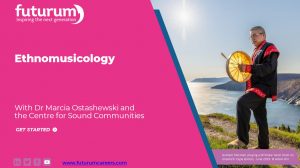
How can innovative ethnomusicology research help foster diversity, inclusivity and equity in the music industry?
Music is an integral part of human experience, and every culture has its own unique creative practices. Dr Marcia Ostashewski is the founding director of the Centre for Sound Communities at Cape Breton University in Canada, an arts-based social innovation hub that uses collaborative, participatory ethnomusicology research to work with and support equity-deserving communities and facilitate decolonisation and reconciliation within the music industry.
Talk like an ethnomusicologist
Culture bearer — a person who practises and passes on cultural traditions and knowledge to future generations
Decolonisation — the process of dismantling the structures and systems that reinforce colonial worldviews
Diaspora — a group of people who originate from, identify with and maintain connections with a specific country or community, but have since moved elsewhere
Ethnomusicology — the study of how people create, interact with and appreciate music in different ways, how they make it meaningful in their lives, and how it can be used to effect change
Hegemonic — the ruling or dominant group in a society
Indigenous — the original inhabitants of a land from before the arrival of colonists or people of different places and cultures
Mi’kmaw — an Indigenous nation whose unceded, ancestral and traditional territories are on the eastern coast of Turtle Island (North America), along parts of the Atlantic coast of both Canada and the US, including Unama’ki (Cape Breton Island)
Participatory research — a collaborative approach to research that actively includes the people involved with and affected by the matters and issues being investigated
Reconciliation — the process of restoring respectful relationships between Indigenous and non-Indigenous peoples, acknowledging the harm caused by colonisation, and working towards a future where Indigenous rights are recognised and respected. This includes ongoing efforts to address the legacy of residential schools, land disputes and systemic discrimination.
In communities all around the globe, music is created and listened to at many of life’s key moments. “We make music together in our homes and communities, and we sing at birthdays and funerals and to our babies,” says Dr Marcia Ostashewski, founding director of the Centre for Sound Communities (CSC) at Cape Breton University. “Music is crucial for communities’ and individuals’ ways of living, being and knowing, for healing and well-being, and for our senses of community, belonging and identity.”
How does the CSC conduct research?
“The CSC is an arts-led social innovation lab that works to effect positive social and cultural change with, by and for the communities we serve,” says Marcia. “We carry out research through creative practices, including music, dance, poetry, theatrical performance, filmmaking, audio recording, storytelling, craft-making and visual arts, as well as conventional research methods across a range of disciplines.” At the CSC, creative practices are not just the subject of research – they are integral to the research process itself.
“Through these creative practices, we are able to engage with people from many different sectors and communities, and everyone brings their own background and knowledge to the table,” says Marcia. “We are able to learn from and draw on all of this as we carry out the research, which is always collaborative and developed in partnership with culture bearers and communities, producing research and materials that respond to their needs in ways that are relevant to them.”
This type of research, based on community-engaged and community-led methodologies, aims to disrupt historically inequitable research relationships in which researchers focused on their own interests, rather than what was useful for the communities they were studying, and rarely shared their results with these communities. “Our processes involve researchers deliberately working with and for Indigenous and equity-deserving communities, engaging with them and nurturing these relationships through research to make amends for historical wrongs and challenge inequitable power structures,” says Marcia.
The CSC projects that engage with youth encapsulate this approach. “At the start of each project, Elders and other culture bearers share their knowledge and experiences of a given topic with the youth,” says Marcia. “This is followed by a period of collaborative creation that expresses the youths’ understanding of the topic and includes aspects relevant to their own lives.” These research methods may be informed by Indigenous practices such as storytelling and sharing of oral histories (by learning and singing songs together, for example) and aim to understand more clearly the needs, interests and concerns of communities and musicians.
Who does the CSC work with?
The CSC works with many diverse communities and people from many different backgrounds within these communities. These include local Indigenous Mi’kmaw or L’nu people, historically underrepresented groups such as African Nova Scotians and Central and Eastern European diaspora communities, and vulnerable demographics such as LGBTQ youth. Marcia and other researchers associated with the CSC are committed to responding to the needs of communities that face injustice and inequity.
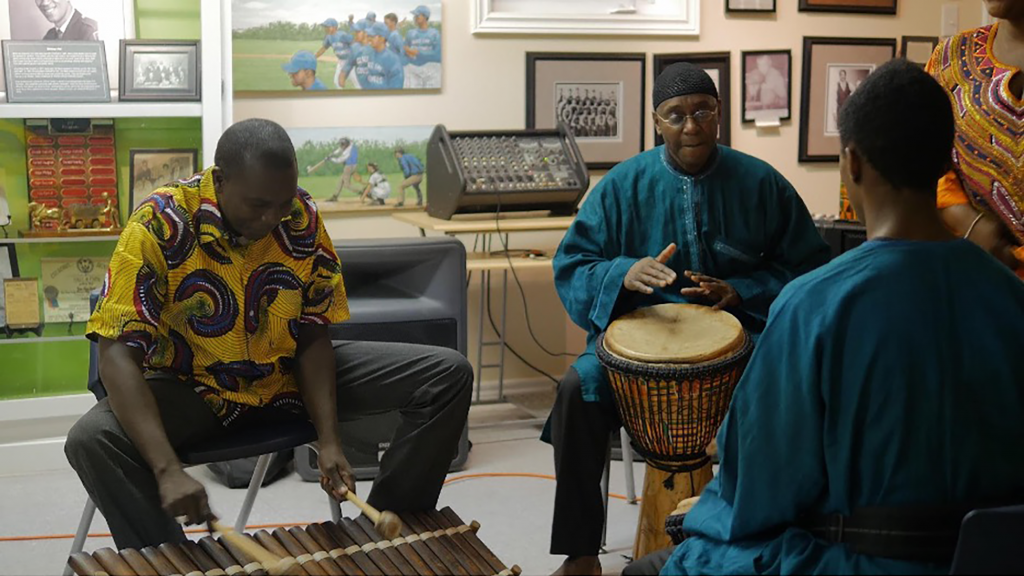
One such researcher is Dr Afua Cooper, a poet, author and scholar based at the University of Toronto. Her most recent collaboration was part of a CSC-supported project called Trans-Atlantic Pilgrimage: African Histories, Poetry, and Music. “This was a beautiful and brilliant project which saw collaboration between music, literature and history scholars from across Canada and African musicians from Mali, Guinea and Canada,” says Afua. “The project included music, poetry, performances, lectures and community tours in West Africa, and its impacts are still being felt.”
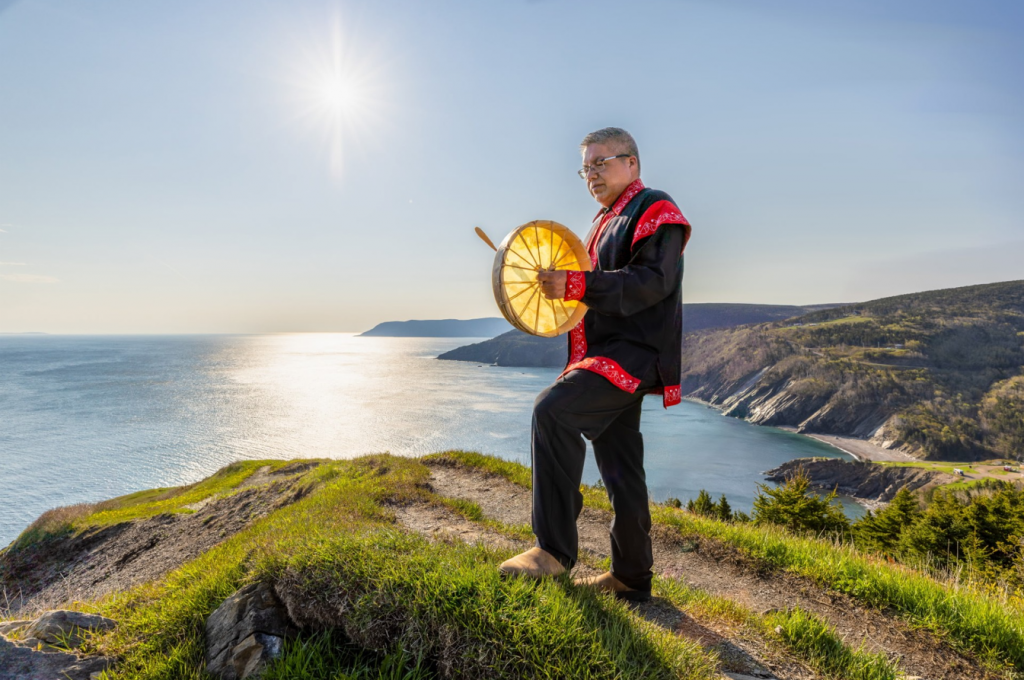
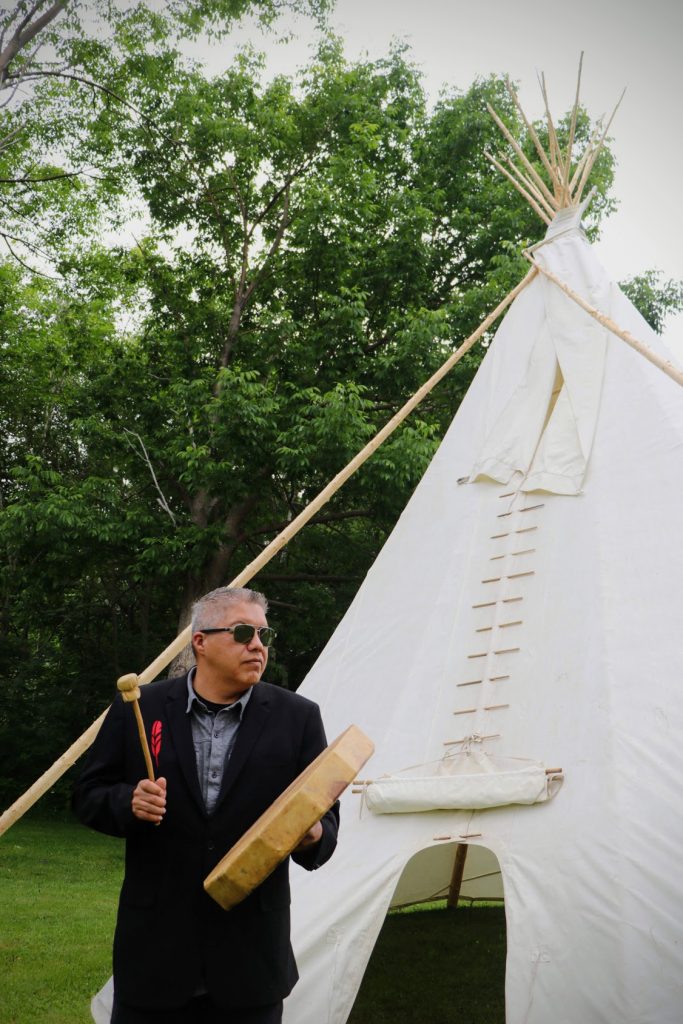
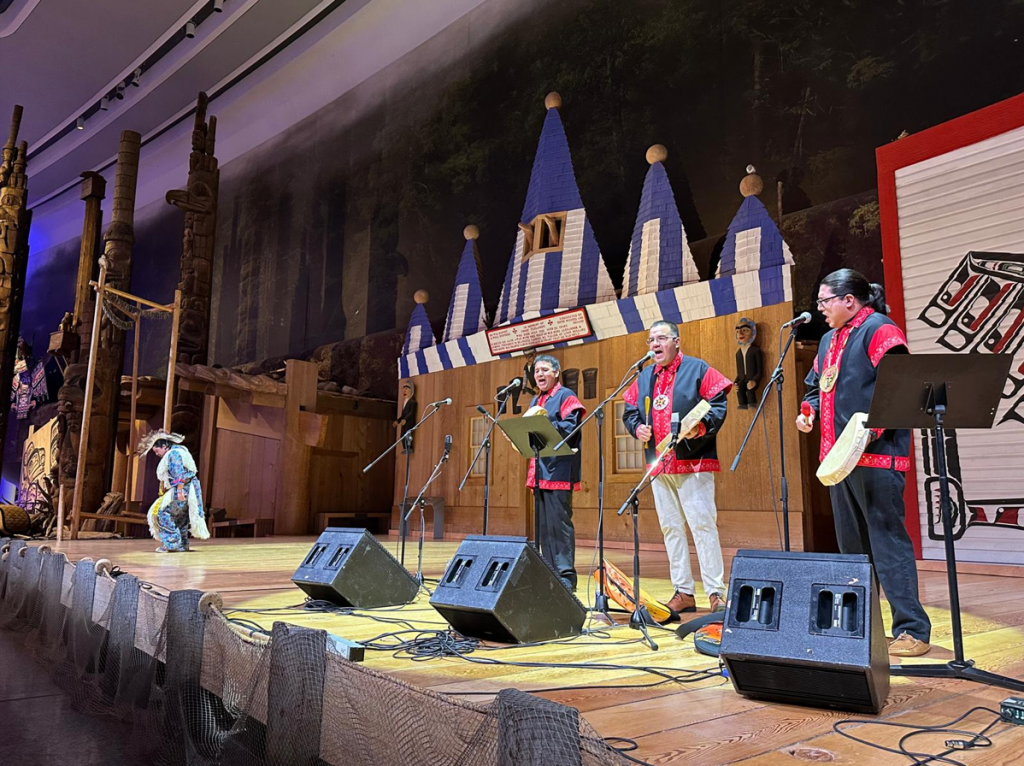
Another ongoing CSC project is Songs and Stories of Migration and Encounter. This project is founded on the centre’s relationship with Membertou First Nation, including a Mi’kmaw drum group called the Sons of Membertou, who use music to strengthen community bonds and practise Mi’kmaw language and culture, ensuring that it will thrive long into the future.
Through processes of colonisation, European settlers forcibly displaced and disrupted Mi’kmaw communities. For example, in the 19th and 20th centuries, Mi’kmaw and other Indigenous children were forced to attend residential schools that were designed to separate them from their communities and destroy Indigenous culture. The effects of these schools and other actions carried out by settler groups over the past 500 years continue to impact Indigenous people and communities. Through Songs and Stories, Marcia and her team work with Mi’kmaw musicians and communities to challenge systemic racism and inequities, and to foster meaningful relationships and reconciliation.
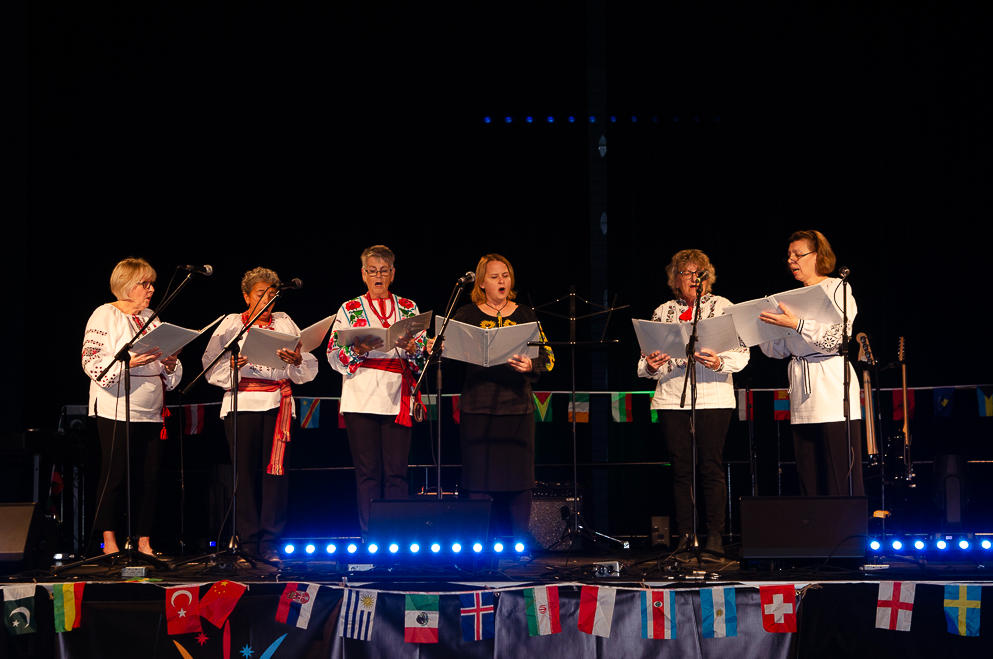
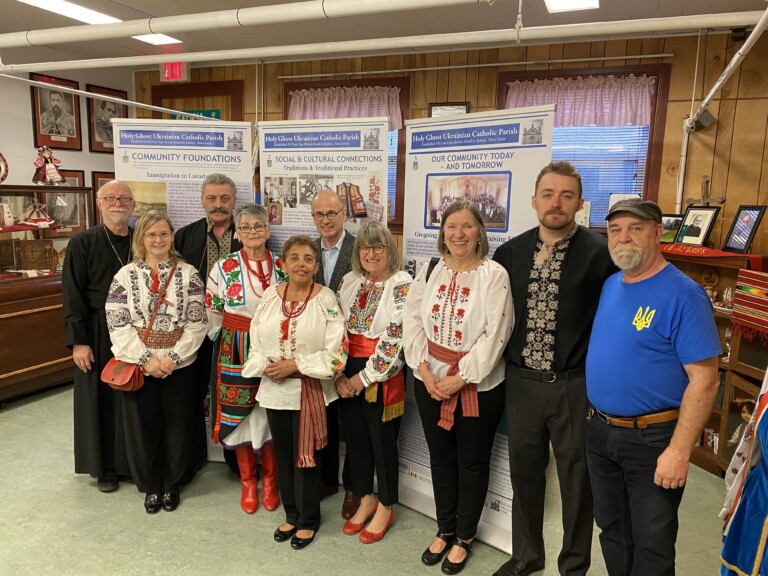
“We have also been investigating the role that music plays in Ukrainian diaspora communities now living in Canada,” says Marcia. “Traditional music from Ukraine, new music created in Canada by people of Ukrainian ancestry, music related to the experiences of the newest Ukrainian immigrants (those who have fled Russia’s recent invasion of Ukraine), and related practices including dance, poetry and filmmaking help connect previous immigrant groups with newer ones, and with people living in Ukraine. We are learning about how people of Ukrainian ancestry are connecting with aspects of their family histories and nurturing strong healthy individuals and communities through shared practices. At times, we also support such community and creative activities.”
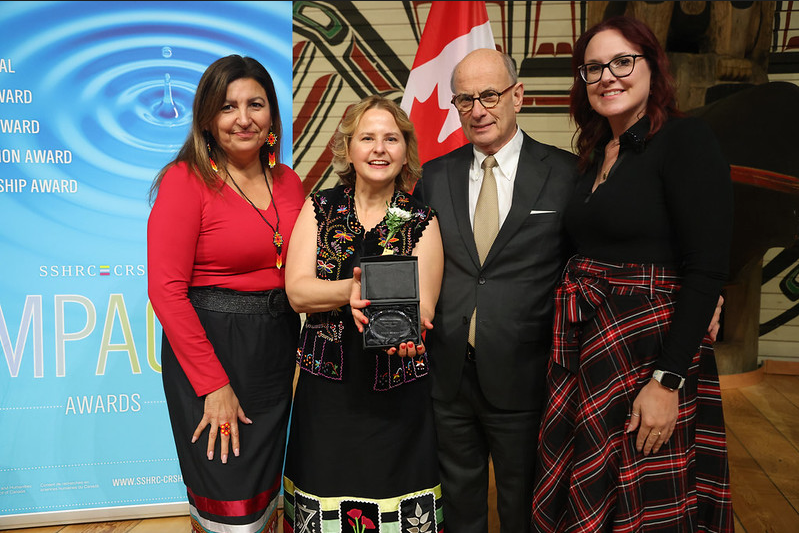
At the end of 2024, Marcia and the CSC team won the Social Sciences and Humanities Research Council of Canada Impact Award. This award recognises their collaborative, participatory research that supports the many communities with whom they work, their aim of creating space for a greater diversity of people in the music industry across research, education and business sectors, and for their work fostering meaningful reconciliation in Canada.
What’s next for the CSC?
Marcia and the team at the CSC are currently working with Smithsonian Folkways Recordings to produce a new series of music and spoken word recordings. “The series features diverse artists telling stories of the lands, waters and peoples of Canada,” explains Marcia. “Along with recordings, this initiative creates and shares open-access learning resources, including films, podcasts and resources for teachers to use in their classrooms. We are also engaging in community outreach and education events and activities, sharing and celebrating the musics, histories and experiences of diverse groups. This documentation, preservation and dissemination of music helps sustain cultural diversity and inclusivity and promotes diverse artists and communities, allowing their artistry, traditions and practices to be appreciated by a wider audience.”
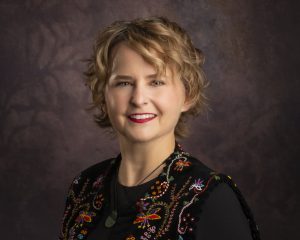 Dr Marcia Ostashewski
Founding Director, Centre for Sound Communities, Cape Breton University, Canada
Field of research: Ethnomusicology
Research project: Serving and supporting Indigenous and diaspora communities through collaborative ethnomusicology research
Funders: Social Sciences and Humanities Research Council of Canada (SSHRC)
Website: soundcommunities.org
About ethnomusicology
Ethnomusicologists are interested in how different people and communities create, perform, listen to, feel, think and write about music, and all of the many ways in which we make music useful and meaningful in our lives. It is a highly interdisciplinary field that draws on knowledge from many areas of academia including social sciences, anthropology, history, dance and media studies, as well as business and economics, natural and health sciences, engineering, and more. “We know that music and related practices have an important role in all of our lives and communities,” says Marcia. “Ethnomusicology allows us to understand how music is made and how it is a part of and shapes our lives in different social, cultural, political, economic, environmental and geographic contexts.”
Marcia conducts applied ethnomusicology research, meaning that her work is guided by social responsibility and the needs of the communities with whom she works. Conducting research with and for these communities – rather than on them – is the best way to ensure that the research serves their needs and interests. “Ethnomusicology can show us how equity-deserving groups experience and resist oppression and work towards health and well-being for their communities, languages, and traditional and creative practices,” says Marcia.
Beyond academia, there are a range of other careers available for ethnomusicologists. “Many work in education, while others work in community projects in NGOs, facilitating and developing music and cultural education projects,” says Marcia. “Elsewhere, ethnomusicologists can work at museums creating and curating exhibits, occupy government positions, get involved in policy and development work, or be professional musicians, producers, communicators or writers.”
Pathway from school to ethnomusicology
At school, there are no specific subjects that are necessary for further education in ethnomusicology, though knowledge around creative practices including music, dance and media can help.
Get involved in volunteer work that exposes you to a range of cultural backgrounds, and work with equity-deserving and marginalised groups. This will help build your understanding of cultural contexts and the needs and concerns of different communities.
At the undergraduate level, ethnomusicology is often taught as a module within degrees such as music or anthropology.
Postgraduate courses in ethnomusicology, available at many universities and institutions, will allow you to specialise and take a deeper dive into this rich field.
Explore careers in ethnomusicology
CareersinMusic.com offers a detailed and accessible insight into ethnomusicology.
This YouTube playlist features interviews with dozens of ethnomusicologists, including Marcia, explaining their research and passions.
Meet Marcia
I grew up on a farm in northern Alberta at the centre of the largest settlement of Ukrainians living outside of Ukraine. As a community, we worked, prayed, sang and danced together. Our mother, who was an advocate for Ukrainian language education, taught me and my siblings Ukrainian music, language, cooking and other traditions. These practices were part of our daily home life.
Every summer, my family would go camping and visit First Nation communities. My parents instilled in me a great respect for Indigenous people, and I learned about their special relationship with the land. Through cultural events, I learnt about their histories, experiences and cultural practices.
I am grateful for the opportunities that I have had to learn from and work with Elders, knowledge holders, artists, practitioners, culture bearers and community leaders. These relationships are the most important and affirming aspects of my work. Often, in the time that we spend with one another, people share their most precious, joyful and sometimes painful songs, stories and memories. Our relationships and shared experiences bring meaning to my life, and through them I continue to learn about how to live with respect, care and in a good way with Indigenous communities and the land.
I love to sing! Most weekends, I attend our local Ukrainian church where I can practice my Ukrainian language and participate in traditional singing – this is the exquisite music of my childhood, through which my life took shape. I also enjoy singing, dancing, and participating in the traditions and practices of the communities I work with. These special opportunities are the gifts of the work that we do together.
Meet Afua
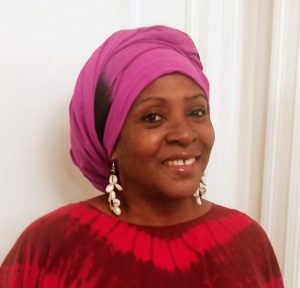 Dr Afua Cooper
Poet, Author and Professor of Black Studies and Women’s Studies, University of Toronto
Reference
https://doi.org/10.33424/FUTURUM679
© Cyrus Sundar Singh
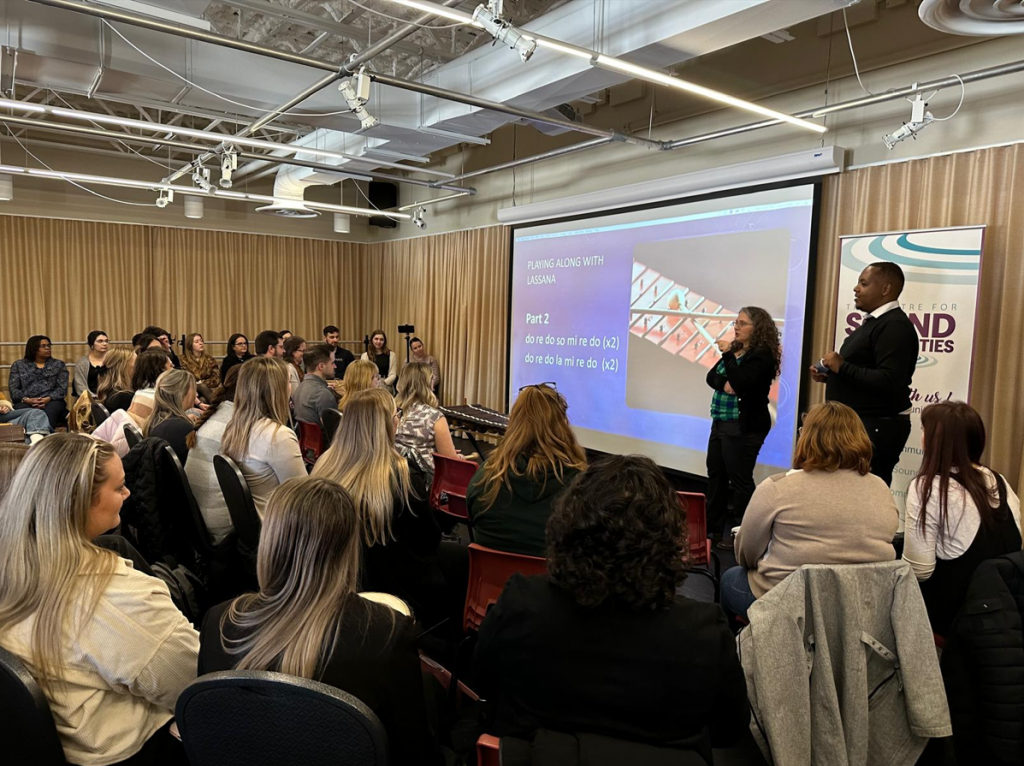
© Marcia Ostashewski
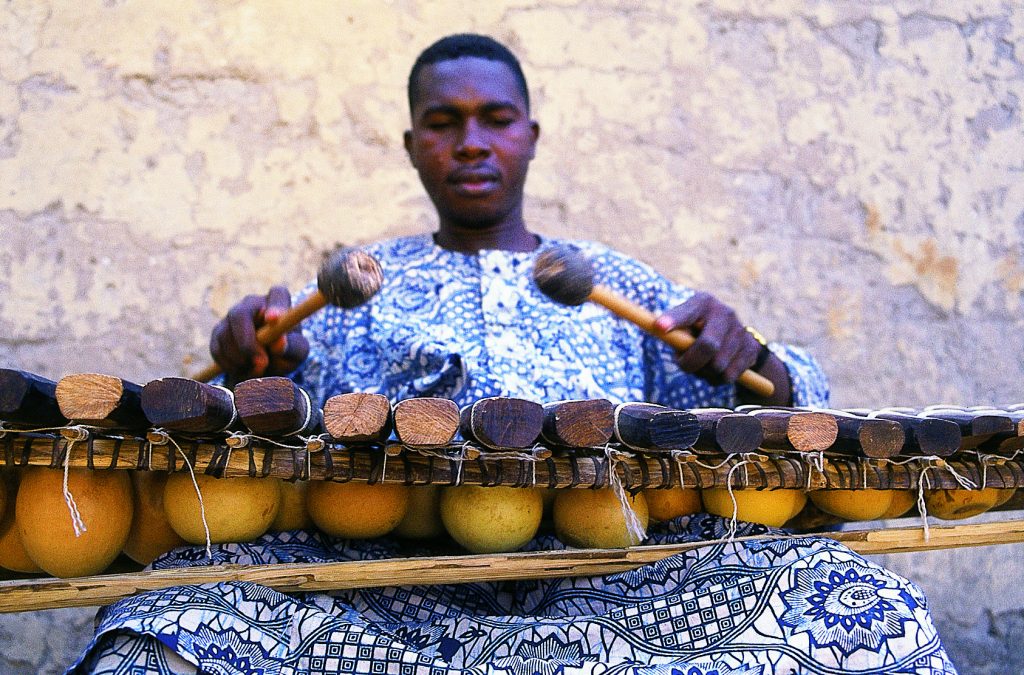
An image used to create the album cover for Lassana Diabaté’s album.
© Cosima Spender
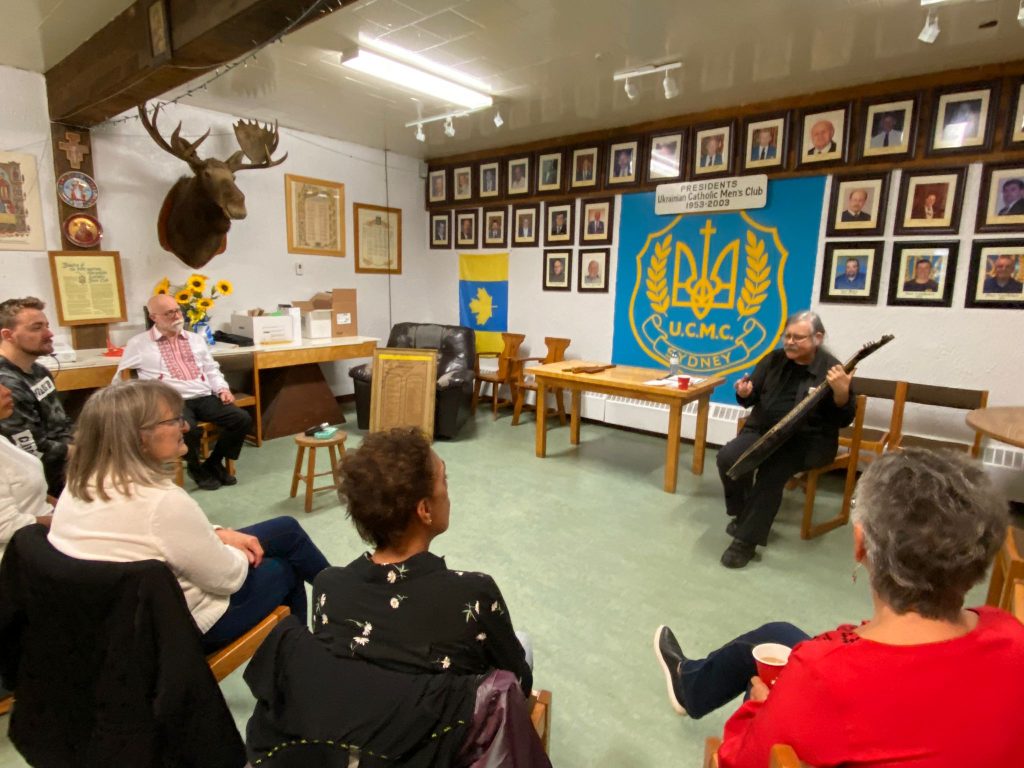
© Marcia Ostashewski
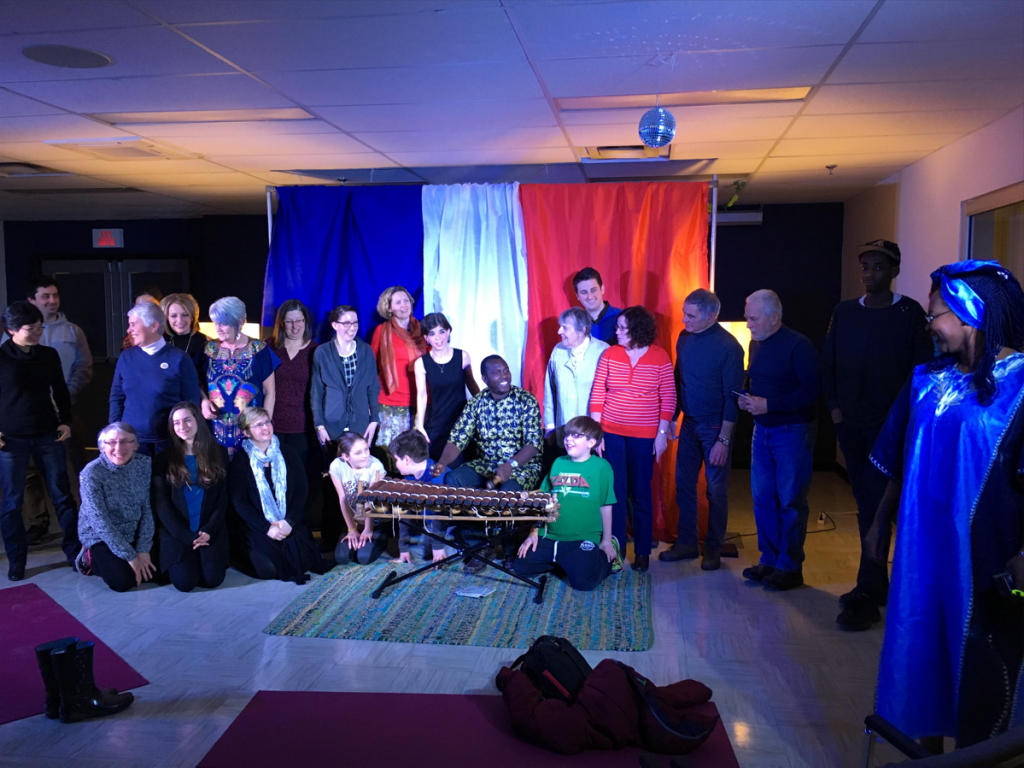
Marcia and Lassana Diabaté with community members gathered for an evening of music and culture to celebrate African Heritage Month at Centre Communautaire Étoile de l’Acadie in Unama’ki Cape Breton, February 2017.
© The CSC
© Ely Lyonblum, for The CSC
© Marcia Ostashewski
I grew up in Jamaica in a large extended family. My older relatives were great storytellers and told us younger ones stories at every opportunity. Sometimes, these were folk tales rooted in the African-Jamaican tradition. At other times, they were factual stories about our history and our family. For example, my paternal grandmother told us about the riots and protests during the anti-colonial struggles of the 1930s. The British soldiers killed many poor, Black people. My grandmother, who became widowed at the age of 29, told us of her heartache when her 33-year-old husband died. She told us stories and anecdotes about her husband, our grandfather, so we came to know him through her eyes.
Later, I went to live in Kingston, the capital of Jamaica, an urban environment with cinemas, sound systems, art and culture. Music was everywhere – reggae music was being born and flourishing. My family even knew some of the reggae stars! At school, we studied poetry, performed in plays and sang in choirs. I started writing poetry and began combining the words with sounds and music. That is Dub Poetry! My poems were about African history, slavery, struggles, family, place and spirituality.
Books fuel the imagination. Read, read and read. If you are not able to read, listen to audio books. As a young kid in Jamaica, I read a lot. The library was my best friend. In books, I saw many possibilities for my life.
If you can, find a mentor — someone who believes in you and loves you. It could be a parent, a family member, a schoolteacher, a religious leader, a neighbour or your sibling. Have that person be a witness to your life, and your cheerleader.
Mi’kmaw language
 Starr Paul
Mi’kmaw language instructor, Cape Breton University
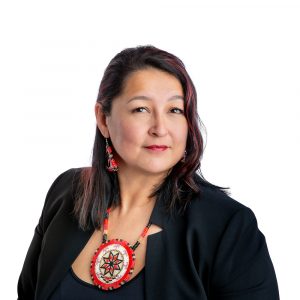
Starr Paul has been teaching Mi’kmaw language for over 25 years. In her family home in Eskasoni First Nation, Starr and her parents spoke to each other only in Mi’kmaw. Her mum, Elizabeth, who passed away in 2019, spent her whole life championing and teaching the Mi’kmaw language. “My mom was a language warrior who taught at Cape Breton University, and I am proud to be able to teach the Mi’kmaw language at university level, just like she did,” says Starr. “She inspired me, and still does to this day.”
Starr takes influence from other communities when thinking about new ways to teach the Mi’kmaw language. “I am interested in how the Māori in New Zealand have been able to revitalise their language using ‘language nests’,” she explains. “I am working towards building a language nest in Eskasoni, which is the largest Mi’kmaw speaking community in the world.” Language nests are educational programmes that immerse young children in their native language and provide them with a safe space to interact with Elders from their communities who are fluent speakers.
“Currently, I am working with Marcia and the CSC to make music with Mi’kmaw artists,” continues Starr. “This includes working to create new Mi’kmaw language songs that young children can listen and sing along to.” Learning, playing and creating Mi’kmaw music is a vital part of ensuring the Mi’kmaw language and culture continue to thrive. “Mi’kmaw is the language of our ancestors,” says Starr. “They were given this gift of language, and we must continue to speak it, listen to it and live it.”
Decolonising music education
 Dr Jody Stark
Associate Professor of Music Education, University of Manitoba
Although European settlers first colonised Canada hundreds of years ago, the impacts and processes of colonisation are still ongoing. Through the seizure of land, forced or cheap labour, and efforts to erase Indigenous people, histories, languages, knowledge and cultural practices, settlers enforce their world view upon native peoples.
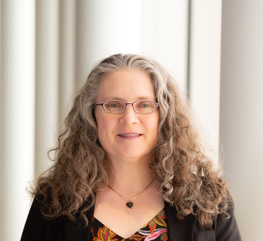
At the Centre for Sound Communities (CSC), Marcia and Dr Jody Stark, a music educator from the University of Manitoba, are working towards decolonising music education. “By continuing to place Western European cultural productions at the centre of curricula, the education system reinforces racial hierarchy and racist worldviews,” says Jody. “On the other hand, being exposed to multiple worldviews enriches students’ experiences, allows those who are not part of the hegemonic group to be seen and reflected back, and provides valuable tools for thinking in different ways.”
The difficulties of decolonising
Decolonising is a difficult process. “When you are part of the hegemonic group, it is hard to see your privilege and to understand that your experience is not universal,” explains Jody. “Those of us in the hegemonic group often try to ignore our feelings of guilt once we begin to become aware of inequity, as this helps us avoid having to give anything up or having to put energy into changing the systems and practices that reinforce the inequity.”
These attempts to avoid responsibility are known as ‘settler moves to innocence’1. “One example of a move to innocence is framing colonialism only as something that happened in the past,” explains Jody. “By framing settler colonialism as being a historical event rather than an ongoing system, people feel that they can let themselves off the hook.”
Colonialism in music education
While most approaches to music education are not explicitly racist, many of them are based on a colonial world view. For example, Western classical music is often valued more than other types of music, instruments of the symphony orchestra are often emphasised more than other instruments, and white, male composers are often idolised more than their contemporaries with different gender and cultural identities.
“It is important to note that learning to read Western music notation, sing or play a piece by Schubert, and recognise the instruments of the orchestra are not inherently bad things to do,” says Jody. “But, without context around these musical practices and pieces, and without exposure to other perspectives, these lessons reinforce a colonial worldview.”
Decolonising the music classroom
So, how can we begin to rid our music lessons of this colonial worldview? Well, we can start by shifting our mindset. “An idea that has been helpful to me is the idea of decentring Western music,” says Jody. “We don’t have to remove European classical music from our classrooms, but we should include, for example, Inuit throat singing or West African polyrhythms too.”
Another important shift in mindset is to move away from extractivist thinking. “Extractivism is a mindset where land, resources, people and cultural productions are viewed as being ‘there for the taking’,” explains Jody. “When we extract a piece of music from its context and remove it from the web of relationships involved in its creation, we remove its purpose and meaning, resulting in cultural appropriation.”
For example, in many Indigenous communities, songs and the teachings that accompany them are remembered and safeguarded by song keepers and community Elders. Understanding a song and how it can be used requires understanding Indigenous worldviews and protocols, which requires being in relationship with Indigenous musicians and cultural teachers. While this may not be possible in all circumstances, it is unethical to teach songs without context and some understanding of the cultural significance.
Decentring Western music and avoiding extractivism are just two ways in which we can work towards decolonising our classrooms. By opening our ears to the full richness and diversity of musical traditions and cultures, we can learn more, not just about music, but also about each other.
1 Tuck, Eve, and K. Wayne Yang. “Decolonization Is Not a Metaphor.” Decolonization: Indigeneity, Education, & Society 1, no. 1 (2012): 1–40.
Project spotlight 1
Songs and Stories of Migration and Encounter
“Through Songs and Stories, our research group has been investigating the experiences and impacts of the forced relocation of the Membertou First Nation, an event whose history and impact on the displaced residents are finally being addressed,” says Marcia. “Since 2017, Membertou-based researchers and CSC-based faculty have worked together to recover local Mi’kmaw histories, honour Mi’kmaw traditions and practices, and move towards meaningful reconciliation with local people of non-Indigenous ancestry.”
Songs and Stories has seen four phases so far. The first was a one-day pilot project, where Indigenous and non-Indigenous community members shared songs and documentaries that they had created based on their lived experiences. “The second phase was a six-week in-community workshop that culminated in a shared song and dance performance,” says Marcia. “The CSC team met regularly with local research team members and participants. These teams comprised community Elders, knowledge-holders and culture bearers, local youth, and university-based artist-researchers.”
The third phase, shaped by a request from Membertou First Nation, involved the participatory development of a theatrical production, entitled Kun’tewiktuk, that communicated the events of the community’s forcible relocation and its long-lasting effects. “Through this process, Mi’kmaw youth and Elders engaged with and creatively articulated their community’s history from the perspective of its own members,” says Marcia. “Through the process of creating and staging a play, the wider community was invited to help remember and share this heavy and difficult knowledge with future generations.”
The most recent phase of Songs and Stories was a four-day multi-community event that shared and developed project outcomes through music. “The event began at a gathering in Membertou with traditional songs and drumming and the sharing of a short documentary film about our process,” says Marcia. “International scholars shared their research on the theme, building dialogue among artists, scholars and community leaders from all over the world.” Since that time, local community members in Unama’ki have continued to build relationships and share knowledge at events such as symposia, conferences and community gatherings. The project follows the CSC’s approach of facilitating and supporting research with, by and for Indigenous people and communities to redress historical inequities in research and ensure that Indigenous people are at the helm of studying and sharing knowledge about their histories and experiences.
You can watch some of the creative outputs from Songs and Stories through the links in the ‘More Resources’ section of the accompanying activity sheet.
Project spotlight 2
Ukrainian Diaspora
As a granddaughter of emigrants from Ukraine, Marcia has a personal, as well as a professional, interest in the role that music plays in Ukrainian diaspora communities in Canada. “In 2022, the CSC hosted a festival of Ukrainian heritage featuring performances from Ukrainian musicians, talks from researchers and academics about Ukrainian dance, history and language in Canada, and workshops on traditional music, dance, bread-making, beading and textiles,” says Marcia. “But our work with Ukrainian diaspora in Canada goes back much further.”
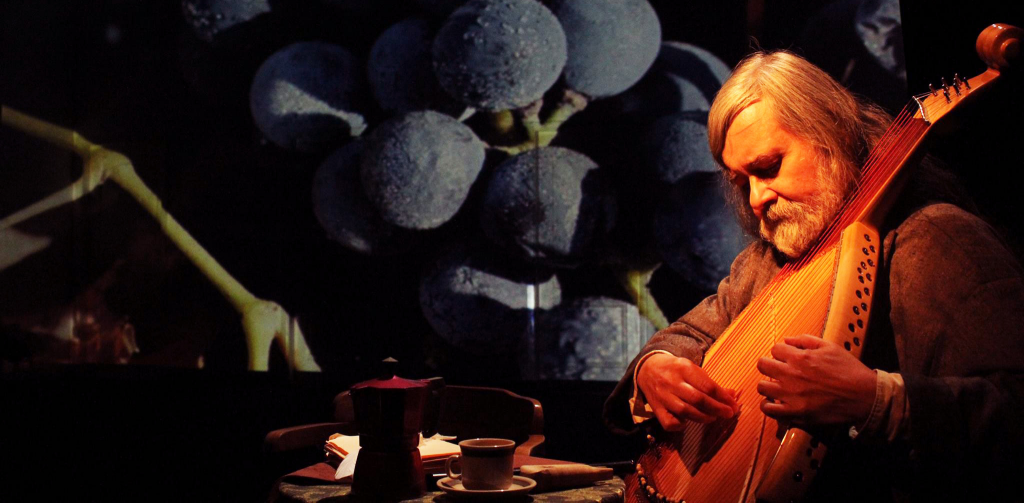
Since 1997, Marcia has been working with Julian Kytasty, a third-generation bandura player. His family came from Ukraine to Detroit after being displaced from their homeland due to the Second World War and Russian Soviet aggression. Playing the bandura, a traditional Ukrainian instrument that resembles a lute, had been a part of life for his family in Ukraine, and so it became for Julian when he was born in their new North American home. Through the bandura, Julian’s family also connects with a centuries-old Ukrainian tradition.
“Julian and I have worked together on a number of research, performance, public engagement and education projects,” says Marcia. “In 2014, as part of the collaborative Singing Storytellers project that explored the lives, music and artistry of bards from around our world, I produced an album of traditional songs, featuring Julian, called ‘Songs of Truth’. In 2025, we will re-release the album through Smithsonian Folkways Recordings on our new Sound Communities series along with content-rich learning resources that teachers can use in their classrooms, sharing the story of Julian’s family, who brought this precious music from Ukraine to North America, and many different aspects of Ukrainian music in Canadian diaspora communities.”
Other projects have captured different aspects of Ukrainian music, dance and language in Canada. “I was especially interested in the role of dance practices, festivals and cultural memory of Ukrainians in diaspora communities,” says Marcia. “During the early years of immigration to Canada, when discrimination was often overt, the new immigrants danced together and shared their songs and other creative practices with their new neighbours in Canada. This provided a sense of pride whilst also offering an opportunity for people of Ukrainian ancestry to create community and connection through creative and language practices.” Marcia has also investigated the role of congregational singing among Ukrainians in Canadian church communities. “Singing together helps create a sense of community and belonging, and is a way to continue to practice the Ukrainian language,” she says. “Children of immigrants have frequently told me how this was vital to their families as they endeavoured to make a new home.” Her research suggests that these shared community activities helped immigrants create relationships, new possibilities and life pathways as they settled in a new country.
Research training
With such a range of research projects and disciplines, the Centre for Sound Communities (CSC) is a great place for new researchers to learn the ropes. Research assistants at the CSC benefit from a collaborative community of researchers to learn from and unique opportunities to grow professionally and intellectually by creating research and engaging with different communities. But it’s not just the research assistants who benefit from this commitment to training and mentoring. Experienced researchers and established musicians and artists also find new opportunities and audiences thanks to an atmosphere of knowledge sharing, collaboration and support.
The CSC team is proud of their commitment to provide high-quality training, support and career development for Indigenous, Black and People of Colour (IBPOC) and equity-deserving students and researchers. With a mutually-supportive network that spans international, cultural, religious and linguistic borders, the CSC has become a hotbed of knowledge sharing, collaboration and innovation.
Meet some of the CSC’s current research assistants
 Eric Escudero
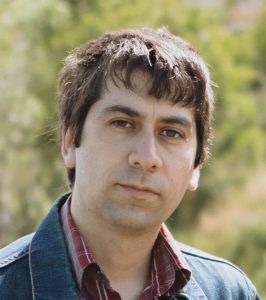
Growing up in Brazil, there was always music in our home. My father was a great fan of British rock music from the 60’s and early 70’s, Bob Dylan, and other singer-songwriters. He occasionally wrote his own music, and was always playing the classical guitar. I grew up in a house in which music was considered central to human expression, and great musicians were revered as great artists and geniuses. As a result, music became important to me, before I could even realise it.
I have been in many different roles at the CSC, including project manager for the Bala project, developed in partnership with Malian musician Lassana Diabaté. I’ve also supported the creation of bibliographies and research ethics applications, and created written content, conference presentations and videos.
I love discovering exciting new music and the many ways in which it can be meaningful for communities. I love the fact that we get to learn with so many different culture bearers and communities that partner with the CSC.
Music has always played a central role in my life. That is why I study, research, write about and perform music. Since I was a child, I’ve always been fascinated by how music can communicate feelings and ideas in a unique and deep way.
If you find music meaningful, if you want to write about it, think about its political implications and how it helps communities, and to talk to musicians, then this might be the profession for you.
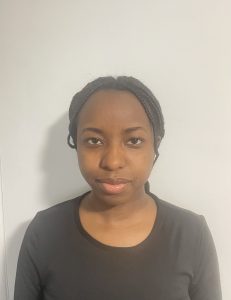 Selina Kibanda
I grew up in a home and family in Tanzania that loved music. My parents love and appreciate music, especially gospel music. Most of my family members either sang or played instruments. My elementary school held events every year that included music from different cultures, including songs from South Africa, Nigeria and the Congo, so I was introduced to different types of music at a young age.
I love exploring and learning about music from different cultures. The more you explore different viewpoints and cultures, the more you learn and understand. I started working with Marcia and the CSC in 2024, and I was happy to be part of the Trans-Atlantic Pilgrimage project events, where we were able to play drums, teach, dance and sing. I am always excited to help with any of the CSC’s projects.
When I want to relax, I listen to music, which helps me enjoy the moment. When I am happy, I listen to music, because it brightens my mood. When I am new to a church, I will always involve myself with praise and worship, because I sing and I love music. Wherever I end up, I get involved in music. It just finds me, no matter what.
Don’t be intimidated by the word ‘ethnomusicology’. When I first heard that word, I had no idea what it meant. But, when you get into it, you realise that it’s pretty straightforward, and if you work with the right people, the experience becomes even more enjoyable. I am not an expert in ethnomusicology; in fact, I am also learning and hoping to improve. Be open-minded and, when you’re stuck with something, ask for help.
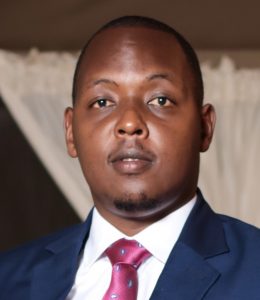 Mark Parselelo
Growing up in Kenya, I was surrounded by music. In church, we often sang hymns and worship songs in multiple languages (Swahili, English and local dialects). This gave me an ear for different sounds and rhythms, and I loved how music could bring people together, no matter their background. At home, we sang together as a family, and I learned how to play the piano and guitar. These early experiences made me fall in love with music. It wasn’t just something I listened to — it was something I lived, felt and shared with the people around me.
Currently, I’m working on my PhD, which focuses on migrant musicians working in Nairobi’s music industry. I’m following their stories, the challenges they face and how they contribute to shaping the unique ‘Nairobi Sound’. I’m also co-directing a film about research and balafon making (a traditional African xylophone) for the CSC’s Trans-Atlantic Pilgrimage project under the guidance of Marcia and Afua.
I come from a tradition where music and movement aren’t seen as separate — they are one and the same. In my language, we use the word ‘Ngoma’ to mean dance, music, singing and drumming, all woven together. Dance, in particular, has always fascinated me. My training in dance anthropology and ethnochoreology (the study of dance and culture) has given me the tools to study dance not just as an art form but as a cultural lens. Through dance, I get to see deeper layers of people and their traditions — the intangible parts of their culture that words alone can’t capture.
Ethnomusicology is a fascinating field with countless subfields to explore, allowing you to find your own unique research path. What makes it so special is that you don’t just study music and dance — you live and experience it as part of your research.
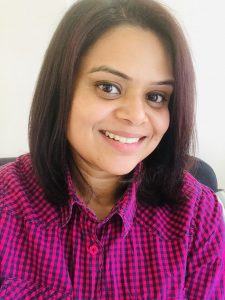 Leena Mascarenhas
Growing up in Goa, India, and being raised in a Catholic household, deepened my relationship with music, making it an integral part of my childhood. I learned to play the organ and flute during my formative years. Our radio played music all day in the kitchen, including American, Bollywood and Konkani music, all of which had a profound impact on my musical taste and development.
Currently, I’m working on projects that explore the concept of ‘Two-Eyed Seeing’, which integrates Indigenous and Western knowledge systems, using music and arts to promote emotional well-being. Additionally, I’m involved in an exciting project focused on simplifying complex research topics into accessible formats like podcasts, crafting a narrative story that engages a diverse audience and makes the information more relatable.
What excites me about the research I am involved in is that it is conducted within communities for their own benefit. Additionally, I enjoy using unconventional methods to share and narrate the research, making it accessible to a wider audience. I am eager to learn more about the integration of music and arts into health and explore their potential impacts.
Music has been an integral part of my life since childhood. It has been my companion in moments of joy and sadness, a source of motivation, and a way to celebrate. This connection has only deepened as I’ve lived away from home while pursuing my education and career.
Ethnomusicology is a highly interdisciplinary field that offers the flexibility to connect your area of interest with music, sound and movement. These connections can lead to unconventional approaches such as linking ethnomusicology to health, advocacy, business or other fields. Think creatively about these intersections, and explore how music and movement can enhance understanding in your chosen area of study.
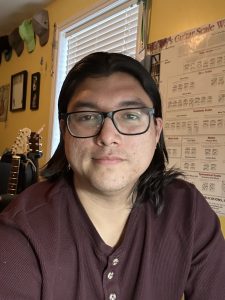 Leim Joe
Music was always present in my life growing up in Eskasoni First Nation. My family listened to popular music and I also listened to Mi’kmaw chants at school and with my family. My great grandmother, Sarah Denny, still sang even when she was in the later stages of Alzheimer’s, and memories of her remind me of certain Mi’kmaw chants like the ‘Treaty Song’, the ‘Welcoming Song’ or my grandmother’s famous ko’jua dance songs, like ‘Wapikatji’j’.
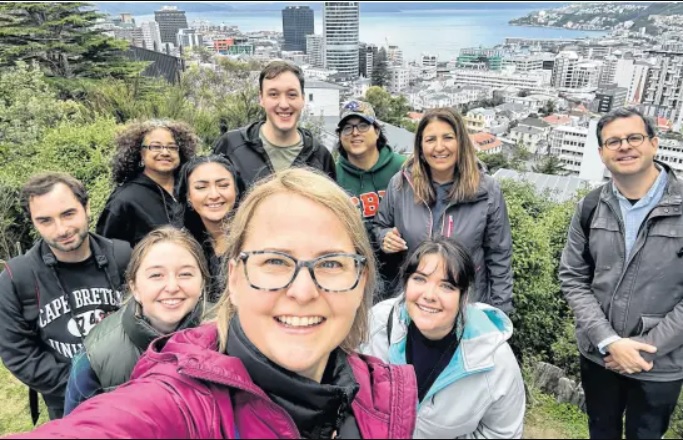
My research includes collaborative projects with other research assistants to document Mi’kmaw chants, dance, language and other aspects of culture. Some of my work with the CSC has involved filming, documenting and performing Mi’kmaw music and dance. Currently, I’m working on a podcast that highlights the relationship between our Mi’kmaw colleagues and Māori people who we interacted with on a recent field course in Aotearoa (New Zealand), and a subsequent trip to participate in the 2025 International Council for Traditions Music and Dance Conference.
I love the in-person interactions I have with people through my research. When you hear people express such passion for a culture in an intimate environment, you retain the knowledge and information more easily than you would from reading an article on the same topic.
Immerse yourself not only in the music you are interested in, but find ways to participate in other musical events too. The most authentic form of learning comes from participant observation. Music workshops at your school, community events like ceilidhs or open mics, and Indigenous gatherings like powwows are great opportunities to learn about the musical culture you are surrounded by, and can foster positive perspectives on culture, music and dance.
Do you have a question for Marcia or another member of the CSC team?
Write it in the comments box below and they will get back to you. (Remember, researchers are very busy people, so you may have to wait a few days.)
Learn more about how female artists are challenging gender norms in heavy metal music:
0 Comments