
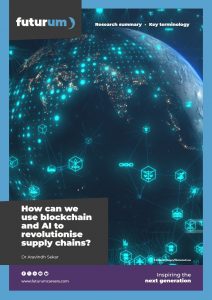
How can we use blockchain and AI to revolutionise supply chains?
Blockchain technology has taken off in recent years, and is helping to streamline and secure supply chains like never before. However, organisations need to change their strategies, capabilities and mindsets to fully embrace this revolutionary technology. This transition can be supported by artificial intelligence (AI), so Dr Aravindh Sekar from Dakota State University in the US has developed a unique framework to help organisations effectively integrate AI-augmented blockchain into their supply chains.
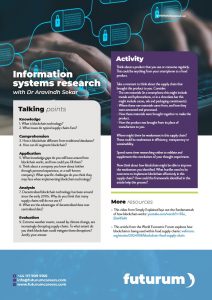
Talk like an information systems researcher
Artificial intelligence (AI) — software that can perform tasks that normally require human intelligence
Blockchain — a shared, decentralised, tamper-resistant digital ledger that records transactions in ‘blocks’
Decentralised — the transfer of powers, responsibilities or resources from a central authority to a wider group
Supply chain — the system that produces, processes and distributes a product or service – including people, organisations, information, activities and resources
Transparency — being open to public scrutiny, without secret or confidential information
Supply chains make the world go round. They link the production, processing and distribution of any product that you can think of — but making them work efficiently is no easy task. “Having worked in the supply chain industry for many years, I have seen first-hand how easily information breaks down between companies,” says Dr Aravindh Sekar from Dakota State University. “Delays, mistakes and mistrust usually happen not because people are careless, but because different systems cannot talk to each other.”
If each company within a supply chain has a different way of storing, processing and sharing information, it can be difficult to hold all the information about the supply chain in one place — especially given that this place needs to be secure and tamper-proof. “Data can be delayed, incomplete or inconsistent,” says Aravindh. “This leads to problems such as lost shipments, slow decision-making and higher operating costs.” Blockchain may hold the key to these problems, and Aravindh believes we are on the cusp of rolling it out across supply chains worldwide.
What is blockchain?
You have probably heard the term ‘blockchain’ being used on the news or social media, perhaps in relation to cryptocurrency; but it’s often tricky to get a handle on what it actually means. “Blockchain is a digital technology that records information in a shared, secure and tamper-proof way,” explains Aravindh. “Once data is added to the blockchain, everyone involved can trust it without needing a central authority.”
Blockchain is essentially a shared database that is unique through its use of ‘blocks’ to store and share data. These blocks are all linked to each other in a ‘chain’, and once made, a block’s data cannot be changed. “This helps supply chains become more resilient by improving transparency and reducing errors,” says Aravindh. “It also supports sustainability by cutting inefficiency and enabling accurate tracking of materials, allowing companies and consumers to verify where products come from and if they are made responsibly and ethically.”
Transparency is especially important for supply chains, but is tricky to establish. “When organisations can see real-time data on inventory, shipments, delays or disruptions, they can respond faster and make better decisions,” says Aravindh. “Problems are identified and resolved earlier, and trust is built among partners, which leads to better cooperation during emergencies.”
Blockchain implementation
Aravindh studies how blockchain can be best implemented in organisations. “To me, this research is important because it helps companies work together more smoothly and honestly,” he says. “For society, it supports safer products, more reliable supply chains and systems that are better prepared for disruption.” Aravindh has developed a framework called Strategic-Decentralised Resilience Theory (SDRT) that lays out how organisations can successfully adopt blockchain technology. “Blockchain implementation is not just a technical project,” he says. “It requires the right strategy, organisational capabilities and decentralised mindset.”
SDRT comprises three connected pillars of resilience. The first is strategic resilience: the vision and commitment of leaders to use blockchain effectively. The second is organisational resilience: the ability of companies to upskill their workforce and develop processes to use blockchain effectively. “The third is decentralised resilience,” says Aravindh. “Organisations need to embrace blockchain’s unique strengths: shared control, secure data, distributed decision-making and trust built through technology rather than hierarchy.” This is a very different approach to the centralised culture that many organisations are accustomed to — which is why it’s important to study how to make it happen.
Enter AI
Pushing for strategic, organisational and cultural change in any company can be a headache, but Aravindh believes that artificial intelligence (AI) can help ease the process. “Blockchain can be slow or expensive if not designed correctly, and partners may hesitate to share information openly,” says Aravindh. “Moreover, employees may be unsure how to use the technology, and may not have the skills to redesign processes around decentralised data.” AI can potentially overcome these issues: it can analyse large volumes of data, predict disruptions before they happen and automate many decisions. Aravindh has updated his framework to include AI as a powerful enabler. “The SDRT-Agentic AI framework expands the original SDRT by adding AI systems that can sense problems, make recommendations and take autonomous actions,” he says. “This helps supply chains become not just transparent and secure, but adaptive, predictive and self-correcting.”
Nonetheless, this is a big step for organisations — they need to identify the problems they want to solve, have reliable and accessible data, build internal skillsets, and establish governance rules for data management and decision-making. “The SDRT-Agentic AI framework guides organisations through these steps by aligning strategy, technology and people,” says Aravindh. “My hope is that it can help organisations understand how to implement blockchain successfully.”
The future is now
Aravindh is currently testing and refining his framework in real organisational settings. “I am working on simulation models and case studies to show how blockchain and AI interact,” he says. “I am also developing projects that explore blockchain in project management, AI-driven privacy controls and decentralised governance in digital organisations.”
These efforts are creating fertile ground for the next generation of information systems researchers. “They will explore how AI, blockchain and data analytics reshape decision-making, resilience, sustainability and the future of work,” says Aravindh. “This field is just beginning. There is enormous potential for meaningful impact.”
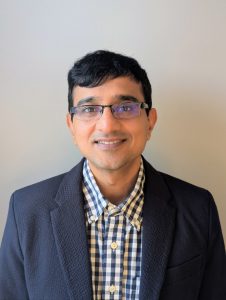 Dr Aravindh Sekar
Dakota State University
Field of research: Information systems
Research paper: Integrating AI and Blockchain in Supply Chains: An SDRT-Based Resilience Framework. Sekar, A., et al. (2025) doi.org/10.20944/preprints202512.0845.v1
Website: scholar.google.com/citations?user=2nk8dJEAAAAJ&hl=en
Do you have a question for Aravindh?
Write it in the comments box below and he will get back to you. (Remember, researchers are very busy people, so you may have to wait a few days.)

Learn more about other innovations taking place in supply chain management:
0 Comments