
How does the human respiratory tract microbiome affect our health?
Your mouth, lungs and airways are home to billions of bacteria and other microbes that make up your respiratory tract microbiome. When it is well balanced, this community of microorganisms helps to keep you healthy and protect you from disease. Dr Ariangela Kozik from the University of Michigan in the US studies the bacteria living in our airways to learn more about them and how they influence our health. By following her curiosity and asking the right questions, she has shed light on a century-old biological paradox and transformed our understanding of the human respiratory tract microbiome.
Talk like a microbiologist
Commensal – an organism that lives in or on a host and benefits from the relationship while the host is neither helped nor harmed
Inflammation – an immune response that helps the body heal injuries or fight infections, causing swelling and pain
Microbiome – the community of microorganisms and their genes living on and in the human body
Next-generation sequencing – a high-speed laboratory technique that allows scientists to read the genetic code of a sample
Obligate anaerobe – an organism that cannot survive or grow in oxygenated environments
Symbiont – an organism that lives in a close, long-term biological interaction with another organism of a different species
You might not realise it, but trillions of microorganisms are living on your skin and inside your body. For example, your respiratory tract – your mouth, nose, airways and lungs – houses a community of microorganisms that plays a complex role in maintaining, and sometimes endangering, your health.
“Up until recently, we thought that healthy lungs were sterile and didn’t contain any bacteria,” says Dr Ariangela Kozik from the University of Michigan. “However, thanks to advancements in next-generation sequencing, we now know that there is a vibrant and diverse microbiome throughout our airways.” This microbiome – made up of bacteria, fungi and viruses – plays an important role in training our immune system and protecting us from disease. “Evidence suggests that people who have chronic airway diseases, such as asthma or cystic fibrosis, have different microbial communities in their airways compared to healthy people,” continues Ariangela. “We’re still figuring out how changes in the respiratory tract microbiome lead to disease and mapping out the relationships that promote our health.”
Which microorganisms does Ariangela study?
“Throughout history, microbiologists have been focused on infectious diseases,” says Ariangela. “Knowing everything that there is to know about the microorganisms that infect and harm us can help us treat disease.” However, only a tiny fraction of the microbial life on Earth is harmful to humans. We know far less about the microbes that are not a threat to us, even those that are living in our bodies. “I am interested in figuring out what these other bacteria are doing,” says Ariangela.
Microorganisms that are not pathogens but have long-term interactions with us are known as symbionts. “Although they might seem less interesting at first, many of these microorganisms have long-term relationships with us and our bodies,” says Ariangela. “It is important for us to understand what these microorganisms are doing in our bodies and how they might impact our health in unexpected ways.”
What is Prevotella?
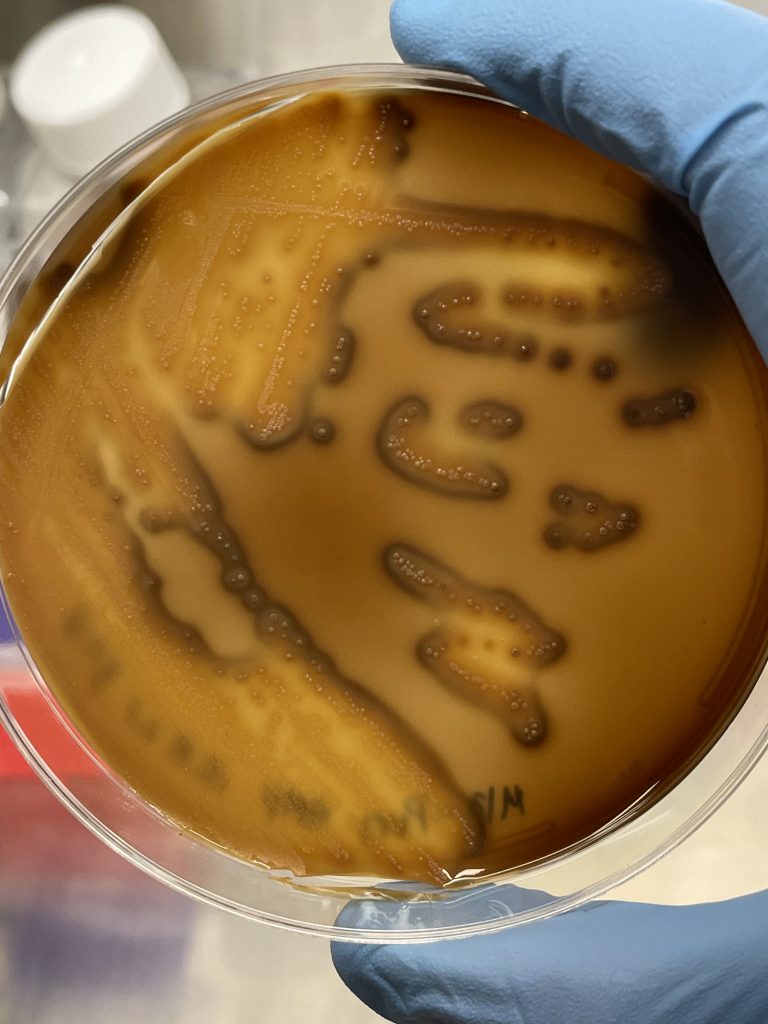
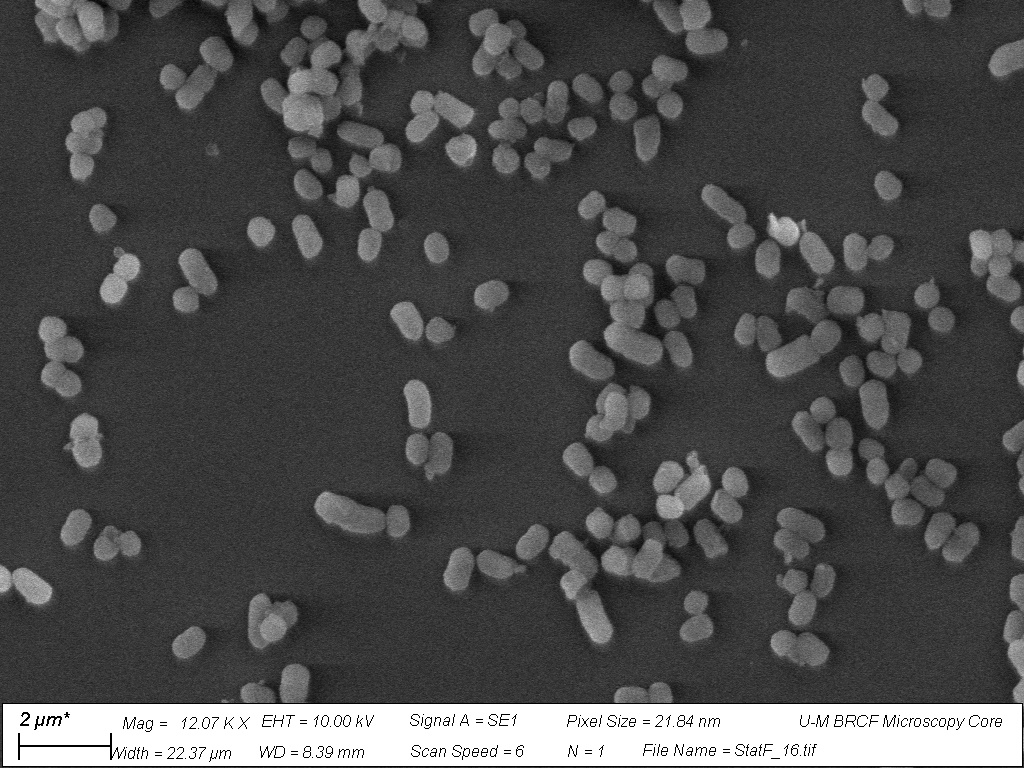
Ariangela is particularly interested in a genus of bacteria called Prevotella. The first member of this genus, Prevotella melaninogenica, was first discovered over 100 years ago (although it was called something else at the time). It wasn’t until 1990 that P. melaninogenica and other bacteria like it were grouped together as Prevotella. This genus has been reclassified and refined as genomic sequencing techniques have improved. “Prevotella are commonly found in the human respiratory tract microbiome, but when I tried to find out more about their function, there wasn’t a lot of information out there, which surprised me,” says Ariangela. “So, I decided to tackle this challenge in my own research and learn more about these commensal bacteria.”
For a long time, Prevotella have been classified as obligate anaerobes – organisms that cannot grow or survive in oxygenated environments. “That didn’t really make sense to me,” admits Ariangela. “If it really is an obligate anaerobe, then how can it survive in our lungs where there is always oxygen? Right off the bat, I knew that there was something interesting to be figured out.”
How did Ariangela solve the Prevotella problem?
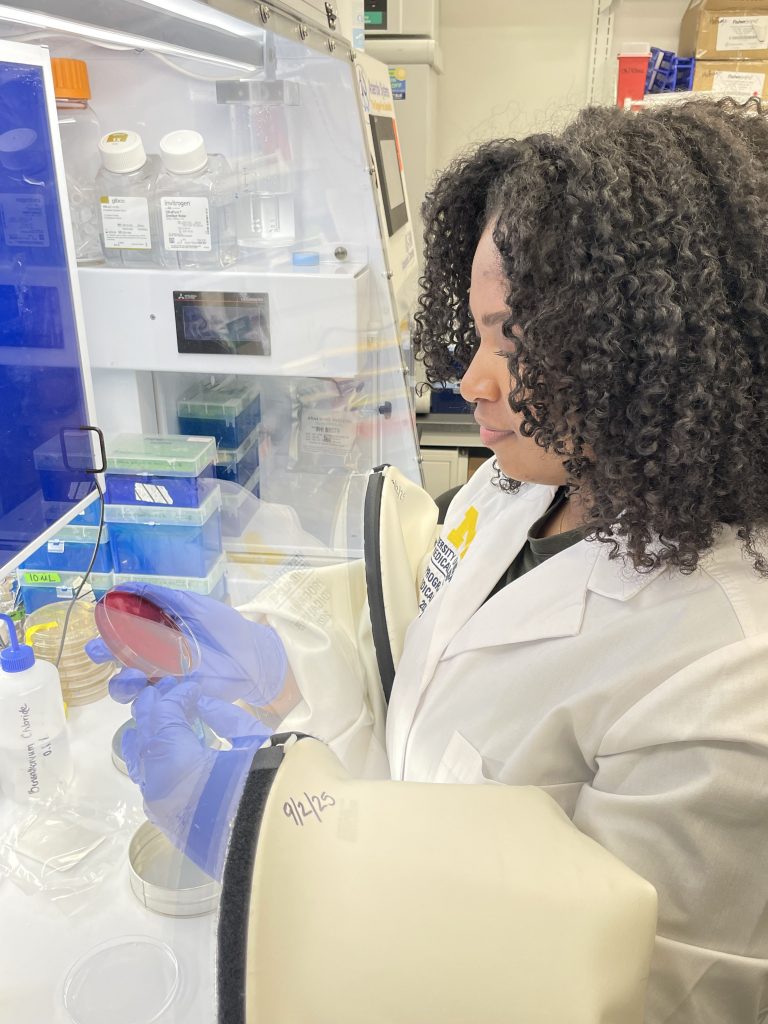
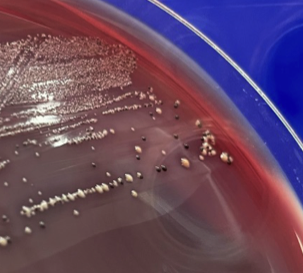
Ariangela conducted experiments to test how P. melaninogenica coped with varying levels of oxygen exposure. “We grew cultures of P. melaninogenica in specialised growth chambers, each with a different oxygen concentration,” she explains. “We found that it was able not only to survive but also to grow in concentrations of up to 5% oxygen.” At 8% oxygen, P. melaninogenica stopped growing, but it did not die and was able to recover when returned to an environment without oxygen.
“Our results revealed a few new things,” says Ariangela. “Firstly, Prevotella has been misclassified and is not an obligate anaerobe, and secondly, this means it must have some really cool mechanisms for surviving in oxygenated environments.” Although we need it to live, oxygen is actually highly toxic to most cells and can damage DNA. “All organisms need a way to deal with the harmful effects of oxygen, but we don’t know what these mechanisms are in Prevotella,” explains Ariangela. “In my lab, we are just at the cusp of discovering these mechanisms and figuring out how Prevotella survives in the human respiratory tract. We are really excited because we have so many unanswered questions that we can now try to answer.”
What questions is Ariangela asking next?
“I’m really interested in understanding how the members of the respiratory tract microbiome interact with our immune system, especially in chronic respiratory conditions where you have cycles of inflammation,” says Ariangela. “I’m also interested in the variation in how patients with chronic respiratory diseases respond to treatment.” For example, asthma can be treated by lots of different steroids and therapies, but they do not all work well for everyone. “We don’t really know what’s behind this variability yet,” says Ariangela. “Since we do know that our respiratory tract microbiomes vary from person to person, I want to find out whether differing relationships between the microbes and the immune system can influence the way a person responds to certain therapies or drugs.”
In order to answer these larger questions, Ariangela and other microbiologists need to learn more about the specific organisms, like Prevotella, that make up the respiratory tract microbiome and the roles they play. “It’s like being the new manager of a soccer team who knows who their players are, but doesn’t yet know each of their strengths, weaknesses and specialities,” says Ariangela. “My goal is to fill in some of these knowledge gaps so that we can step back and really understand what the organisms in our bodies are doing.”
Reference
https://doi.org/10.33424/FUTURUM713

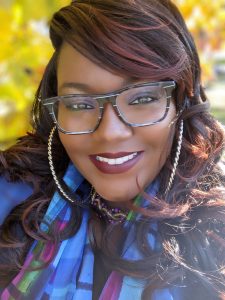 Dr Ariangela Kozik
Assistant Professor, Department of Molecular, Cellular, and Developmental Biology; Division of Pulmonary and Critical Care Medicine, Department of Internal Medicine, University of Michigan, USA
Fields of research: Microbiology; microbiome research; bioinformatics; immunology
Research project: Investigating commensal bacteria in the human respiratory tract microbiome
Funders: US National Institutes of Health (NIH); National Institute of General Medical Sciences (NIGMS); University of Michigan Rackham Graduate School
Website: sites.lsa.umich.edu/koziklab
About microbiology
Microbiology is the study of microorganisms, how they live and how they interact with their environments. “It is a diverse and varied field that impacts not just health and medicine but also ecology and the environment,” says Ariangela. “There are so many sub-disciplines to explore depending on where your interests and curiosity lead you.”
Ariangela has also been interested in how the concept of race has been misused in microbiome research, exacerbating discriminatory views and a misunderstanding of scientific knowledge. “In biomedical studies, we collect demographic information about participants,” she explains. “In many studies, researchers will analyse their data based on factors such as race and ethnicity, asking questions like: Do we see differences based on race?”
This is problematic because the concept of race is based on social constructions rather than biological realities. Using social categories, such as ‘Black’, ‘White’ or ‘Asian’, to explain biological findings can lead to serious misunderstandings and undermine meaningful research. “When we rely too much on those categories to ask our questions and do our statistical tests, we’re collapsing the totality of human diversity into these very rough, imprecise terms that aren’t based on good science,” explains Ariangela. “When doing microbiome research and trying to understand biological phenomena, it is important not to make assumptions based on misguided applications of social categories.”
During the COVID-19 pandemic, Ariangela co-founded the Black Microbiologists Association (BMA). “I was fielding a lot of questions from family and friends about the information that was available,” she says. “Because of some of the completely unethical things that have happened to various groups of people in the name of science and medicine, there is often still a lack of trust about where to get accurate, reliable information. We wanted to be a source of information for people who didn’t know who to trust.” The BMA is also a community space where microbiologists can connect with and support each other through the challenges of a career in science.
Pathway from school to microbiology
At school, build a strong foundation in subjects like biology, chemistry and physics. Computing skills and an understanding of statistics are also helpful.
Getting hands-on experience in a lab is a great way to learn more about the field and figure out if this career is right for you. Taking part in summer schools is a great way to do this before you go to college or university.
At university, courses in microbiology, immunology, molecular biology and biochemistry can all lead to a career in microbiology.
Explore careers in microbiology
If you are interested in microbiology, explore the websites of organisations such as the American Society for Microbiology, the Microbiology Society and the American Society for Virology where you can find blogs and articles about new research.
To find out more about BMA, visit their website.
Meet the team
Ariangela
When I was really young, my parents gave me a microscope. It came with empty slides and tools, so I could just go and cut pieces off stuff and look at them under the microscope. That was my first entry into microbiology and I realised that there are all these other tiny organisms that you can’t normally see but are still an important part of our world. I thought that was the coolest thing ever.
I love being able to ask questions at the edge of our knowledge. It’s such an amazing feeling when you and your team discover something new and you’re the only people in the world who know it. That doesn’t happen all the time, but when it does, it gives me the energy to keep asking questions.
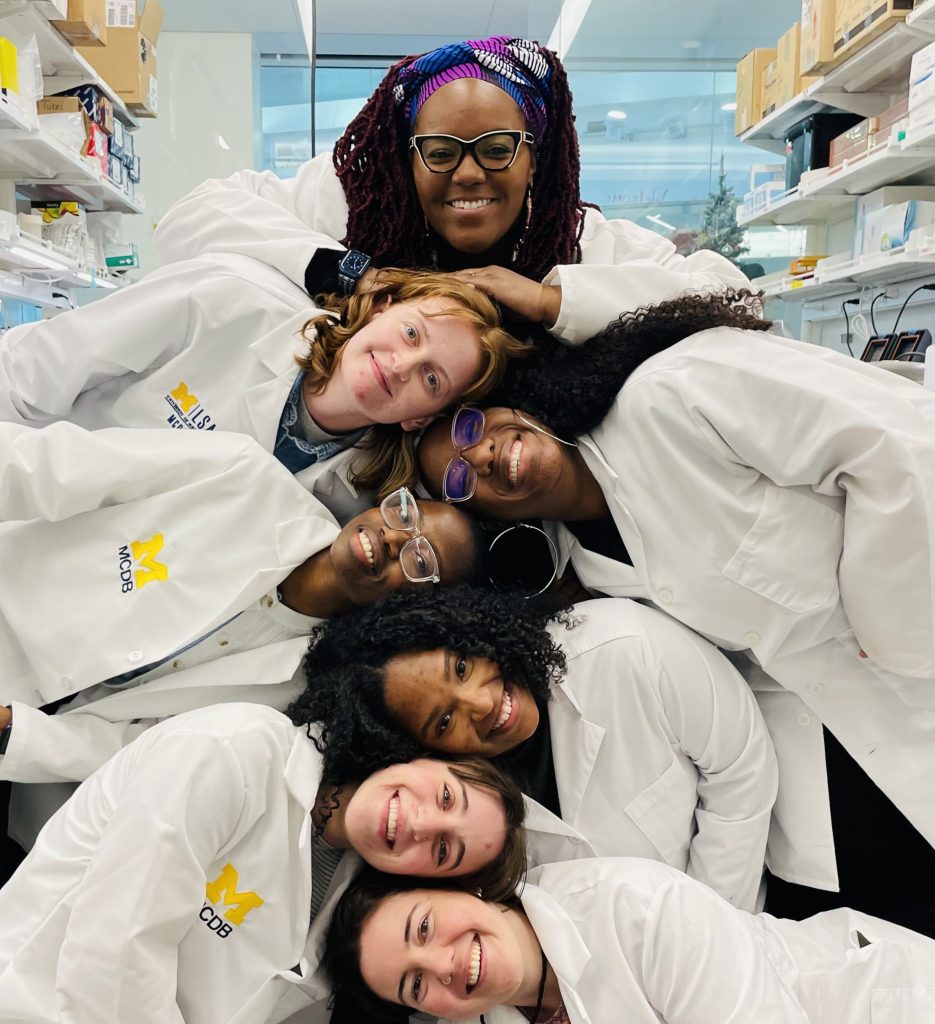
I love working with my students. They are bright, brilliant people who are going to do really cool things and change the world. I love having the privilege of training and mentoring them to become excellent scientists and follow their curiosity.
Curiosity is important, but you also have to be a good advocate for yourself. It’s easy to get lost in large courses and on new campuses, but it’s important to have confidence in yourself. Make the effort to talk to your professors and learn from them. Having good mentors and role models is key.
I’m a scientist, but also a musician. Science is often seen as the opposite of art, but I think leaning into creativity is important. I love listening to and playing music, painting, and listening to birds to ground myself.
Ariangela’s top tip
Don’t be intimidated by your perception of where you think a scientist needs to come from or what they have to do or be. So many of my students came from artistic backgrounds, and science needs that creativity and spark!
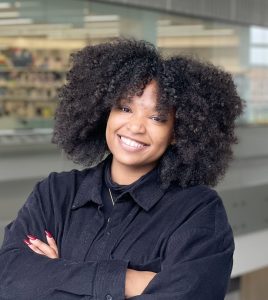 Kelyah Spurgeon
PhD candidate, Kozik Lab
Science is about finding your passion, asking questions and getting creative! In the Kozik lab, half my time is spent at the computer using programming to predict how bacteria will behave. The other half is spent in the lab conducting experiments to test if my predictions are correct in real life. My research aims to answer an important question about host-microbe interactions: are Prevotella friends or foes?
I’ve always wanted to understand how things work. Growing up, I took things apart to look at all the parts, then put them back together. My first real glimpse into the microscopic world happened when I was in high school. I was observing the arrangement of plant cells and noticed a striking resemblance between them and ordinary brick walls. Seeing the similarities between the invisible world of microbes and our day-to-day lives motivated me to pursue a career in science.
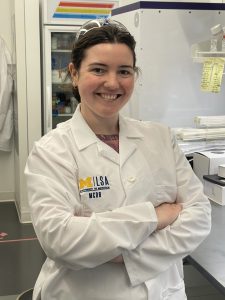 Claire Albright
PhD candidate, Kozik Lab
Scientific discovery rarely happens on the first try. In the Kozik lab, I discovered the significant aerotolerance of the lung bacteria P. melaninogenica. However, there were many rounds of failed experiments before I got the data I needed! I had to troubleshoot, adapt my methods and try again. This trial and error is a perfectly normal part of science, making resilience an essential skill. When you finally get that breakthrough, and you have discovered something entirely new, there is no better feeling.
ADHD is my scientific superpower. Growing up, I wasn’t the best student in biology class. I was a curious kid with a love for nature, but I struggled with tests and paying attention. I didn’t know if I could succeed as a scientist, but I decided to try anyway. Now I know that the traits that make me different – like my ability to hyperfixate on things that interest me and think outside the box – are the same traits that make me a great scientist. Never discount the things that make you different; they could open new doors!
Funder: Claire was supported by the University of Michigan Predoctoral Training in Genetics Program (T32GM149391).
Do you have a question for Ariangela, Keylah or Claire?
Write it in the comments box below and they will get back to you. (Remember, researchers are very busy people, so you may have to wait a few days.)
Learn about how a baby’s gut microbiome helps to prevent allergies:
futurumcareers.com/can-microbes-in-a-babys-gut-prevent-food-allergies
0 Comments