
Time-travelling detectives: how are palaeontologists studying ancient organisms?
Fossils contain valuable clues about what organisms living hundreds of millions of years ago looked like and the environments they inhabited. However, revealing their secrets can be tricky. At the University of São Paulo in Brazil, Dr Gabriel Ladeira Osés is using an array of advanced techniques to study fossils, with each method revealing different pieces of the puzzle. He is particularly interested in soft-tissue preservation and early biomineralised animals – the first organisms to produce mineral-built body parts.
Talk like a palaeontologist
Accelerator techniques — using particle accelerators to analyse fossils and determine their internal structure or chemical composition
Biomineralisation — the process by which living organisms produce minerals to form hard structures such as shells, bones, teeth or scales
Compositional techniques — techniques to identify the chemical signatures and elements, minerals, and organic matter that make up a fossil or rock
Diagenesis — the physical and chemical changes that happen to a fossil and surrounding sediment during and after the process of becoming rock
Fossilisation — the process by which the remains or traces of an organism become preserved through burial, mineral replacement and other geological processes
Imaging techniques — techniques to create detailed pictures of fossils to reveal their internal and external structures
Morphology — the form and structure of an organism or fossil, including its size, shape and physical features
Fossils hold clues about ancient life. However, during the journey from ancient past to present day they can undergo significant changes, making it difficult to untangle the secrets of the original organism.
“Palaeontologists are detectives,” says Dr Gabriel Ladeira Osés from the University of São Paulo. “We use technology to decipher how fossils are preserved and to envisage original characteristics of the organisms.”
Biomineralisation and Ediacaran fossils
The earliest known biomineralising animals evolved during the Ediacaran Period (635- 539 million years ago). Fossils of these organisms reveal that they developed hard mineralised tubes, an early form of skeleton. The biomineralisation process was similar to that used by organisms today, such as corals, shellfish and humans, to build hard body parts such as bones, shells and teeth.
We know these early biomineralised animals lived on microbial mats (slimy surfaces made of bacteria) in shallow, oxygen-rich seas. But many questions remain: “Some big challenges include understanding what groups they are related to, their original mineral composition, and their biomineralisation and reproduction strategies,” says Gabriel.
The clues to solving these mysteries can be found by investigating their fossils. “When an organism dies, the soft tissues are readily decomposed by microorganisms, while more resistant, biomineralised parts last longer,” says Gabriel. “Some bacteria ‘breathe’ sulphur and iron instead of oxygen while eating organic matter, which leads to the formation of minerals at decaying carcasses, promoting soft-tissue preservation.”
However, the process of diagenesis changes fossils over time. From the moment the organism is buried in sediment until a palaeontologist excavates the fossil millions of years later, pressure, heat, water and chemical reactions alter the fossil’s shape and composition.
Investigating using imaging techniques
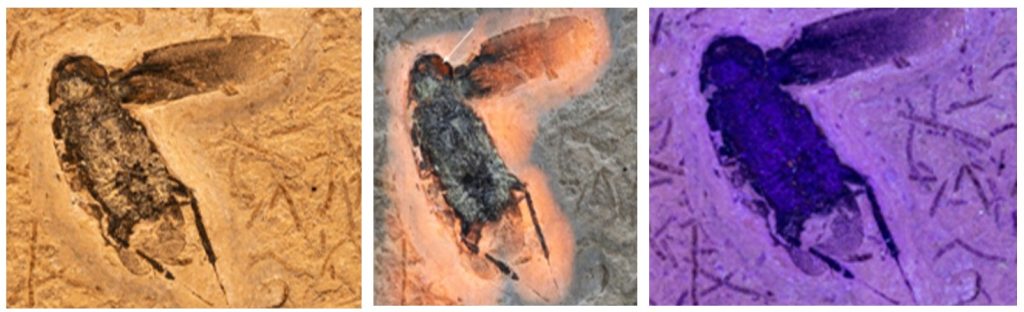
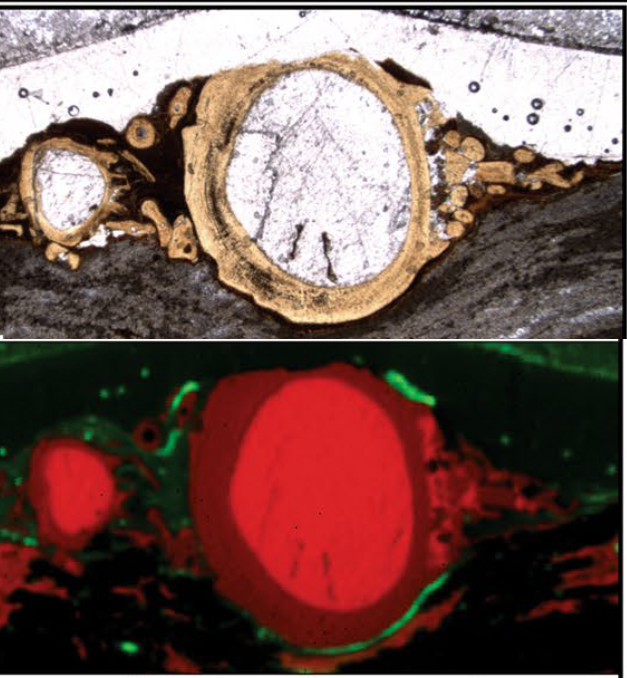
To untangle the diagenesis process and reveal the clues held by fossils, Gabriel uses a range of imaging and compositional techniques, including accelerator techniques. Imaging techniques such as ionoluminescence (IL), cathodoluminescence (CL) and ultraviolet fluorescence (UVF) reveal the structure of fossils by causing minerals in the fossils to emit visible light.
These techniques highlight the differences between the host rock and fossil structures, and IL and CL also provide clues about the chemistry of the minerals. Gabriel and his team have developed a method to create an IL map, showing how different parts of a fossil or rock light up to reveal subtle differences. UVF works in a similar way, highlighting fossil morphology and areas with different compositions, helping Gabriel decide where to carry out more detailed chemical analyses.
Uncovering clues with compositional techniques
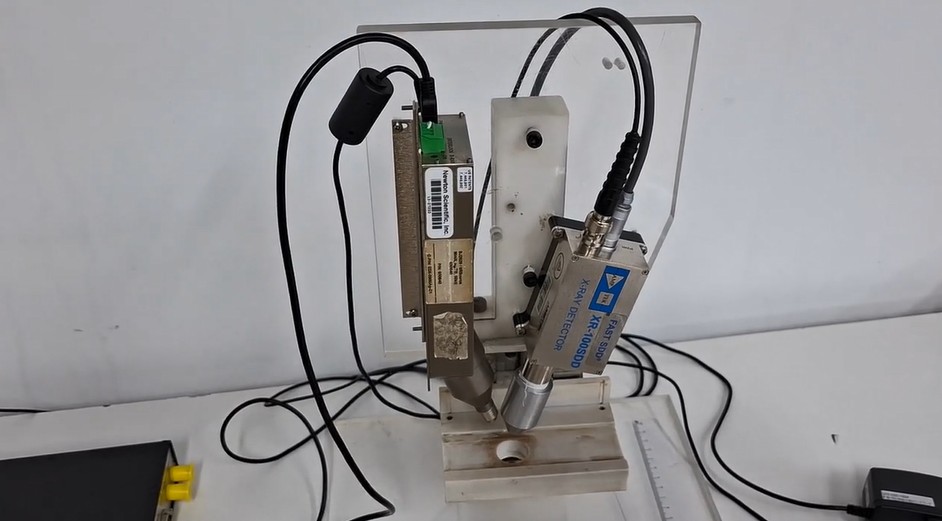
Compositional techniques such as X-ray fluorescence (XRF) and Raman spectroscopy reveal what fossils are made of. XRF uses X-rays to excite atoms in the fossil which then emit X-rays that are characteristic of the chemical elements it contains. Raman spectroscopy uses a laser to interact with molecules in the fossil to identify minerals and organic compounds. Gabriel also uses a suite of palaeoenvironmental geochemistry techniques to examine the chemistry of fossils and surrounding rocks. This is often done by dissolving samples and analysing their chemical composition to uncover the ancient environments and conditions in which organisms lived and were preserved.
Electron microscopy produces highly detailed images of tiny fossil structures while accelerator techniques, such as synchrotron-based computed tomography (CT) scanning, use powerful radiation sources in large laboratories to create high-resolution three-dimensional images of the inside of fossils without causing damage. “Accelerator techniques have several advantages over conventional equipment, like higher sensitivity to detect small amounts of chemical elements and the possibility of measuring smaller, deeper regions in samples,” explains Gabriel.
Corumbella and Cretaceous creatures
Gabriel has used a combination of these techniques to transform our understanding of the early biomineralising Ediacaran fossil Corumbella. CL and CT imaging provided new details of its skeleton, while electron microscopy and Raman spectroscopy detected mineral components and possible original organic material. “Our results challenge previous biological interpretations of Corumbella, allowing us to tentatively suggest a relationship with other organisms,” says Gabriel.
Combining palaeontological techniques has also helped Gabriel to uncover how delicate tissues were preserved in Cretaceous (145-66 million years ago) insects and fish. “Electron microscopy showed soft tissues like eyes, muscles and digestive tracts,” he says. “XRF, Raman spectroscopy and accelerator techniques provided elemental composition and organic matter identification. UVF highlighted mineral distribution in samples, and IL mapping enhanced fossil boundaries, identification of alteration spots and gave information on rock composition.” As a result, Gabriel has been able to develop theories to explain how soft tissues of these insects and fish were preserved.
Digging deeper
Next, Gabriel aims to improve these imaging and compositional techniques so they can detect even smaller structural and chemical differences. Then he hopes to solve even more mysteries about incredible ancient organisms – how they evolved, how they lived and died, and how they were preserved to form the fossils we find today.
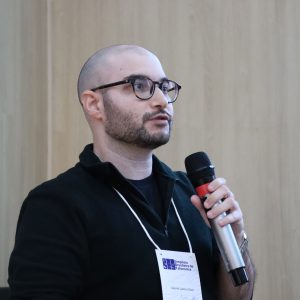 Dr Gabriel Ladeira Osés
Research Fellow, Laboratory of Archaeometry and Sciences Applied to Cultural Heritage, Institute of Physics, University of São Paulo, Brazil
Field of research: Palaeontology
Research project: Using imaging and compositional techniques to study fossils
Funders: Dr Gabriel Ladeira Osés’s research was funded by: Sao Paulo Research Foundation (FAPESP): 2022/06485-5, 2023/14250-0, 2023/17293-2, 2025/02782-3, 2025/25784-1, 2023/04501-6, 2022/11586-5; National Institute of Science and Technology- Nuclear Physics and Applications (INCT-FNA): 408419/2024-5; National Council for Scientific and Technological Development (CNPq): 126059/2026-8, 131500/2023-6; Ceará Foundation for Support to Scientific and Technological Development (FUNCAP): UNI-0210-00102.01.00/23.
About palaeontology
Palaeontology is the scientific study of ancient life. Palaeontologists combine knowledge from different fields to investigate extinct organisms and the environments in which they lived and evolved. “I work with a highly interdisciplinary team,” says Gabriel. “There are palaeontologists, sedimentologists, geochemists and physicists.”
How do palaeontologists find fossils?
For Gabriel, one of the most exiting parts of the job is searching for new fossils to study back in the lab. “Fieldwork is always a great adventure!” he says. “I have faced broken vehicles and dealt with poisonous snakes and scorpions! It is a great opportunity to meet new people, try exotic food, and gain a lot of experience in logistics, time management and geology.” Careful planning and preparation are essential. Before a trip, Gabriel will study geological maps and scientific papers to find promising fossil sites, and then spend time organising transport, equipment and supplies. “In the field, the works is highly coordinated,” he says. “People work in different roles according to their expertise – describing rocks, taking photos and collecting fossils.”
Gabriel’s fieldwork focuses on two fascinating fossil sites in Brazil. The Cretaceous Crato Formation contains exceptionally well-preserved insects, fish, pterosaurs and plants, while the Ediacaran Tamengo Formation houses some of the oldest fossils of biomineralising animals, like Corumbella.
Where else do palaeontologists work?
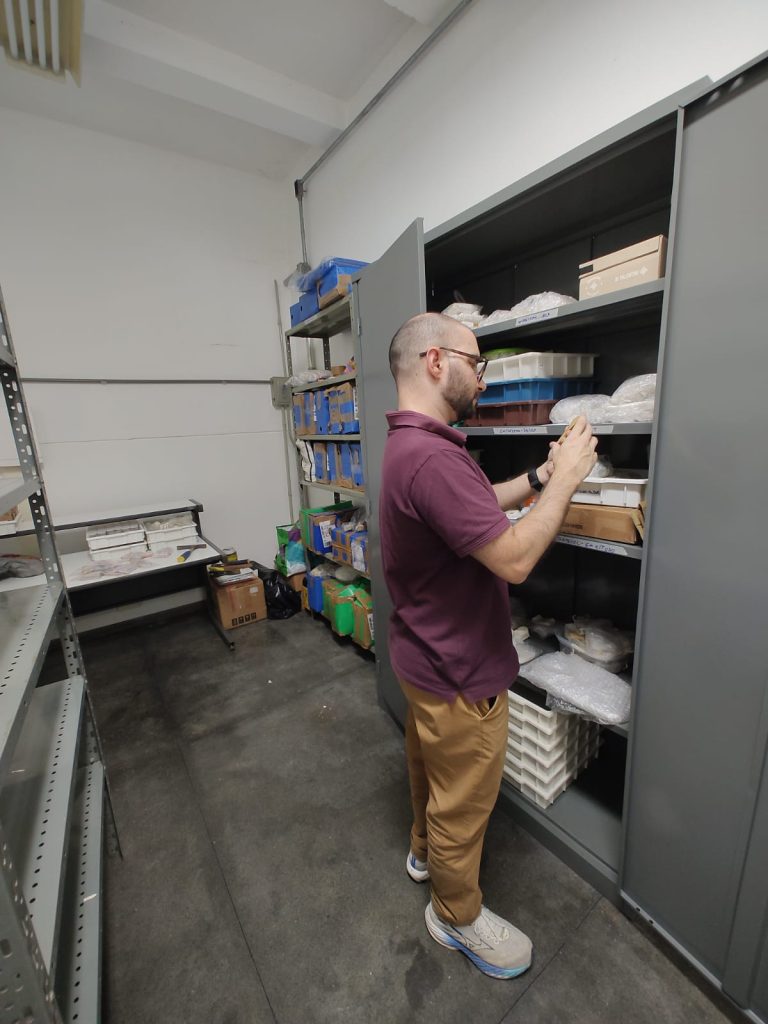
Not all palaeontology happens outside. “A lot of my work is conducted in scientific collections in museums,” says Gabriel. “These collections allow palaeontologists to study well-documented specimens using tools not available in the field, like microscopes.”
“Lab work is fun too,” continues Gabriel. “Planning and running experiments in our lab and at accelerators can be challenging, but it is always exciting to test your ideas and share your findings with others.”
Pathway from school to palaeontology
“Palaeontologists can have a wide background: usually geology and biology, but even ecology, geography and physics,” says Gabriel. “According to their background, they can follow different paths in their career.” Whatever your interests, it would be useful to learn the principles of geology, evolution, ecology, physics, chemistry, maths and statistics.
“The most important skills for a palaeontologist (and any other scientist) are the abilities to think of good questions and to be resilient – never give up!” says Gabriel.
Gabriel recommends participating in science fairs and competitions to stimulate your ability to ask scientific questions, reading blogs and science outreach magazines and watching documentaries to learn more about palaeontology, and visiting museums to see fossils in person. Look for opportunities to participate in summer schools.
Explore careers in palaeontology
Many palaeontologists work as researchers, either at museums or universities, where they study fossils to understand more about past life. Other palaeontologists in museums work as curators to look after fossil collections or as educators to teach the public about palaeontology. And some palaeontologists work as technicians to run the equipment used to analyse fossils.
The Paleontological Society (paleosoc.org/educational-resources) has a wealth of educational resources about fossils and palaeontology.
Reference
https://doi.org/10.33424/FUTURUM724
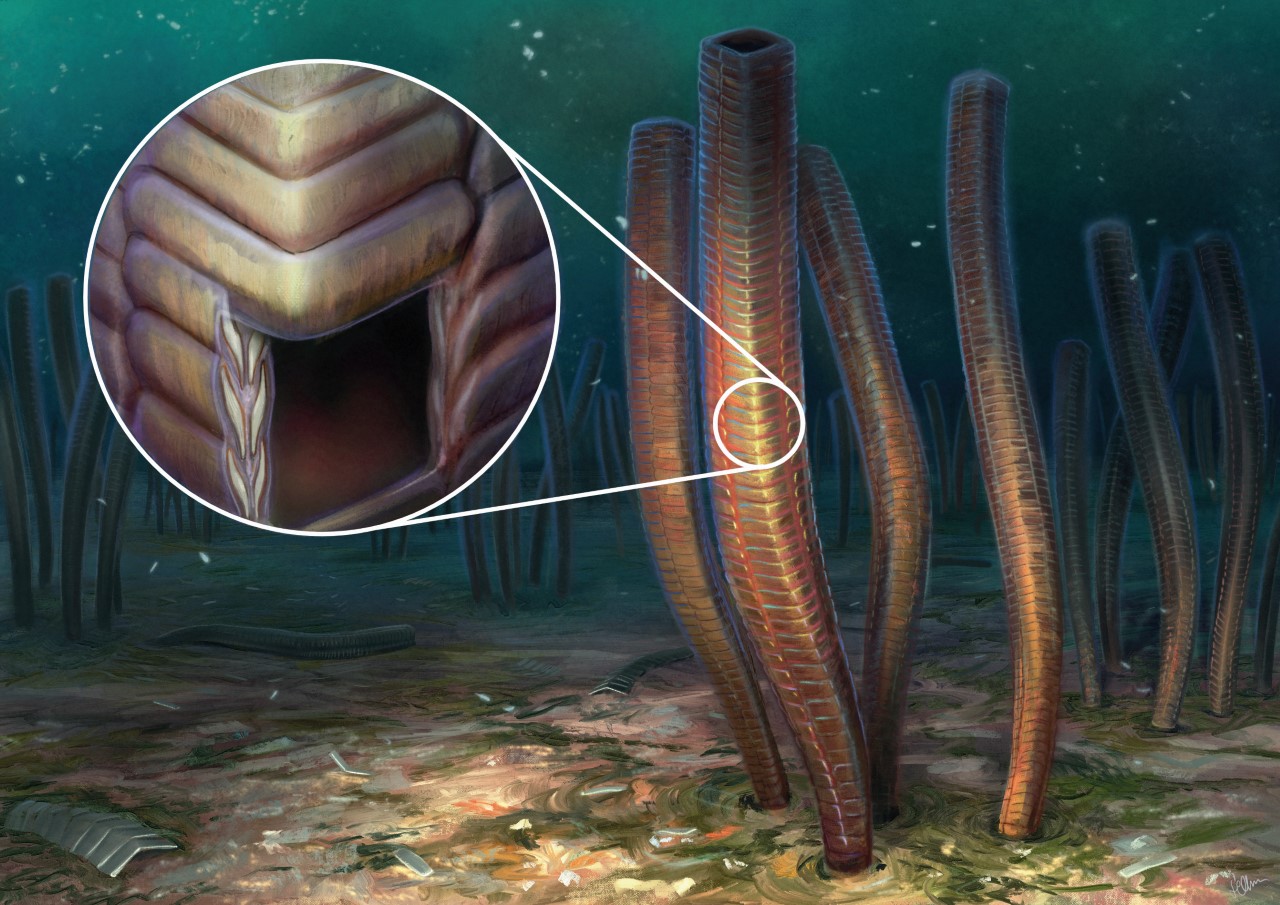
An artistic reconstruction of Corumbella from the Tamengo Formation in Brazil, showing details of its biomineralised skeleton. © Júlia Soares d’Oliveira
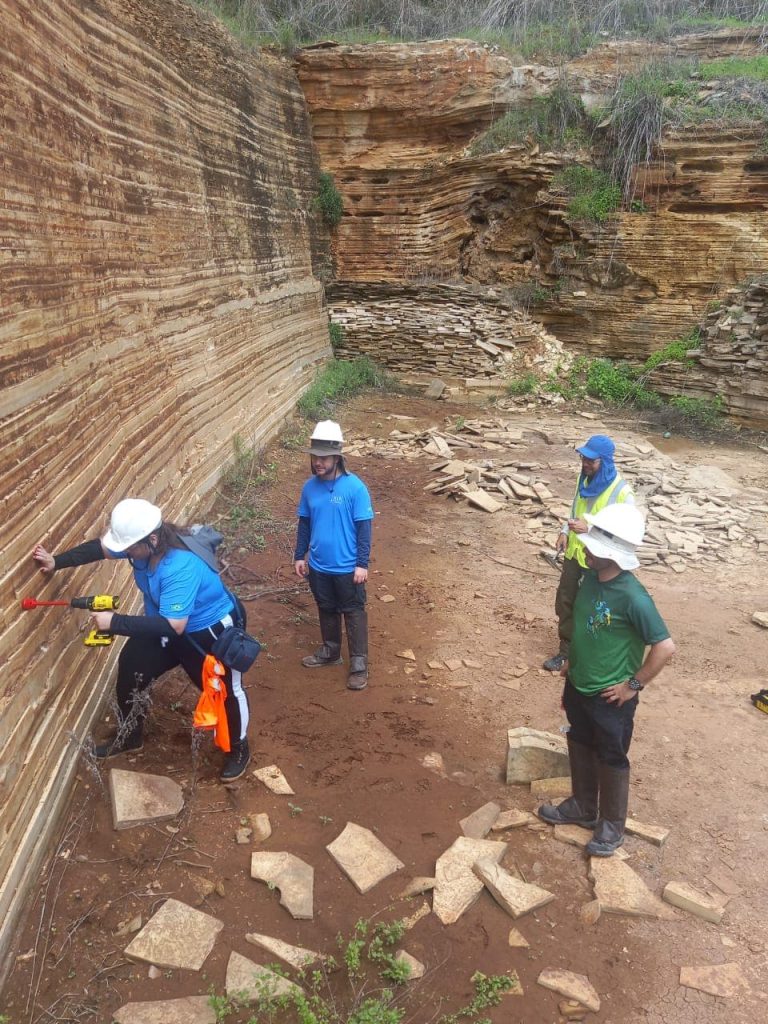
Gabriel and team collect rocks for geochemical analysis at a quarry from the Crato Formation in Brazil. © Ismar Carvalho
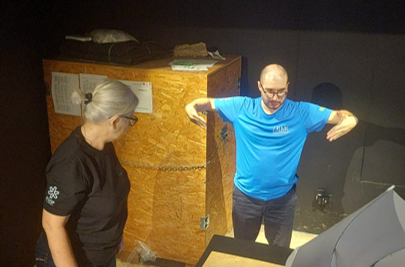
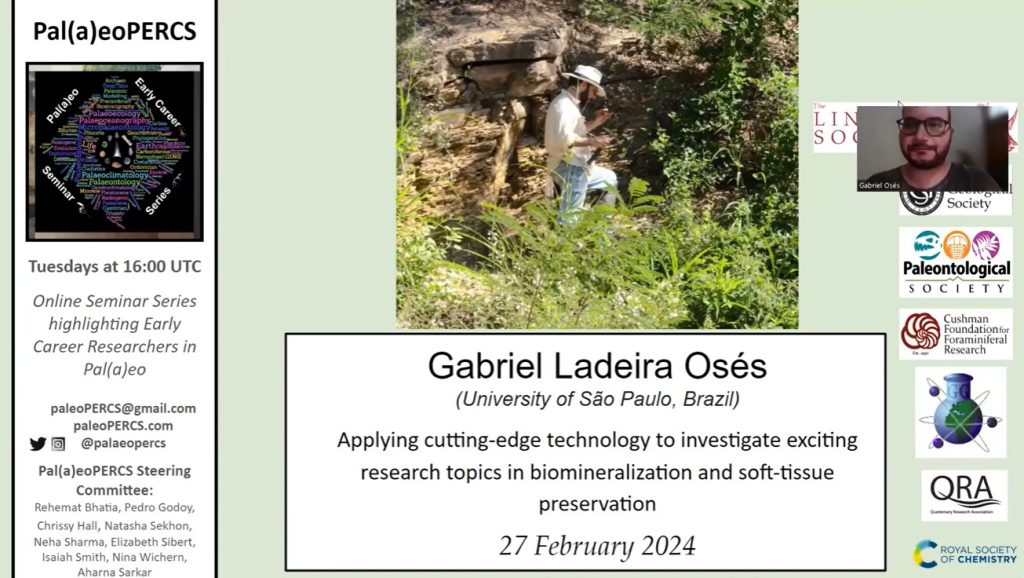
Video 2: Watch a talk Gabriel gave at Pal(a)eoPERCS
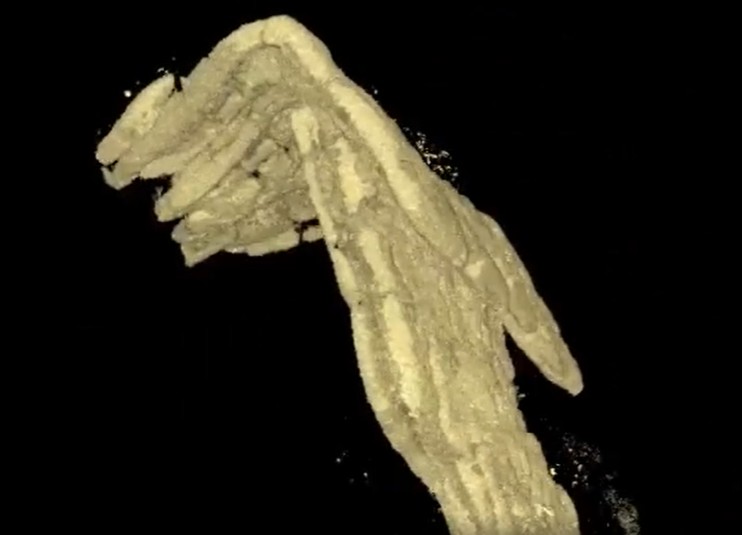
Video 3: See a 3D rendering of a Corumbella fossil generated by micro-CT


Meet Gabriel
As a teenager, I was interested in palaeontology and archaeology. I started with the most popular topics, but with time I discovered a whole new world of possibilities. I learnt that palaeontology can involve working with technology to get more information from samples, which opens new approaches and allows us to answer new questions and push forward the frontiers of knowledge.
I remember being extremely curious about geological cycles – how sedimentary rocks formed in ancient environments, what these environments looked like, how organisms evolved and how fossils formed. The beautiful mystery of the deepness of geological time and the vast information about past life that is recorded in rocks have always motivated me.
I was also inspired by my grandmother (who had a strong connection to nature), my father (a very curious biologist) and my mother (who, together with my father, took my brothers and me for visits to museums and parks). I used to dig for snail shells in my grandmother’s garden, and once my classmates and I built a replica of the famous hominid Lucy for a school science fair!
Ediacaran (635-539 million years ago) and Cambrian (539- 485 million years ago) fossils have always intrigued me – they provide information about a completely different world compared to modern ecosystems. I have always been amazed by fossils with preserved soft tissues, wondering how they formed and what biological information they bring. Through my work, I hope to uncover the environmental conditions for soft-tissue preservation in these periods.
When I’m not working, I really enjoy outdoor activities, like hiking and riding a bicycle. This helps me connect to nature, which is inspiring because my job is trying to understand it! I also enjoy watching TV shows and documentaries and reading books with mysterious and investigative storylines.
Gabriel’s top tips
To pursue a career in palaeontology you need to be curious, work hard with consistency, work collaboratively with colleagues, develop creativity, and have courage to overcome troubles and never give up! Something that also helps is to imagine yourself in the future and think, “What will I be doing in the next 10 years or so? Will I be hunting fossils and making new discoveries?”
Do you have a question for Gabriel?
Write it in the comments box below and he will get back to you. (Remember, researchers are very busy people, so you may have to wait a few days.)
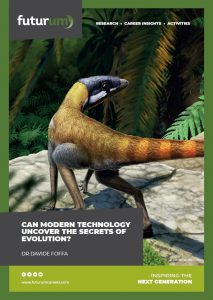
Discover how other palaeontologists are using modern technology to uncover the secrets of ancient fossils:
futurumcareers.com/can-modern-technology-uncover-the-secrets-of-evolution
0 Comments